Coil
The “circulating library” ceases to be a literary reference and becomes an esoteric symbol…
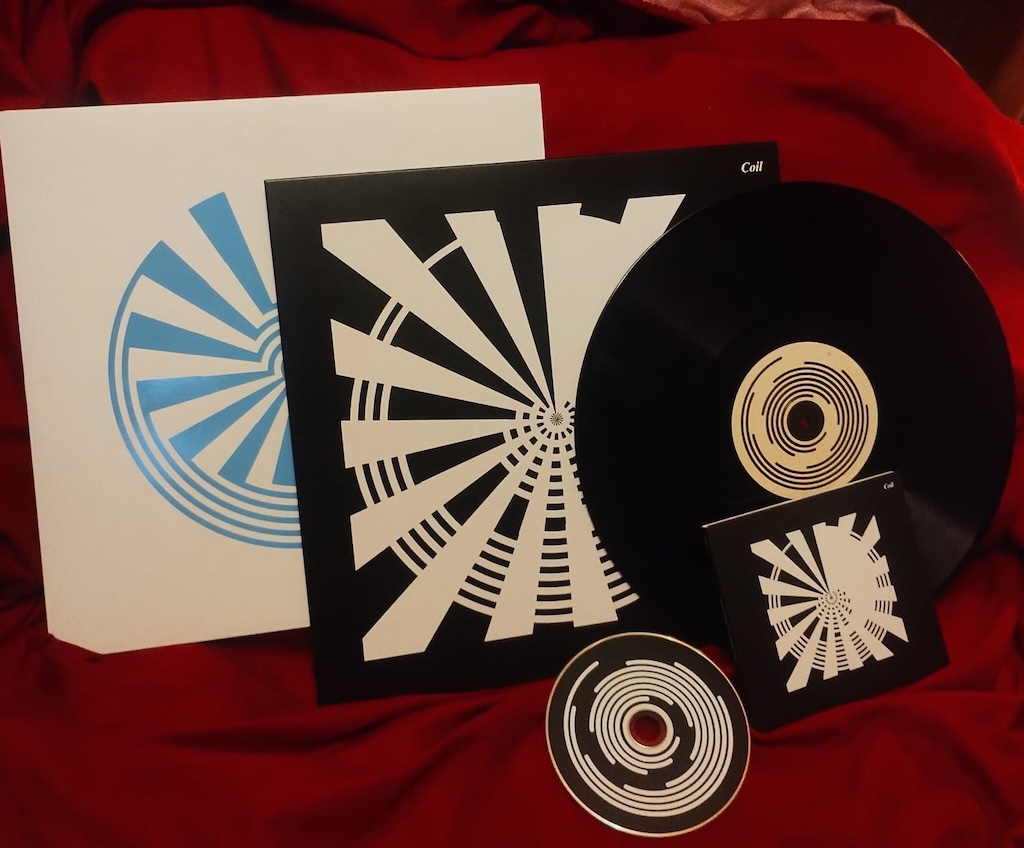
La Reina de la Biblioteca Circular
Naturaleza, entropía y ocultismo en Queens of the Circulating Library
Hace muchos años, conversando entre amigos, comprendimos que la historia de Coil representaba —en honor a su propio nombre— un ciclo, un ritual circular, un vórtice en perpetua mutación. No faltaron quienes redujeron aquella intuición a una exageración romántica: “Coil es solo música”, decían. Sin embargo, incluso desde sus primeros trabajos, existía en la obra de John Balance y Peter Christopherson algo que parecía escapar a la simple lógica de la composición sonora. Cada disco funcionaba como una puerta, una operación alquímica o una forma de trance cuidadosamente codificada.
Ese carácter espiral y ritual se manifiesta no solo en las múltiples encarnaciones estilísticas del grupo —industrial, ambient, paganismo electrónico, música ritual o folk espectral—, sino también en la estructura más íntima de su narrativa artística. Hacia el año 2000, Coil atravesaba una fase particularmente lunar: un período marcado por la introspección, el sueño, la fragilidad y la disolución de las formas. Obras como “Musick to Play in the Dark Vol. 1” y “Musick to Play in the Dark Vol. 2” parecían inaugurar una música nocturna escrita deliberadamente con K, como si la palabra “musick” remitiera no al entretenimiento sino al hermetismo cabalista, o a una ciencia oculta de resonancias invisibles. (Crowley)
Dentro de aquel ciclo crepuscular emerge “Queens of the Circulating Library”, probablemente una de las obras más extrañas y secretas del catálogo de Coil. Publicado originalmente por Eskaton en el año 2000, el álbum aparece como una anomalía incluso dentro de la propia lógica del grupo: una pieza única de cerca de cincuenta minutos, sin divisiones reales, sostenida por drones mínimos, capas espectrales y una recitación hipnótica que avanza lentamente como un encantamiento pronunciado al borde del sueño.
Más singular aún resulta el hecho de que sea una de las pocas grabaciones importantes de Coil sin la participación activa de Peter Christopherson. Sin embargo, lejos de sentirse como una ausencia, el disco parece condensar una esencia profunda de la etapa final de Coil: la música entendida como atmósfera ritual, como suspensión temporal o estado intermedio entre vigilia y visión.
La biblioteca victoriana como símbolo oculto
El título del álbum proviene de una antología literaria publicada en 1950 por F. Alan Walbank, dedicada a recopilar extractos de novelas victorianas escritas entre 1850 y 1900 por autoras populares de la época. Entre aquellas escritoras aparecen nombres como Ouida y Mary Elizabeth Braddon, figuras asociadas a la llamada literatura sensacionalista victoriana: relatos de pasiones prohibidas, secretos familiares, erotismo velado y tensiones morales que circulaban discretamente entre lectoras de clase media.
Las “circulating libraries” del siglo XIX no eran simples bibliotecas públicas. Funcionaban como sistemas alternativos de transmisión cultural donde el deseo, la imaginación y la ficción femenina escapaban parcialmente del control académico y religioso. Los libros viajaban de mano en mano como objetos contaminados por emociones, fantasías y ansiedades sociales.
No resulta extraño entonces que Coil decidiera apropiarse de aquel concepto. En sus manos, la “biblioteca circulante” deja de ser una referencia literaria y se convierte en un símbolo esotérico: un archivo espectral donde las voces del pasado continúan hablando a través de ruinas impresas, papeles húmedos y memorias fragmentadas.
El retorno del bosque
Desde los primeros minutos del álbum, la voz de Dorothy Lewis —cantante de ópera galesa y madre de Thighpaulsandra— emerge como una figura sacerdotal. No canta en un sentido convencional: proclama, invoca, recita. Su tono recuerda más a una sibila o a una médium que a una intérprete tradicional.
El texto escrito por John Balance funciona como una especie de manifiesto ecológico y metafísico al mismo tiempo. La Reina de la Biblioteca Circular exige el retorno de todo aquello que alguna vez perteneció al reino vegetal: libros, papeles, archivos, índices y monumentos impresos deben volver al bosque del que surgieron.
“There are the trees… return the books… the forest is a college, each tree a university”.
La frase posee una fuerza profundamente simbólica. El conocimiento humano aparece aquí como una prolongación temporal de la naturaleza, nunca como algo separado de ella. La biblioteca moderna —símbolo del orden racional y del progreso ilustrado— es reducida a una interrupción momentánea dentro de un ciclo mucho más antiguo.
En este sentido, “Queens of the Circulating Library” puede entenderse como un álbum sobre la entropía. No una entropía puramente destructiva, sino una reintegración de todas las formas al caos originario. El papel vuelve a la madera. El lenguaje retorna al silencio. El archivo se pudre lentamente bajo la humedad del bosque.
Kenneth Grant, el caos tifoniano y la disolución
La fascinación de John Balance por el ocultismo es bien conocida. Las influencias de Aleister Crowley y especialmente de Kenneth Grant atraviesan buena parte de la cosmovisión de Coil. Y es precisamente desde esa perspectiva donde Queens of the Circulating Library adquiere otra dimensión.
En la tradición tifoniana de Grant, el caos primordial no representa un mal moral, sino una fuerza anterior al orden humano. Lo informe, lo nocturno y lo pre-racional aparecen como potencias vivas que sobreviven debajo de la realidad cotidiana. El universo racional occidental —apolíneo, científico y lineal— sería apenas una estructura temporal sostenida sobre un abismo mucho más antiguo.
El disco parece operar exactamente desde esa lógica. No propone una destrucción violenta del conocimiento, sino su lenta absorción dentro de un orden cósmico anterior a la civilización. La Reina no castiga: reclama. El bosque no invade el mundo humano; simplemente espera el momento inevitable de su retorno.
Por eso el álbum posee una cualidad tan extrañamente pacífica. Incluso en sus momentos más inquietantes, “Queens of the Circulating Library” jamás suena agresivo. Todo ocurre como un proceso natural, casi geológico. El fin de la biblioteca humana es narrado con serenidad zen, como si se tratara de un cambio de estación.
Horror británico y memoria espectral
Coil siempre mantuvo una relación profunda con el imaginario del horror británico. El grupo entendía ese cine no como simple entretenimiento, sino como una forma de folklore moderno cargado de símbolos paganos, ruinas rurales y memorias traumáticas.
La célebre frase “It’s in the trees, it’s coming”, tomada de la película “Night of the Demon”, reaparece aquí como una advertencia ritual. Los árboles no funcionan solamente como metáfora ecológica: representan una inteligencia antigua, prehumana, que observa silenciosamente el desarrollo y la decadencia de la cultura occidental.
El bosque en Coil nunca es romántico. Se trata de un espacio ambiguo: maternal y devorador al mismo tiempo. Allí sobreviven restos del paganismo europeo, espectros rurales y fuerzas arcaicas que la modernidad jamás logró eliminar completamente.
La Reina como figura antimoderna
Algunos intérpretes han querido leer el título del álbum únicamente desde referencias a la homosexualidad o al campo asociado históricamente al término “queen”. Sin embargo, reducir la obra a ese plano resulta insuficiente.
La Reina de la Biblioteca Circular parece responder más bien a una figura arquetípica: una soberanía lunar ligada a la memoria terrestre y al conocimiento antiguo. En muchos aspectos, la visión del álbum se aproxima más al imaginario profético de William Blake que a cualquier discurso identitario contemporáneo.
Como en Blake, existe aquí una crítica radical a la racionalidad industrial y al empobrecimiento espiritual de la modernidad. El conocimiento acumulativo, archivístico y burocrático termina siendo reemplazado por una forma orgánica de sabiduría donde el bosque, los ciclos naturales y la intuición recuperan centralidad.
La Reina no gobierna sobre una nación ni sobre una biblioteca concreta. Gobierna sobre el retorno.
El último gran hechizo de Coil
Escuchar “Queens of the Circulating Library” hoy produce una sensación extraña. En plena era digital —cuando la información circula de manera infinita, desmaterializada y acelerada— el disco parece anticipar el agotamiento espiritual de la cultura archivística contemporánea.
John Balance imaginó una biblioteca devorada lentamente por la naturaleza; Thighpaulsandra la musicalizó. Dos décadas después, vivimos rodeados de archivos invisibles, memorias electrónicas y acumulaciones infinitas de información que ya casi nadie puede procesar realmente.
Tal vez por eso el álbum continúa resultando tan perturbador. Porque debajo de sus drones suaves y de su aparente inmovilidad existe una pregunta profundamente incómoda: ¿qué ocurrirá cuando toda nuestra arquitectura del conocimiento colapse bajo su propio peso?
La Reina ya conoce la respuesta.
Y continúa esperando entre los árboles.
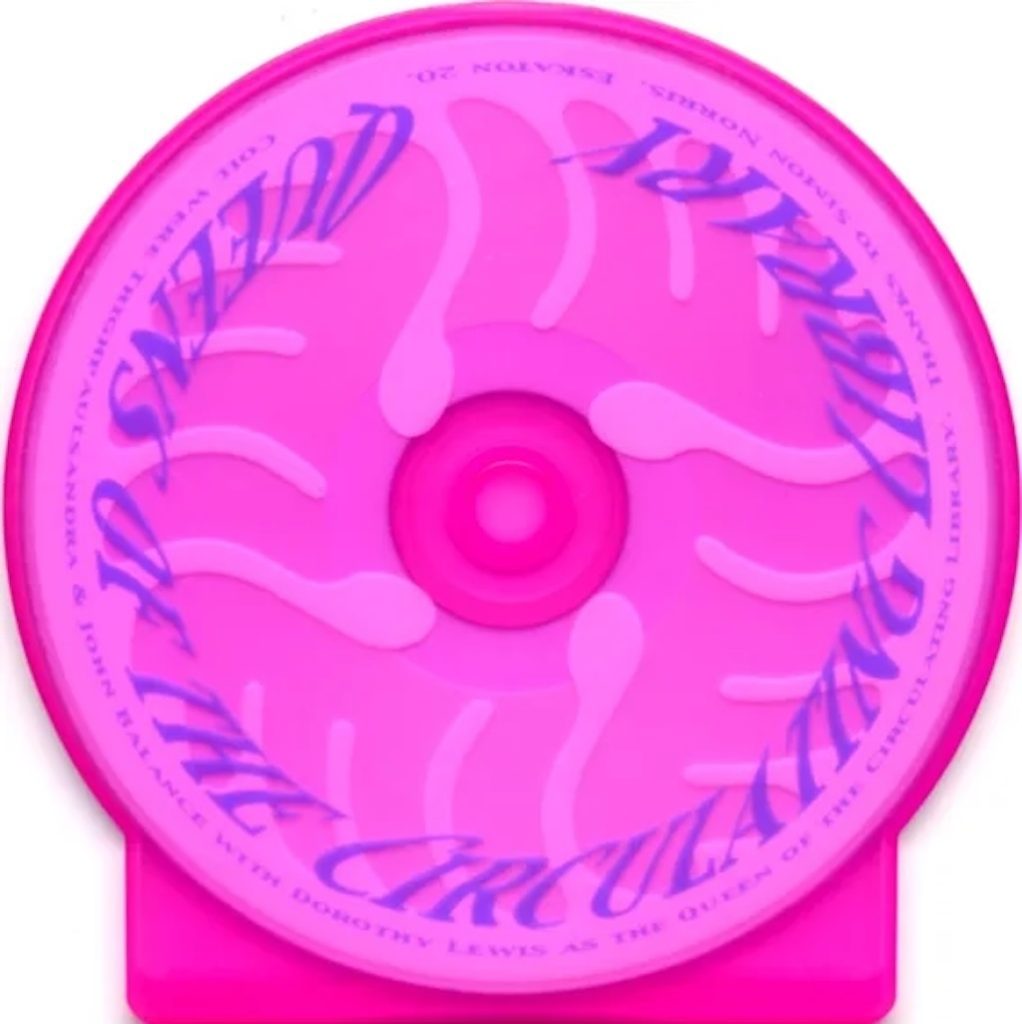
Queen Of The Circulating Library
Nature, Entropy, and Occultism in Queens of the Circulating Library
Many years ago, in conversation with friends, we realized that Coil’s story represented—true to their name—a cycle, a circular ritual, a vortex in perpetual mutation. There were those who dismissed this intuition as romantic exaggeration: «Coil is just music,» they said. However, even from their earliest work, there was something in the music of John Balance and Peter Christopherson that seemed to defy the simple logic of sound composition. Each album functioned as a doorway, an alchemical operation, or a carefully coded form of trance.
This spiral and ritualistic character manifests itself not only in the group’s multiple stylistic incarnations—industrial, ambient, electronic paganism, ritual music, or spectral folk—but also in the most intimate structure of their artistic narrative. Around the year 2000, Coil was going through a particularly lunar phase: a period marked by introspection, dreams, fragility, and the dissolution of forms. Works like ‘Musick to Play in the Dark Vol. 1’ and ‘Musick to Play in the Dark Vol. 2’ seemed to inaugurate a nocturnal music deliberately written with a K, as if the word “musick” referred not to entertainment but to Kabbalistic hermeticism, or to an occult science of invisible resonances. (Crowley)
Within that twilight cycle emerges ‘Queens of the Circulating Library,’ probably one of the strangest and most secretive works in Coil’s catalog. Originally released by Eskaton in 2000, the album appears as an anomaly even within the band’s own logic: a single piece of nearly fifty minutes, without real divisions, sustained by minimal drones, spectral layers, and a hypnotic recitation that unfolds slowly like an incantation uttered on the verge of sleep.
Even more remarkable is the fact that it’s one of the few significant Coil recordings without Peter Christopherson’s active participation. However, far from feeling like an absence, the album seems to encapsulate a profound essence of Coil’s final period: music understood as ritual atmosphere, as a temporary suspension, or an intermediate state between wakefulness and vision.
The Victorian Library as a Hidden Symbol
The album’s title comes from a literary anthology published in 1950 by F. Alan Walbank, dedicated to compiling extracts from Victorian novels written between 1850 and 1900 by popular female authors of the time. Among those writers are names like Ouida and Mary Elizabeth Braddon, figures associated with so-called Victorian sensationalist literature: tales of forbidden passions, family secrets, veiled eroticism, and moral tensions that circulated discreetly among middle-class readers.
The «circulating libraries» of the 19th century were not simply public libraries. They functioned as alternative systems of cultural transmission where desire, imagination, and female fiction partially escaped academic and religious control. Books traveled from hand to hand as objects contaminated by emotions, fantasies, and social anxieties.
It is no wonder, then, that Coil decided to appropriate this concept. In their hands, the “circulating library” ceases to be a literary reference and becomes an esoteric symbol: a spectral archive where the voices of the past continue to speak through printed ruins, damp papers, and fragmented memories.
The Return of the Forest
From the album’s opening minutes, the voice of Dorothy Lewis—Welsh opera singer and mother of Thighpaulsandra—emerges as a priestly figure. She doesn’t sing in a conventional sense: she proclaims, invokes, recites. Her tone is more reminiscent of a sibyl or a medium than a traditional performer.
The lyrics, written by John Balance, function as a kind of ecological and metaphysical manifesto simultaneously. ‘The Queen of the Circulating Library’ demands the return of everything that once belonged to the plant kingdom: books, papers, archives, indexes, and printed monuments must return to the forest from which they sprang.
“There are the trees… return the books… the forest is a college, each tree a university.”
The phrase possesses a profoundly symbolic power. Human knowledge appears here as a temporal extension of nature, never as something separate from it. The modern library—symbol of rational order and enlightened progress—is reduced to a momentary interruption within a much older cycle.
In this sense, ‘Queens of the Circulating Library’ can be understood as an album about entropy. Not a purely destructive entropy, but a reintegration of all forms into the original chaos. Paper returns to wood. Language returns to silence. The archive slowly rots under the dampness of the forest.
Kenneth Grant, Typhonian Chaos, and Dissolution
The Fascination of John Balance’s fascination with the occult is well known. The influences of Aleister Crowley and especially Kenneth Grant permeate much of Coil’s worldview. And it is precisely from this perspective that Queens of the Circulating Library acquires another dimension.
In Grant’s Typhonian tradition, primordial chaos does not represent a moral evil, but rather a force that precedes human order. The formless, the nocturnal, and the pre-rational appear as living powers that survive beneath everyday reality. The Western rational universe—Apollonian, scientific, and linear—would be merely a temporal structure sustained over a much older abyss.
The album seems to operate exactly from this logic. It does not propose a violent destruction of knowledge, but rather its slow absorption into a cosmic order that predates civilization. The Queen does not punish: she reclaims. The forest does not invade the human world; it simply awaits the inevitable moment of its return.
This is why the album possesses such a strangely peaceful quality. Even in its most unsettling moments, Queens of the Circulating Library never sounds aggressive. Everything unfolds like a natural, almost geological process. The end of the human library is narrated with Zen-like serenity, as if it were a changing of the seasons.
British Horror and Spectral Memory
Coil always maintained a deep connection with the imagery of British horror. The group understood this cinema not as mere entertainment, but as a form of modern folklore laden with pagan symbols, rural ruins, and traumatic memories.
The famous line “It’s in the trees, it’s coming,” taken from the film Night of the Demon, reappears here as a ritualistic warning. The trees function not only as an ecological metaphor: they represent an ancient, pre-human intelligence that silently observes the development and decline of Western culture.
The forest in Coil is never romantic. It is an ambiguous space: maternal and devouring at the same time. There, remnants of European paganism, rural specters, and archaic forces survive, forces that modernity never managed to completely eradicate.
The Queen as an Anti-Modern Figure
Some interpreters have tried to read the album title solely in terms of references to homosexuality or the field historically associated with the term «queen.» However, reducing the work to that level is insufficient.
The Queen of the Circulating Library seems to correspond more to an archetypal figure: a lunar sovereignty linked to earthly memory and ancient knowledge. In many ways, the album’s vision is closer to the prophetic imagery of William Blake than to any contemporary identity discourse.
As in Blake, there is a radical critique here of industrial rationality and the spiritual impoverishment of modernity. Accumulative, archival, and bureaucratic knowledge ends up being replaced by an organic form of wisdom where the forest, natural cycles, and intuition regain centrality.
The Queen does not rule over a nation or a specific library. She rules over return.
Coil’s Last Great Spell
Listening to Queens of the Circulating Library today produces a strange sensation. In the midst of the digital age—when information circulates infinitely, dematerialized, and at breakneck speed—the album seems to anticipate the spiritual exhaustion of contemporary archival culture.
John Balance imagined a library slowly devoured by nature; Thighpaulsandra set it to music. Two decades later, we live surrounded by invisible archives, electronic memories, and endless accumulations of information that almost no one can truly process anymore.
Perhaps that’s why the album continues to be so unsettling. Because beneath its gentle drones and apparent stillness lies a profoundly uncomfortable question: what will happen when our entire architecture of knowledge collapses under its own weight?
The Queen already knows the answer.
And she continues to wait among the trees.