
Einstürzende Neubauten
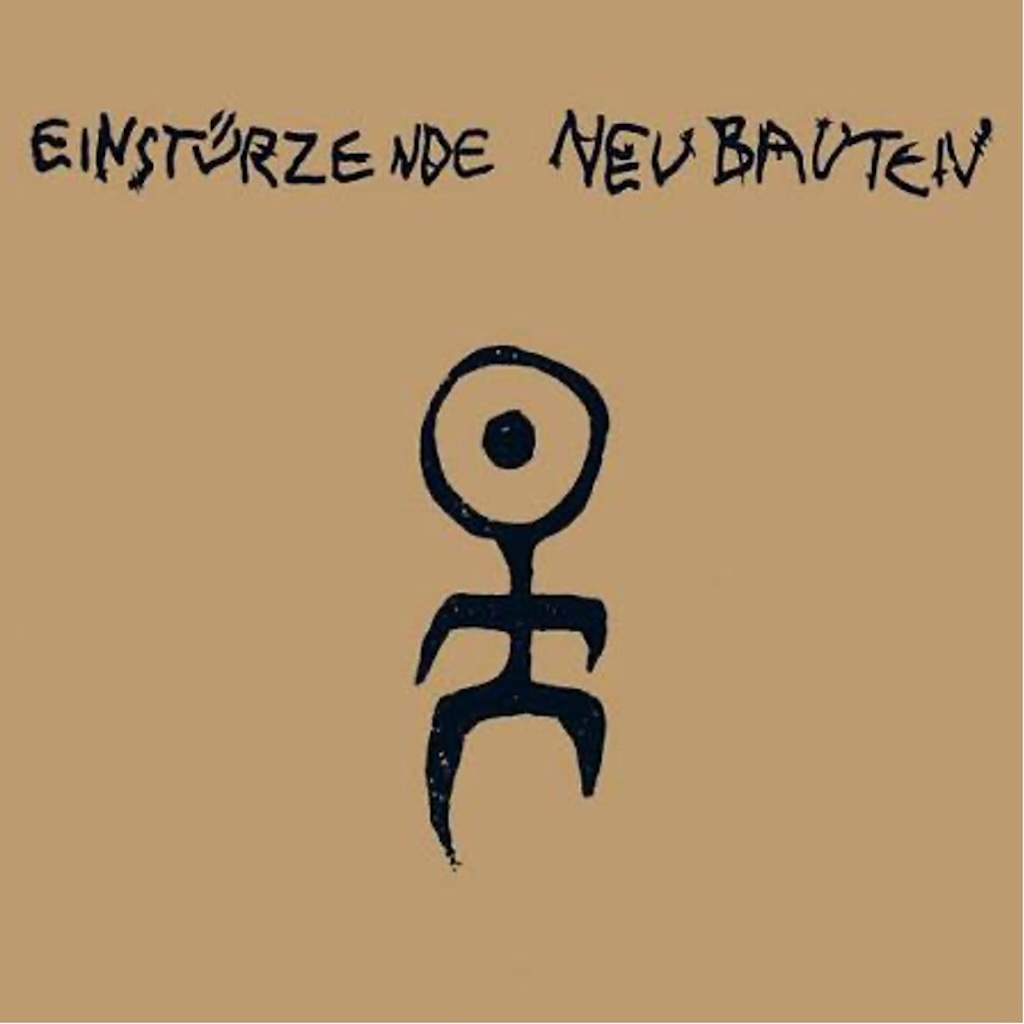
Esta icónica y legendaria banda alemana —que sigue activa— se formó en Berlín en 1980. Originalmente, formaban parte de un movimiento dadaísta llamado “Die Geniale Dilletanten” (1). Este movimiento basaba sus objetivos en el uso de instrumentos fabricados a medida —hechos predominantemente con chatarra y herramientas de construcción— y en la incorporación de ruidos, además de los instrumentos musicales convencionales; todo ello acompañado por el uso del idioma alemán tanto en las letras como en los nombres de las bandas.
Tras casi 50 años, podemos afirmar que Einstürzende Neubauten representa el verdadero espíritu industrial. De hecho, Throbbing Gristle siempre mostró un respeto genuino hacia sus homólogos alemanes, un sentimiento que era mutuo, ya que Genesis P.Orridge colaboró con Einstürzende Neubauten en 1983.
Desde una perspectiva cultural, Neubauten encarnó la nueva actitud de la juventud alemana frente a la Guerra Fría y la excesiva influencia estadounidense en su cultura. Por ello, finales de la década de 1970 en Alemania supuso un auténtico estallido cultural local —tanto visual como musical—, especialmente con la reinterpretación del sonido “krautrock”, ejemplificada por grupos como DAF y Liaisons Dangereuses (Amorosi, 2007).
Neubauten estaba compuesto originalmente por Beate Bartel, Gudrun Gut, Blixa Bargeld y N.U. Unruh. De inmediato crearon un sello distintivo propio que suscitaba tanto admiración instantánea como rechazo absoluto. Sin duda, Neubauten ha influido en toda una generación y en importantes bandas de música industrial —desde Test Dept hasta NIN e incluso Depeche Mode (¿quién no recuerda el “sample” de “People Are People”?)—.
No obstante, el sonido de Neubauten surgió de circunstancias diversas. El sitio web oficial de la banda mencionaba la falta de dinero (Neubauten, 2023), pero en realidad se trató de una cuestión cultural de fondo.
Alemania aún intentaba vencer a los fantasmas del pasado y el infame Muro de Berlín seguía siendo una herida abierta permanente, por lo que resultaba necesaria una identidad cultural sólida. Alemania ya contaba con marcas emblemáticas, desde los mejores automóviles del mundo hasta los ritmos tecnológicos y fríos de Kraftwerk. La respuesta no provino del punk británico —grosero y sórdido— ni de los Ramones estadounidenses; surgió de la esencia misma de la reconstrucción alemana: el metal y las herramientas.
La experimentación industrial no era una prioridad al otro lado del Atlántico; Estados Unidos era una mezcla de estilos, y la incipiente New Wave se asociaba a círculos intelectuales, como el de los Talking Heads en Nueva York. En la costa del Pacífico, The Residents seguían trabajando con sonidos electrónicos primitivos y minimalistas. En Sudamérica, debido a la falta de interés y a la desconexión total de aquella época, el sonido de Neubauten solo fue conocido por un círculo muy reducido gracias a algunos proyectos culturales impulsados por el Instituto Goethe a finales de los años ’80 —casi una década más tarde—; resultó impactante saber que, en 1980, nos sentíamos unos bichos raros por escuchar a Yes o a Pink Floyd.
No me malinterpreten, pero pasamos diez años totalmente fuera del radar; hubo un vacío enorme. Finalmente nos reconciliamos durante los años 90 y tras algunos viajes al extranjero, comprendimos parte del proceso y, personalmente, descubrí la verdadera importancia del álbum «Kollaps» de Neubauten.
El álbum comienza con una auténtica fiesta de música metal. “Tanz Debil” es casi una declaración de principios de “codicia” por todo. El tema se basa en una percusión metálica constante, cruda y contundente a la vez. El bajo también se aleja del esquema típico del rock o el pop mediante el uso de la técnica del slap. Sin duda, Blixa marcó un nuevo estándar vocal —sin recurrir al inglés— y su voz allanó el camino para el estilo característico de los vocalistas de metal industrial. Este tema abre las puertas a un nuevo concepto industrial en el que, a mi juicio, la estructura se fusiona con la electrónica, dando lugar a estilos como el de Ministry de los ‘80.
“Steh Auf Berlin” refuerza nuestra afirmación anterior sobre las heridas abiertas en la Alemania de finales de los años setenta. “I’m into decay” evoca una imagen que no pudo borrarse hasta diez años más tarde- La Reunificación-; en este tema, los sonidos de taladros parecen evocar el Muro de Berlín. Así, la percusión y la voz de Blixa desafían y, a la vez, adornan un paisaje frío y oxidado.
El agua representa claramente el hecho de sentirse ahogado en una situación espantosa. “Negative Nein” podría interpretarse —de manera fácil y algo ingenua— como una alusión a la opresión, la Guerra Fría y todo eso (Scaruffi, 2024); sin embargo, la obra trasciende esa lectura: hoy resulta evidente que Blixa buscaba retratar un hastío cultural más que cuestiones de política internacional.
“Draussen ist Feindlich” es una pieza breve y sombría, cargada de temor y pesar —“te quiero” / “olvídalo”—, al estilo del teatro kabuki; ¡una obra extraordinaria!
Con el estricto ritmo de marcha alemán, “Schmerzen Hören» es un tema que clama por ayuda: «Escucha mis heridas». Es una pieza totalmente minimalista, con percusión metálica y una única guitarra distorsionada. Blixa invita al oyente a padecer su mismo dolor. El final de la canción resulta algo peculiar, ya que Neubauten deconstruye al estilo industrial “Je t’aime… moi non plus”, el éxito de 1969 de Serge Gainsbourg y Jane Birkin.
“Kollaps” es el manifiesto de Neubauten. Las letras son claras y contundentes; refuerzan la idea de que Neubauten no arremete contra la Guerra Fría ni la bomba atómica, ni tampoco contra Reagan o Gorbachov; solo Thatcher ocupaba algunos titulares en aquella época. Neubauten reivindicaban una suerte de cambio social acompañado de una performance dadaísta con máquinas, fragmentos de hierro, hojalata y chatarra metálica. “La gente no se da cuenta de que hay mucho humor en lo que hacemos. Siempre hemos tenido ese espíritu travieso y curioso”. Alexander Hacke (guitarrista).
Einstürzende Neubauten sigue siendo una banda inexplorada, con cientos de definiciones y conexiones. Fue una agrupación que “observaba cómo la música industrial expresaba ideas de rebelión más allá de las del rock” (Ryszka, 2012); una banda que surgió a contracorriente tanto de la vanguardia como de la escena comercial.
El Berlín Occidental de finales de los años setenta se consideraba un entorno “singular”; por tanto, Neubauten fue un producto singular de aquella agitación política y cultural. Sin embargo, lejos de ser una banda más de punk o de rock tradicional de Berlín Occidental, dieron el puntapié inicial de salida a una revolución real e imparable de bandas industriales.
1 «Geniale Dilletanten» [Genial Dilletantes], El título —escrito deliberadamente con faltas de ortografía— del concierto celebrado en el Tempodrom de Berlín en 1981 se ha convertido en sinónimo de una breve etapa de efervescencia artística en Alemania. La intensa actividad cultural de este periodo se desarrolló principalmente en las escuelas de arte y su entorno, caracterizándose por la experimentación entre géneros y el uso de nuevos equipos electrónicos; a menudo se desdeñaba la destreza técnica musical.
This iconic and legendary German band – still active- was formed in Berlin in 1980. Originally, they were part of a Dadaist movement called ‘Die Geniale Dilletanten’ (1) This movement based its goals on the use of custom-built instruments, predominantly made out of scrap metal and building tools, and noises, in addition to standard musical instruments. Besides the use of German language in both lyrics and band names.
After almost 50 years have passed and we can say Einsturzende Neubauten embraced the real Industrial spirit. In fact, Throbbing Gristle always showed a real respect for their German counterparts and it was mutual as Genesis collaborated with Einsturzende Neubauten in 1983.
Culturally, Neubauten incarnated a German’s young people new attitude towards the Cold World and the excessive American influence in their culture. Therefore, the late 70’s in Germany became a real local cultural outburst, visual and musical, especially with the Krautrock sound revisited, i.e. DAF and Liaisons Dangereuses (Amorosi, 2007)
Neubauten was originally composed by Beate Bartel and Gudrun Gut, Blixa Bargeld, and N.U. Unruh. They immediately created a proper hallmark which created both an instant admiration or completely rejection. Neubauten has doubtlessly influenced an entire generation and some important Industrial bands, such as Test Dept until NIN, even Depeche Mode -who doesn’t remember ‘People are people’s sample’?
However, Neubauten’s sound emerged from different circumstances. The official band’s website mentioned their lack of money (Neubauten, 2023), but it really involves a true cultural issue.
Germany was still trying to defeat ghosts, and the infamous Berlin Wall provided a permanent open wound, so a strict cultural identity was necessary. Germany needed iconic brands, from the best world cars to the coldest technological Kraftwerk beats. The answer was not the rude and filthy British punk or the American Ramones; it was an answer from the core of the German reconstruction, i.e., metals and tools.
Industrial experimentation was not a priority on the other side of the Atlantic; America was a mixture of styles, and the incipient New Wave was something associated with intellectual people, such as Talking Heads in New York. On the Pacific coast, The Residents still worked with primitive and minimalist electronic sounds. In South America, due to the lack of interest and the total disconnection in those years, the Neubauten’s sound was known by an exclusive reduced circle in these latitudes thanks to some cultural projects launched by the Goethe Institute in the late 80s—almost a decade later, and it was shocking to know that during 1980 we felt oddballs listening to Yes or Pink Floyd.
Don’t get me wrong, but we spent 10 years completely off the radar—there was a huge gap. We finally reconciled during the 90s and some trips abroad. We understood part of the process, and I personally figured out the real importance of Neubauten’s album ‘Kollaps.’
The album opens with a real metal party. ‘Tanz Debil’ is almost a principles declaration of «greed» for everything. The track is based on constant metal percussion, raw and tough at the same time. The bass also gets away from the typical rock/pop scheme as it is slapped. Blixa definitely set a new vocal standard, with no English, and his voice smoothed the path to the industrial metal singer’s style. This track opens the gates to a new industrial concept, which, in my opinion, this structure is merged with electronics, making up styles such as 1980s Ministry.
‘Steh Auf Berlin,’ reinforces our previous statement about the open wounds in Germany in the late 1970s. ‘I’m into decay’ pictures the image which it couldn’t be erased until 10 years later- Reunification; drillers in this track probably dream up the Berlin’s wall. Hence, the percussion and Blixa’s speech once provoke and decorate a cold and rusty landscape.
The water clearly represents being drown in a horrible situation. ‘Negative Nein’ could be easily and naively read as oppression, cold war and blah, blah. (Scaruffi, 2024) However, it goes beyond and today looks clear that Blixa wanted to draw a cultural boredom more than international political issues.
‘Draussen is Feindlich,’ is a dark short flash, full of scare and regret: I love you –forget it, in a Kabuki’s style; amazing piece!
In the strict German march tempo, ‘Schmerzen Hören’ is a cry for help track: ‘Listen to My Wounds.’ It’s a completely minimalist piece with metallic percussion and a single distorted guitar. Blixa invites you to suffer his same pain. The end of the track is a little bit weird as Neubauten deconstructed the song ‘Je t’aime… moi non plus,’ a 1969 hit by Serge Gainsbourg and Jane Birkin, in an industrial mode.
‘Kollaps’ is Neubauten’s manifesto. The lyrics are clear and strong; they reinforce the idea that Neubauten is not railing against the Cold War or the atomic bomb, nor Reagan or Gorbachev. It was only Thatcher who was in the news in those years. Neubauten claimed a sort of social change accompanied by a Dadaist performance with machines, pieces of iron, tin, and metal wreckage. “People don’t realize that there is a lot of humor in what we do. We’ve always had this sense of mischief and curiosity.» Alexander Hacke (Guitarist)
Einstruzende Neubauten is still an unexplored band, with hundreds of definitions and connections. Neubaten was a band that looks at how industrial music expressed ideas of rebellion beyond that in rock music” (Ryszka, 2012). It was a band that emerged against the avant-garde and commercial stream. West Berlin was called a «rare» environment in the late 1970s; therefore, Neubaten was a rare product of this political and cultural turmoil. But, instead of being another West Berlin punk band or a traditional rock band, they kicked the ball for a real, unstoppable sequence of industrial bands’ revolution.
1 «Geniale Dilletanten» [Genial Dilletantes], the deliberately misspelled title of the concert held in Berlin’s Tempodrom in 1981, has become a synonym for a brief era of artistic upheaval in Germany. The intense cultural activity of this period developed particularly in and around art schools and was marked by cross-genre experimentation and the use of new electronic equipment; musical craftsmanship was frequently spurned.
Bibliography
Amorosi, A. (2007, 10 13). Einstürzende Neubauten: Stories From The Industrial Revolution. Retrieved from Magnet: https://magnetmagazine.com/2007/10/13/einsturzende-neubauten-stories-from-the-industrial-revolution/
Javier, F. (2008, July). History of Avant-Garde Metal. Retrieved from Scribd: https://es.scribd.com/document/207202826/Avantgarde-Classics-1987-200-2008
Neubauten, E. (2023). Einsturzende Neubauten . Retrieved from Einsturzende Neubauten : https://neubauten.org/en/biography/
Ryszka, M. A. (2012). SUBMITTED TO THE FACULTY OF GRADUATE STUDIES IN PARTIAL FULFILMENT OF THE REQUIREMENTS FOR THE DEGREE OF MASTER OF ARTS. UNIVERSITY OF CALGARY.
Scaruffi, P. (2024). Einsturzende Neubauten. Retrieved from scaruffi.com: https://www.scaruffi.com/music.html
