Las 3 Marías

El folk del infierno como búsqueda, rito y regreso
Me acerco a Inherente desde una posición que siempre he preferido reconocer antes que ocultar: la del curador diletante, la del escuchador de música. Después de décadas oyendo discos, recorriendo tiendas, conociendo músicos, viajando y encontrándome con proyectos provenientes de lugares y épocas muy distintas, inevitablemente escucho una obra nueva acompañado por todos esos fantasmas. Las comparaciones, por lo mismo, nunca deben entenderse aquí como genealogías estrictas ni como afirmaciones acerca de las influencias conscientes de Las 3 Marias. Son, más bien, asociaciones del oído: aquello que una música hace reaparecer dentro de quien escucha.
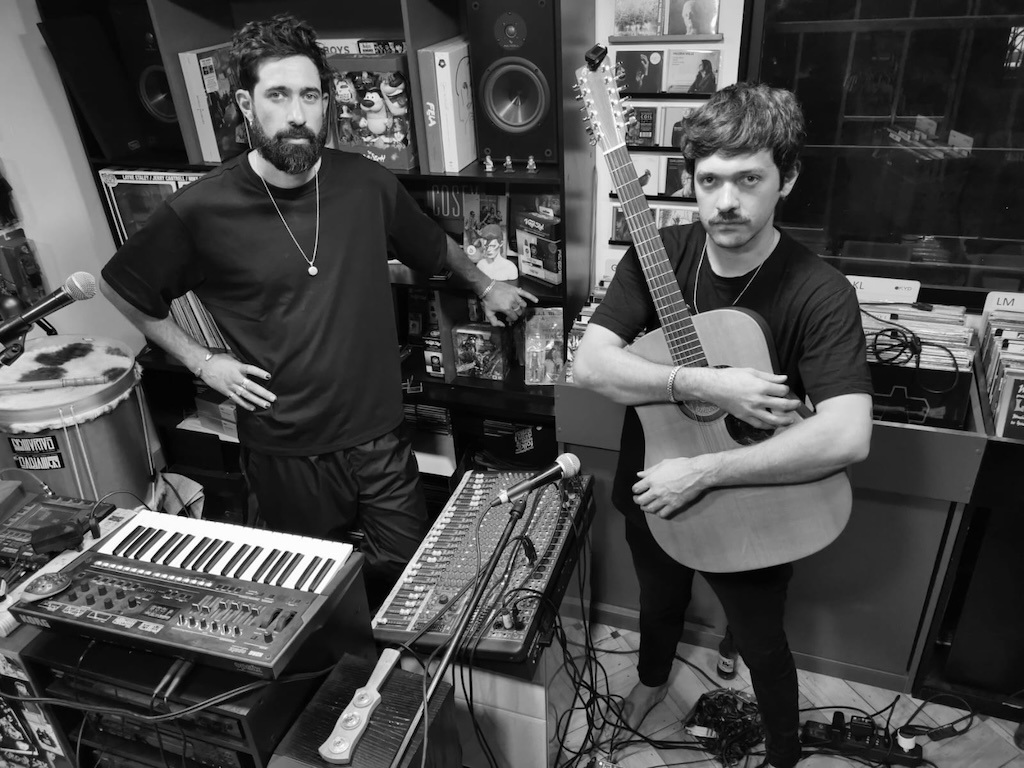
Las 3 Marías, proyecto de los hermanos Diego y Esteban Cabezas, pertenece a una familia y a un territorio musical donde los antecedentes importan. Está la sombra —o mejor dicho, la memoria— de Carlos Cabezas y Electrodomésticos; aparece también, según información que me llega desde personas cercanas al proyecto, el nombre de Cristián Heyne y su universo Shogún. Es una genealogía chilena que no debe ignorarse. Sin embargo, mi escucha da inevitablemente otros giros y cruza el océano. Por momentos pienso en Leonard Cohen; en otros, en el Nick Cave temprano y The Bad Seeds; en Swans entre los años ochenta y noventa; en Current 93, Rome, Of the Wand & the Moon, Death in June, Andrew Liles y aquella desaparecida constelación que alguna vez se reunió alrededor de World Serpent.
Nada de ello significa que Las 3 Marías “suenen como” esas bandas. La comparación habla tanto de la música como del oído de quien la recibe.
Ellos mismos han utilizado una expresión magnífica para definir su propuesta: “el folk del infierno”. Sin embargo, al escuchar “Inherente” con atención, ese infierno no me parece simplemente profano. Hay oscuridad, sin duda, pero no oscuridad por la oscuridad. Encuentro algo religioso en el mejor sentido de la palabra: una búsqueda de redención, una cierta vocación barroca, un deseo de restituir algo que ha sido fragmentado. Hay una búsqueda de unidad. Incluso en sus momentos más sombríos permanece una especie de disciplina espiritual, una obstinación por encontrar belleza dentro de aquello que amenaza con desintegrarse.
El disco comienza con “Viento Bajo”, y digo “comienza” con cierta cautela porque perfectamente podría tratarse también de su epílogo. Es una pieza breve que se encuentra entre lo pastoral y lo postmoderno, o quizás lo postapocalíptico. Las texturas y las armonías parecen estar allí antes de aparecer completamente, como si todavía no se decidieran a manifestarse. Emergen apenas, al filo del metal. Es música que podría pertenecer tanto al nacimiento de un paisaje como a sus últimos restos.
Siempre me han fascinado los discos circulares, aquellos en los que el primer tema y el último podrían intercambiar posiciones. Como en el tarot, donde comienzo y final pueden terminar reflejándose hasta confundirse, aquí tampoco sabemos del todo cuándo comienza ni cuándo termina la experiencia. “Viento Bajo” introduce el disco, pero también contiene ya la posibilidad de su desaparición.
En esta introducción percibo algo de la melancolía de Swans y también de aquella obsesión por la perfección técnica que ciertas músicas consiguen convertir casi en disciplina espiritual. Hay en ello algo severo, algo devocional. Incluso me hace pensar, de manera enteramente subjetiva, en una clase de perfección anglicana o protestante: austera, obstinada, obsesiva, distinta de la exuberancia católica y también de la indiferencia secular. Las 3 Marias consiguen reflejar esa cualidad de manera sorprendente.
El segundo tema, “Te Acuerdas”, abandona aquella suspensión inicial y comienza a insistir. “Te acuerdas”, repite la voz, una y otra vez. La frase se convierte en mantra. Hay algo medieval y algo renacentista en esa repetición, una cualidad ceremonial que convive con una enorme potencia. Es un tema insistente, cargante incluso, pero cargante de una manera productiva: uno termina rindiéndose a él de una u otra forma. Pese a la densidad de la propuesta, resulta extraordinariamente agradable al oído. Esa será una de las constantes del álbum: su capacidad para ser complejo sin renunciar a la belleza.
“Mi Reina”, la tercera pista, modifica nuevamente la temperatura. Es un tema sabroso, lujurioso, que me recuerda al Leonard Cohen de sus baladas más juguetonas, aunque nunca completamente libre de oscuridad. Aquí destaca especialmente Esteban Cabezas. Su timbre puede recordar a Cohen, pero lo importante es la manera en que alcanza los tonos sin forzar. Parece hacerlo con una facilidad desconcertante, como si cantar así fuera lo más natural del mundo. Y, sin embargo, precisamente esa naturalidad revela oficio. Se siente que cree en aquello que está cantando. La pieza va creciendo, entra lentamente en crescendo y termina por imponerse.
Llegamos después a “Miedo (Mi Niña 04)”, uno de los momentos más bellos del disco. Su introducción me parece exquisita, de una belleza que rara vez he escuchado por estas latitudes. La vocalización avanza como un oleaje de baja intensidad: serena, contenida, anunciando una tormenta que nunca termina de llegar. Y precisamente porque esa tormenta no llega, la tensión aumenta.
Hay algo melancólico y épico en esta canción. La imagino llena de rosas y claveles, pero también de espadas. Belleza y peligro ocupan el mismo espacio. La ternura nunca está completamente separada de la amenaza. No necesita producirse una explosión para que sintamos que algo puede ocurrir. Todo permanece suspendido.
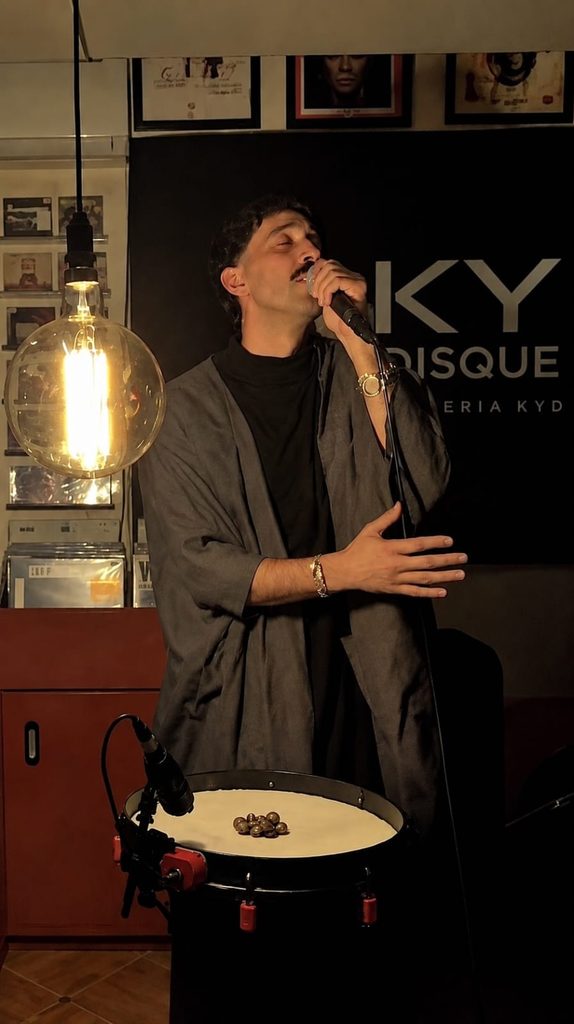
Con “Y me doy cuenta” entramos en una zona distinta. Parece al comienzo un cuento o un relato semiinfantil, pero progresivamente se transforma en una verdadera pesadilla neofolk, digna de ciertos Current 93 o del ambient torcido de Andrew Liles. El relato permanece curiosamente parejo, casi inexpresivo, y justamente esa neutralidad vuelve todo más inquietante. Al fondo, un grito desgarra la superficie.
Entonces aparece una frase fundamental: “no quiero desligarme de mi ser… y lo hago”.
Ahí la canción revela otra profundidad. Ya no se trata únicamente de una historia extraña. Hay una conciencia que intenta permanecer unida a sí misma mientras simultáneamente reconoce su propia disolución. El yo todavía habla, pero comienza a deshacerse mientras habla.
El paisaje sonoro que lo sostiene es radioactivo, escatológico, apocalíptico. Parece existir después de una catástrofe que nunca se nos explica. La voz conserva su relativa serenidad mientras, detrás de ella, todo se encuentra contaminado. El apocalipsis deja entonces de ser exterior: también está sucediendo dentro del sujeto.
“Nueva Vida” (cover Peso Pluma) -una versión libre de 2023 de la canción del cantante mejicano del mismo nombre- conduce el disco hacia un territorio más directamente neofolk. Aquí pienso menos en Cohen y más en Rome que en una serenata. El ritmo tiene esa cualidad ceremonial, austera y caminante. Cierro los ojos y suspiro. Esa reacción física me parece más exacta que cualquier categoría estilística. La canción envuelve. No necesita imponerse: avanza como una marcha íntima, una música que parece caminar al mismo tiempo hacia afuera y hacia adentro.

“Tiempo Suficiente” nos devuelve luego a una sensación más claustrofóbica. Hay allí algo parecido a una historia mal contada: recuerdos incompletos, frases que quizás no fueron dichas correctamente, acontecimientos que permanecen mal acomodados dentro de la memoria. El ritmo posee algo reivindicatorio, como si estuviera reclamando una deuda antigua.
Pero aquello que vuelve del pasado no aparece como nostalgia. El pasado se presenta como presencia. Sigue allí. Ocupa espacio. Persiste. Esa es quizás la clave de la canción: algo que debería haber terminado continúa respirando en el presente.
En “Mi Padre”, versión de la legendaria banda underground chilena SuperSordo, el disco establece abiertamente una relación con la memoria subterránea de nuestra propia música. No se trata de una pieza de museo ni de nostalgia retro. La versión avanza en ascenso, en crescendo, y en la vocalización aparecen para mi oído resonancias de ciertas raíces ochenteras chilenas: Titín Moraga, Carlos Cabezas, timbres y gestos que parecen provenir de un territorio común.
Sin embargo, el resultado posee una frescura catártica. Ahí está lo notable. El peso de la historia no aplasta la canción. El coro, llevado hacia un registro bajo, le entrega una mezcla particular de elegancia y arrogancia. Pero se trata de una arrogancia de factura sincera: no hay pose. Hay seguridad, presencia, una forma contenida de imponerse sin necesidad de levantar la voz.
Luego aparece “Roman Santino”, y aquí el disco nos entregó una de sus mayores sorpresas.
En una primera escucha, aquella voz aguda y casi femenina que aparece en la canción puede hacernos pensar en alguna presencia proveniente de la vieja cofradía de World Serpent. Por momentos, mi imaginación llegó incluso hasta nuestra querida Rose McDowall. Parecía haber una mujer al fondo contando un cuento, con una voz preciosa, emocionante, casi espectral. El ritmo y el relato funcionaban como encantamiento.
Pero la investigación posterior hizo la canción todavía más extraordinaria: aquella presencia vocal procede de Esteban Cabezas, cuya propia voz es procesada y llevada hacia un registro que el oído percibe como femenino. Y “Roman Santino” es, además, el nombre de su hijo.
El dato técnico podría quedar reducido a la anécdota: un efecto vocal, una decisión de producción, un vocoder. Pero sería insuficiente quedarse ahí. En una época en que se discute constantemente sobre Auto-Tune, inteligencia artificial y tecnologías capaces de modificar la voz humana, aquí ocurre algo mucho más interesante: es la propia voz de Esteban Cabezas —el padre de Román Santino— la que se transforma hasta hacer surgir dentro de sí otra voz, percibida como femenina.
Desde una lectura simbólica y esotérica —y debe entenderse precisamente como eso, como lectura y no como afirmación científica— resulta difícil no pensar en las antiguas concepciones acerca de la complementariedad de principios masculinos y femeninos dentro de la psique. Mucho antes de Freud, distintas tradiciones filosóficas, religiosas y esotéricas pensaron al ser humano como una totalidad atravesada por polaridades complementarias.
Desde esa perspectiva, Esteban no estaría simplemente “imitando” una voz femenina. Podemos imaginar que está abriendo vocalmente una alteridad contenida dentro de sí. El padre canta al hijo y, para hacerlo, desdobla su propia identidad tímbrica. Hace emerger otra presencia de su propia garganta.
Eso vuelve “Roman Santino” profundamente conmovedora. La tecnología deja de funcionar como ornamento o como sustituto de algo que faltaba y se transforma en herramienta expresiva. Aquella mujer que parecía contar un cuento estaba, de alguna forma, escondida dentro de la voz de Esteban.
“Roman Santino” es, sin duda, uno de los grandes temas del disco.
Finalmente llegamos a “Inherente”, la pieza que entrega su nombre al álbum. Apenas supera el minuto y funciona como epílogo. Después de todo lo recorrido, regresa la serenidad.
Y entonces comprendemos mejor “Viento Bajo”.
Como en un buen ritual, la calma puede encontrarse antes de entrar y después de salir. Introducción y epílogo terminan reflejándose. El disco vuelve a su punto inicial y la estructura se cierra sin clausurarse. El principio y el final son lo mismo.
“Inherente” dura muy poco y nos deja deseando más. Abre una puerta a otra posible entrega, aunque quizá esa entrega nunca llegue. Hoy no lo sabemos. Y posiblemente no importe. La puerta ha quedado abierta.
Debo decir que “Inherente” me sorprendió profundamente.
Llegué al disco desde mis inevitables prejuicios de escuchador formado en los años ochenta y noventa, después de una vida atravesada por músicas que conocí gracias a viajes, amistades, tiendas, conciertos, músicos y accidentes. He tenido la fortuna de escuchar proyectos extraordinarios provenientes de muchos lugares. Por eso mismo me resulta especialmente satisfactorio encontrar, tan cerca, una obra de tan buena factura.
Las 3 Marías consiguen mirar hacia muchos lugares sin perder la relación con su propia tierra. A ratos aparecen ecos del folk chileno y entonces la música me devuelve también a mi tierra, que es la tierra de estos muchachos. Esa dimensión territorial impide que sus referencias se conviertan en simple imitación de tradiciones europeas o anglosajonas. Cohen, Cave, Swans, Current 93, Rome o World Serpent pueden aparecer en mi escucha, pero hay debajo de todo ello una raíz que permanece aquí.
Incluso el nombre Las 3 Marías me conduce inevitablemente hacia las estrellas del cinturón de Orión: tres luces que desde nuestra perspectiva parecen encontrarse próximas, aunque en realidad estén separadas por enormes distancias. Quizás la música funcione de una manera semejante. Elementos provenientes de épocas, lugares y sensibilidades muy distantes pueden alinearse por unos minutos y formar ante nuestros ojos —o ante nuestros oídos— una constelación.
Por eso recomiendo “Inherente” y recomiendo seguir proyectos como Las 3 Marias. Comprar sus discos, descargar legítimamente su música, asistir a sus presentaciones, sostener estos espacios.
No quiero utilizar la palabra “resistencia”; me parece demasiado siútica para lo que intento decir. Prefiero otra imagen: son bastiones que todavía permanecen firmes.
Desde esos bastiones podemos continuar buscando algo que nunca conseguimos capturar completamente. Algo profundamente humano que se escapa de las categorías, de las genealogías y hasta de las palabras con las que intentamos describir una obra.
Porque hay músicas que pueden analizarse.
Hay músicas que pueden explicarse.
Y hay otras que, llegado cierto punto, solamente pueden experimentarse mediante una intuición más profunda.
Desde el alma.
“Inherente”, por momentos, llega precisamente hasta ahí.
«Folk from Hell» as Quest, Ritual, and Return
I approach ‘Inherente’ from a stance I have always preferred to acknowledge rather than conceal: that of the dilettante curator, the music listener. After decades of listening to records, browsing shops, meeting musicians, traveling, and encountering projects from vastly different places and eras, I inevitably listen to a new work accompanied by all those ghosts. Consequently, comparisons here should never be understood as strict genealogies or assertions regarding Las 3 Marías’ conscious influences. Rather, they are auditory associations—things that the music summons back within the listener.
Las 3 Marías—a project by brothers Diego and Esteban Cabezas—belongs to a musical lineage and territory where antecedents matter. There is the shadow—or rather, the memory—of Carlos Cabezas and Electrodomésticos; the name of Cristián Heyne and his «Shogún» universe also appears, according to information from those close to the project. It is a Chilean genealogy that cannot be ignored. Yet, my listening experience inevitably takes other turns and crosses the ocean. At times, I think of Leonard Cohen; at others, of early Nick Cave and The Bad Seeds; of Swans during the eighties and nineties; of Current 93, Rome, Of the Wand & the Moon, Death in June, Andrew Liles, and that vanished constellation that once gathered around World Serpent.
None of this implies that Las 3 Marias «sound like» those bands. The comparison speaks as much to the music as it does to the ear of the listener.
They themselves have used a magnificent phrase to define their work: «folk from hell.» Yet, upon listening closely to Inherente, that hell does not strike me as merely profane. There is darkness, certainly, but not darkness for darkness’s sake. I find something religious in the best sense of the word: a quest for redemption, a certain Baroque sensibility, a desire to restore something that has been fragmented. There is a search for unity. Even in its darkest moments, a kind of spiritual discipline remains—a stubborn insistence on finding beauty within that which threatens to disintegrate.
The album opens with ‘Viento Bajo’ —and I use the word “opens” with some caution, as it could just as easily serve as the epilogue. It is a brief piece hovering somewhere between the pastoral and the postmodern, or perhaps the post-apocalyptic. The textures and harmonies seem to exist before fully appearing, as if undecided about whether to manifest themselves. They barely emerge, hovering on the edge of metallic resonance. It is music that could belong as much to the birth of a landscape as to its final remnants.
I have always been fascinated by circular albums—those where the first and last tracks could swap places. Much like in the tarot, where the beginning and end can reflect one another until they blur together, here we never quite know when the experience begins or ends. ‘Viento Bajo’ introduces the album, yet it already holds within it the possibility of its own disappearance.
In this introduction, I sense something of the melancholy found in Swans, as well as that obsession with technical perfection that certain forms of music transform into something akin to a spiritual discipline. There is something stern, something devotional about it. It even brings to mind—in a purely subjective sense—a kind of Anglican or Protestant perfection: austere, stubborn, obsessive, distinct from Catholic exuberance and secular indifference alike. Las 3 Marías manage to reflect this quality in a striking way.
The second track, ‘Te Acuerdas,’ abandons that initial state of suspension and begins to insist. ‘Te acuerdas’ [Do you remember], the voice repeats, over and over. The phrase becomes a mantra. There is something medieval and something Renaissance-like in that repetition—a ceremonial quality that coexists with immense power. It is an insistent track, even an overwhelming one, yet it is overwhelming in a productive sense: one eventually surrenders to it, one way or another. Despite the density of the sound, it is extraordinarily pleasing to the ear. That will be one of the album’s hallmarks: its ability to be complex without sacrificing beauty.
‘Mi Reina,’ the third track, shifts the mood once again. It is a rich, sensuous song that reminds me of Leonard Cohen in his more playful ballads—though never entirely devoid of darkness. Esteban Cabezas particularly shines here. His vocal timbre may recall Cohen’s, but what matters is the way he hits the notes without strain. He seems to do so with disarming ease, as if singing this way were the most natural thing in the world. And yet, that very naturalness reveals true craftsmanship. You can feel that he believes in what he is singing. The piece builds gradually, slowly rising to a crescendo before asserting its full power.
Next comes ‘Miedo (Mi Niña 04),’ one of the album’s most beautiful moments. I find its introduction exquisite—possessing a beauty rarely heard in these parts. The vocals unfold like a gentle swell: serene and restrained, heralding a storm that never quite arrives. And precisely because that storm never breaks, the tension mounts.
There is something both melancholic and epic about this song. I picture it filled with roses and carnations, yet also with swords. Beauty and danger share the same space; tenderness is never entirely divorced from menace. No explosion is required for us to sense that something might happen. Everything remains suspended.
With ‘Y me doy cuenta,’ we enter a different realm. At first, it resembles a story or a tale for children, but it gradually morphs into a true neofolk nightmare—worthy of Current 93 or the twisted ambient soundscapes of Andrew Liles. The narration remains curiously steady, almost deadpan, and it is precisely that neutrality that makes everything more unsettling. In the background, a scream tears through the surface.
Then, a pivotal phrase emerges: “I don’t want to sever ties with my self… yet I do.”
At that moment, the song reveals a new depth. It is no longer merely a strange tale. There is a consciousness striving to remain whole while simultaneously acknowledging its own dissolution. The “I” still speaks, yet begins to unravel even as it does so.
The supporting soundscape is radioactive, scatological, and apocalyptic. It seems to exist in the wake of a catastrophe that is never explained to us. The voice retains a relative serenity while, behind it, everything is contaminated. The apocalypse ceases to be an external event; it is unfolding within the subject as well.
‘Nueva Vida’ (cover [versión of] Peso Pluma)—a 2023 reinterpretation of the Mexican singer’s song of the same name—steers the album into more overtly neofolk territory. Here, I think less of a serenade and more of Cohen or Rome. The rhythm possesses that ceremonial, austere, and marching quality. I close my eyes and sigh. That physical reaction strikes me as more precise than any stylistic category. The song envelops the listener. It doesn’t need to force itself upon you; it moves forward like an intimate march—music that seems to walk both outward and inward at the same time.
‘Tiempo Suficiente’ then returns us to a more claustrophobic feeling. There is something akin to a poorly told story there: incomplete memories, phrases perhaps not quite spoken right, events that remain awkwardly lodged in the memory. The rhythm holds a sense of vindication, as if it were collecting on an old debt.
Yet, what returns from the past does not manifest as nostalgia. The past presents itself as a living presence. It remains there. It occupies space. It persists. That is perhaps the key to the song: something that should have ended continues to breathe in the present.
In ‘Mi Padre’—a cover of a song by the legendary Chilean underground band SuperSordo—the album openly establishes a connection with the underground memory of our own music. It is neither a museum piece nor an exercise in retro nostalgia. The version builds steadily—a crescendo—and in the vocals, I hear echoes of certain Chilean roots from the eighties: Titín Moraga, Carlos Cabezas—timbres and gestures that seem to stem from a shared territory.
And yet, the result possesses a cathartic freshness. That is what is remarkable. The weight of history does not crush the song. The chorus, delivered in a low register, lends it a unique blend of elegance and arrogance. But it is an arrogance born of sincerity; there is no posturing. There is confidence, presence—a restrained way of asserting itself without needing to raise one’s voice.
Then comes ‘Roman Santino,’ and here the album delivers one of its greatest surprises.
Upon first listen, the high-pitched, almost feminine voice in the song might call to mind a figure from the old World Serpent circle. At times, my imagination even drifted toward our beloved Rose McDowall. It seemed as though a woman were in the background telling a story, her voice beautiful, moving, and almost spectral. The rhythm and the narrative worked like a spell.
Yet, subsequent research made the song even more extraordinary: that vocal presence comes from Esteban Cabezas, whose own voice is processed and shifted into a register the ear perceives as feminine. And ‘Roman Santino’ is, moreover, his son’s name.
This technical detail could easily be dismissed as a mere anecdote—a vocal effect, a production choice, a vocoder. But stopping there would be insufficient. In an era of constant debate regarding Auto-Tune, artificial intelligence, and technologies capable of altering the human voice, something far more interesting is happening here: it is Esteban Cabezas’s own voice—Román Santino’s father’s—that transforms, giving rise from within itself to another voice perceived as feminine.
From a symbolic and esoteric perspective—and it must be understood precisely as such, as an interpretation rather than a scientific assertion—it is difficult not to think of ancient concepts regarding the complementarity of masculine and feminine principles within the psyche. Long before Freud, various philosophical, religious, and esoteric traditions viewed the human being as a totality shaped by complementary polarities.
From that perspective, Esteban is not simply “imitating” a female voice. We can imagine him vocally unlocking an otherness contained within himself. The father sings to the son and, in doing so, splits his own timbral identity. He summons another presence from his own throat.
This makes ‘Roman Santino’ deeply moving. Technology ceases to function as mere ornamentation or a substitute for something missing; instead, it transforms into an expressive tool. That woman who seemed to be telling a story was, in a way, hidden within Esteban’s voice.
‘Roman Santino’ is, without a doubt, one of the album’s standout tracks.
Finally, we arrive at “Inherente,” the title track. Lasting just over a minute, it serves as an epilogue. After the journey taken, serenity returns.
And then, we gain a better understanding of ‘Viento Bajo.’
As in a good ritual, calm can be found both before entering and after leaving. The introduction and epilogue end up mirroring each other. The album returns to its starting point, and the structure closes without shutting itself off completely. The beginning and the end are one and the same.
‘Inherente’ is brief, leaving us wanting more. It opens a door to another possible release, even if that release never comes. We do not know today. And perhaps it does not matter. The door has been left open.
I must say that ‘Inherente’ deeply surprised me.
I approached the album with the inevitable biases of a listener shaped by the eighties and nineties—after a life defined by music discovered through travels, friendships, record stores, concerts, musicians, and chance encounters. I have been fortunate enough to hear extraordinary projects from all over the world. That is precisely why I find it so satisfying to discover, right here close to home, a work of such fine craftsmanship.
Las 3 Marías manage to look in many directions without losing their connection to their own land. At times, echoes of Chilean folk music emerge, transporting me back to my own homeland—which is also the home of these musicians. That sense of place ensures their influences never devolve into mere imitations of European or Anglo-Saxon traditions. While names like Cohen, Cave, Swans, Current 93, Rome, or World Serpent might come to mind as I listen, there is an underlying root that remains firmly planted here.
Even the name ‘Las 3 Marías’ inevitably draws my thoughts to the stars of Orion’s Belt: three lights that appear close together from our vantage point, even though vast distances actually separate them. Perhaps music works in much the same way. Elements born of vastly different eras, places, and sensibilities can align for a few fleeting minutes, forming a constellation before our eyes—or, rather, our ears.
That is why I recommend ‘Inherente’ and encourage everyone to follow projects like Las 3 Marías: buy their albums, download their music legally, attend their shows, and support these spaces.
I hesitate to use the word «resistance»; it feels too pretentious for what I want to convey. I prefer a different image: they are bastions that stand firm.
From those bastions, we can keep searching for something we never quite manage to fully capture. Something deeply human that eludes categories, genealogies, and even the very words we use to describe a work of art.
For there is music that can be analyzed.
There is music that can be explained.
And then there is music that, at a certain point, can only be experienced through a deeper intuition.
From the soul.
At times, ‘Inherente’ reaches precisely that place.