
David Norland
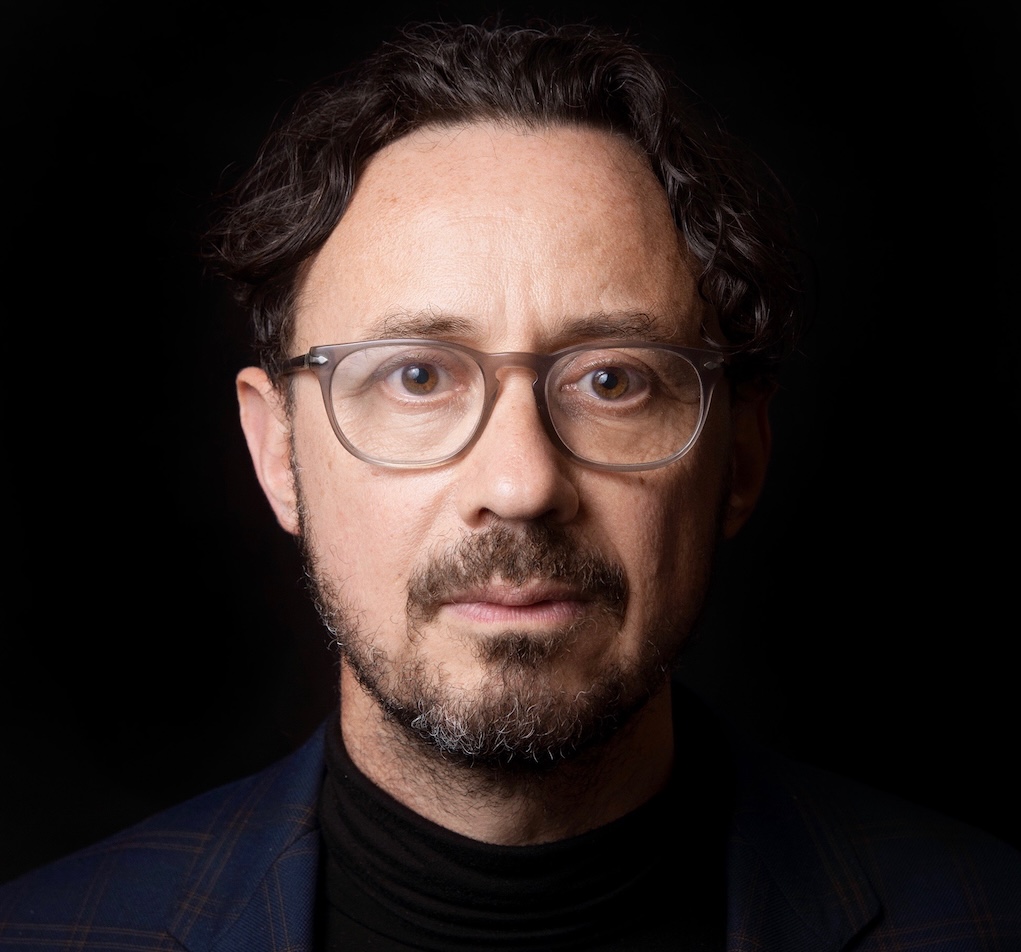
Radicado en Londres, el compositor inglés, narrador y músico experimental David Norland es un creador intrépido e inquieto por naturaleza. Su labor se reparte entre la música para cine y documentales y su discografía en solitario, que ya suma tres álbumes en el sello Denovali junto a diversas colaboraciones. Su prolífica trayectoria creando bandas sonoras para los noticieros y documentales de la cadena estadounidense ABC durante su estancia en ese país le valió una merecida nominación al premio Emmy.
Su formación coral juvenil sigue latiendo en su propuesta actual. En ella, explora la electrónica por su poder de transformación —manipulando los sonidos “hasta el punto de hacerlos irreconocibles”— en diálogo con una rica paleta acústica que reúne campanas, gongs, guitarra con arco, percusiones de madera y metal, flauta y voz.
Su trabajo funciona también como una plataforma para exigir acciones frente a los trastornos de la crisis climática —una realidad que ya golpeamos de frente aquí en Chile— y para cuestionar, desde su paternidad, “el legado que le dejamos a la próxima generación. Y, aun así, tengo muchísima fe en ellos”.
Esta conversación surge a raíz de La Source (octubre de 2026, Denovali Records), su más reciente trabajo discográfico y un manifiesto urgente que nos invita a tomar conciencia y actuar ¡AHORA!
Agradecemos a Alex de Denovali Records por facilitar esta entrevista y a David Norland por su generosidad al compartir sus inquietudes y anhelos. Especialmente por sus creaciones musicales de las que brotan frescura, elegancia y pasión, cualidades tan necesarias en estos días.
Al componer la banda sonora de una película o un documental, tu música está al servicio de una narrativa visual externa. En un álbum en solitario como La Source, la narrativa es totalmente tuya. ¿Cómo gestionas esa transición, pasando de las pautas creativas que impone el cine a la libertad absoluta de un lienzo en blanco?
“Esa libertad resulta estimulante. En el trabajo para la pantalla, el objetivo es servir a la visión del director. Dentro de ese marco, existe una enorme recompensa creativa al colaborar con alguien para potenciar al máximo el recorrido de su historia y sus personajes. Eso sí, implica que algunas de mis ideas más extravagantes o inusuales —esas que tanto me entusiasman— probablemente no encajen”.
“Por eso, trabajar en mis propios discos y composiciones es como una explosión de anhelos musicales acumulados; nunca, jamás, me faltan ideas ni inspiración, solo tiempo. A menudo, cuanto más inusual es una idea, más ganas tengo de intentar llevarla a cabo. Cada día, al entrar en mi estudio en Canary Wharf, me pregunto si tendré tiempo para desarrollar las ideas que ya tengo, por no hablar de las nuevas que van surgiendo. Encuentro inspiración en todas partes: desde el sonido del Támesis hasta las formas de la arquitectura londinense”.
“Por otra parte, las limitaciones no son exclusivas del trabajo cinematográfico. De hecho, me gusta mucho trabajar bajo ciertas restricciones; siento que eso impulsa mi creatividad. En el caso de La Source, la limitación consistía en utilizar únicamente los instrumentos que tenía en mi estudio, tocarlos yo mismo y prescindir de los sintetizadores”.
“En gran medida lo logré; los instrumentos de viento-metal en La Source fueron grabados por mi mejor amigo musical, Nick dePinna. Es sumamente raro encontrar una sintonía musical tan profunda como la que tengo con él. Hay un par de instrumentos sampleados, pero, en esencia, el álbum se ciñe a esas limitaciones, y eso es precisamente lo que le confiere su sonido característico.
«Quise emplear este sonido en un documental para el que compuse la música hace poco, pero pronto quedó claro que no era lo que buscaba el cineasta. Así que me puse manos a la obra para encontrar el lenguaje musical específico de esa película. Todo es un proceso de descubrimiento, ya sea de mis propios impulsos o de los de otra persona. En ambos casos, lo fundamental es mantener una apertura total hacia esos impulsos”.
Has pasado años creando música para grandes cadenas de televisión y para el cine. ¿Cómo es equilibrar ambos mundos hoy en día, y de qué manera se nutren mutuamente estas distintas disciplinas?
“Considero que la disciplina de componer para la pantalla resulta muy útil a la hora de crear discos. En la composición para el cine o la televisión, a menudo debes escribir mucha música con gran rapidez, sin apegarte demasiado a lo que has creado, incluso cuando es rechazado. Tanto la ética de trabajo como la capacidad de no tomarse como algo personal el hecho de que una idea no funcione, son disciplinas creativas fundamentales que enriquecen mis proyectos personales”.
“Al mismo tiempo, como mi nombre aparece en los créditos, me aseguro de realizar un trabajo del que pueda sentirme realmente orgulloso. Además, nunca dudo en proponer algunas de mis ideas musicales más excéntricas cuando compongo para la pantalla. Lo peor que puede pasar es que las descarten; pero, si las aceptan, experimentas la increíble sensación de haber aportado algo que realmente realza la originalidad de la obra. Me entusiasma intentar crear cosas que sean genuinamente novedosas. Lo que más me enorgullece de La Source es que no creo haber escuchado nada parecido anteriormente. Me encanta formar parte del sello Denovali; su enfoque, basado en un compromiso absoluto con la creación artística original, es algo que valoro profundamente”.
Has declarado que tu objetivo es crear música que suene «a la vez futurista e increíblemente antigua; como jeroglíficos alienígenas tallados en arenisca ancestral”. ¿Cómo equilibras los elementos acústicos y atemporales de tu infancia —voces, campanas, flautas— con las arquitecturas electrónicas modernas para lograr esa paradoja en particular?
“Para mí, se ha convertido en una especie de axioma el no querer utilizar sintetizadores por software en mis proyectos personales, al menos no de la forma tradicional. Me gusta partir siempre de un instrumento o una voz que pase por una cadena de señal analógica… Me gusta captar el sonido con micrófonos —de cinta, equipos de válvulas antiguos, etc.—. Por otro lado, una vez que esos elementos de origen acústico están dentro de la sesión, ME ENCANTA aplicarles procesamiento electrónico. Pero necesito haber tocado el instrumento en una sala —y que eso quede registrado— antes de empezar a experimentar con procesamientos inusuales”.
“Utilizo campanas, gongs, guitarra acústica tocada con arco, percusión de madera y metal, flauta y mi propia voz. Estos instrumentos se encuentran entre los primeros que utilizó el ser humano; para mí, aportan un ‘ADN ancestral’ a la música. Luego los proceso, a veces hasta el punto de hacerlos irreconocibles. El sonido de órgano masivo que se escucha en E-Car Soul es, en realidad, una flauta grabada en múltiples pistas y con su tono modificado”.
“Hay algunas excepciones: para las frecuencias graves, por ejemplo, utilizo un antiguo Studio Electronics SE1, que es, básicamente, un MiniMoog en formato rack. Cuando se trata de obtener bloques sólidos de bajos, no hay mucho que pueda superarlo.
En cuanto a mi voz, he estado experimentando con una técnica que debe mucho a la música coral ortodoxa oriental: la idea de dos coros, situados a ambos lados de una iglesia, cuyas partes colisionan para crear algo superior. La obra Hymn To The Mother Of God, de John Tavener, me provocó escalofríos la primera vez que escuché sus armonías en conflicto; eso me llevó a profundizar en sus influencias ortodoxas”.
“Sin embargo, en lo que respecta al procesamiento y la estructura, mi enfoque es plenamente moderno, arraigado en las técnicas de producción discográfica. Hace años trabajé en discos jamaicanos; la cualidad espacial del ‘dub’ y la estética centrada en las frecuencias graves me han acompañado siempre. ¿Qué podría ser más interesante que tomar sonidos de antaño y pasarlos por algún ‘plugin’ disparatado, creado por alguien desde su propia habitación? Es una combinación insólita, y eso me genera un entusiasmo creativo inmenso. Sencillamente, no me interesa ceñirme a un género concreto. Probablemente, esto haga que mis discos sean inclasificables; pero, al menos según mis propios valores, eso es algo de lo que me siento orgulloso”.
Has señalado que tus experiencias como progenitor/a influyeron profundamente en este disco, llevándote a plantearte: «¿Qué clase de mundo les estamos dejando a nuestros hijos?». ¿Cómo logra la música conciliar el profundo pesar que provoca la urgencia climática con el instinto luminoso y protector propio de la crianza?
“¡Espera a escuchar el disco en el que estoy trabajando ahora mismo, que ya está a medio terminar! Aborda directamente el legado que le dejamos a la próxima generación. Y, aun así, tengo muchísima fe en ellos. ¿Conoces el «Sunrise Movement» en Estados Unidos? ¡Me encantaría unirme, pero es solo para personas de 35 años o menos! Soy muy consciente de que mi propuesta artística es para un público específico, y la verdad es que no me gusta nada el arte didáctico; incluso Brecht, a veces, me resulta excesivo. Pero la realidad de la crisis climática es tal que no concibo no aprovechar cualquier plataforma que uno tenga —ya sea pequeña o grande— para generar conciencia sobre la necesidad de cambiar ahora. ¡AHORA! ¡Tiene que ser AHORA!”
“Existe una película que se está proyectando en comunidades por todo el Reino Unido, titulada National Emergency Briefing (Informe sobre la emergencia nacional). El gobierno británico no ha revelado a la población lo que sabe acerca de la magnitud de esta crisis. Es probable que la cadena de suministro de alimentos se desmorone; la gente pasará hambre y habrá enfrentamientos en las calles. ¡Todo esto se avecina, a menos que cambiemos AHORA! La película se está proyectando en miles de lugares en todo el Reino Unido —en salones parroquiales, centros comunitarios, instituciones académicas…—, impulsada por ciudadanos preocupados. Al parecer, la magnitud de la crisis y sus posibles repercusiones en la sociedad se están ocultando a nivel gubernamental. Si es así, se trata de un crimen atroz, verdaderamente atroz. Pero aún estamos a tiempo de evitar lo peor. Veo una gran toma de conciencia en la próxima generación; no podemos fallarles. El arte desempeña un papel fundamental: ayuda a las personas a comprender realidades que van más allá de nuestra programación individual heredada”.
De cara al futuro, ¿qué tienes entre manos o en desarrollo que te despierte ese chispazo de entusiasmo creativo?
“¡Ese disco a medio terminar! ¿Cómo puedo sacar más tiempo para terminarlo pronto? Y la película La Carousel, que presentaremos —para empezar— en París y Londres a principios de 2027. Tengo previsto interpretar la banda sonora en directo durante las proyecciones, al estilo de los antiguos pianistas de cine mudo. La obra aborda los vínculos humanos, la comunidad que quizá perdimos durante la pandemia y nuestra relación con nuestra propia historia. Está rodada en blanco y negro, con una fotografía preciosa y a cámara lenta. Es, además, una película muda, salvo por la música. También hay algunas piezas corales nuevas; una de ellas, para un coro fantástico en el Reino Unido. Cada proyecto es una oportunidad más para sacar de mi cabeza —y llevar al mundo— al menos una de las muchísimas ideas que no dejan de acumularse”.
Based in London, English composer, storyteller, and experimental musician David Norland is an intrepid and restless creator by nature. His time is divided between scoring for film and television and building his solo discography, which already features three albums on the Denovali label alongside various collaborations. During his years living in the United States, his prolific career composing soundtracks for ABC’s news programs and documentaries earned him a well-deserved Emmy Award nomination.
Norland’s early background in youth choirs continues to resonate throughout his current music. He explores electronics for their transformative power—manipulating sounds, ‘then I process them, sometimes so they’re unrecognizable.’—in dialogue with a rich acoustic palette that brings together bells, gongs, bowed guitar, wooden and metal percussion, flute, and voice.
His artistry also serves as a platform to demand change in the face of the climate crisis—a reality we are already grappling with head-on here in Chile—and to question, from his perspective as a father, “It deals directly with the legacy we’re leaving the next generation. And yet I have such faith in them.”
This conversation stems from La Source (October 2026, Denovali Records), his latest album and an urgent manifesto that invites us to raise awareness and take action NOW!
We would like to thank Alex at Denovali Records for arranging this interview, and David Norland for his generosity in sharing his thoughts and aspirations. We are especially grateful for his musical creations, which radiate freshness, elegance, and passion—qualities so vital in today’s world.
When scoring a film or documentary, your music is in service of an external visual narrative. For a solo album like La Source, the narrative is entirely yours. How do you navigate that transition from the creative guardrails of cinema to the absolute freedom of a blank canvas?
“The freedom is exhilarating. In screen work, the mission is to serve the director’s vision. Within that there’s a huge creative reward in working with someone to fully enhance the journey of their story and characters. It DOES mean that some of my more outlandish, unusual ideas that I’m excited by are probably not going to work.
“And so working on my own records and composition is like an explosion of accumulated musical yearning, I am never, never short of ideas and inspiration, only time, and often the more unusual the idea, the more I want to try and execute it. Every day I head into my studio in Canary Wharf wondering whether I’ll have time to execute the existing ideas I have, let alone the new ones that materialize. I find inspiration everywhere, from the sound of the Thames to the shape of London’s architecture.”
“And limitations are not confined to the screen work. I actually really like working within limitations – I find it pushes my creativity. For La Source, the limitation was to only use instruments available in my studio, to play them all myself, and to avoid synthesizers.”
“Largely I succeeded – the brass on La Source is by my best musical friend Nick dePinna. It’s incredibly rare to find a collegial musical understanding in the way I have with him. There are a couple of sampled instruments on there. But mainly it’s within the limitations, and that gives it its sound.”
“I wanted to use this sound on a documentary I scored recently, but it became apparent quite quickly that it wasn’t what the filmmaker was after. And so then I moved quickly into the journey of finding that film’s musical language. It’s all a journey of discovery, either of my own impulses or of someone else’s. Both rely on total openness to the impulses in question.”
You’ve spent years crafting music for major network television and films. What does it feel like to balance those two worlds now, and how do these different disciplines feed into each other?
“I find that the discipline of scoring for screen is really helpful in making records. With scoring you normally have to write a lot of music very quickly, and not be too precious about playing it and having it rebuffed. Both the work ethic and the lack of sensitivity around when things aren’t working are essential creative disciplines, and enhance the personal work I make.”
“And at the same time, the score’s also going to have my name attached to it, somewhere down the credits, so I’m going to execute it so it’s something I’m really proud of. And I’m also never shy to put some of my more outlandish musical ideas up for consideration when scoring. The worst that can happen is they get passed over, and if they do fly you get the amazing feeling of having contributed something that really enhances the originality of the film. I get really excited about trying to make things that are genuinely new. My biggest pride in «La Source» is that I don’t think I’ve heard much like it before. I really love being on Denovali – the emphasis is on original art, as a total commitment.”
You have stated that your goal is to make music that sounds «both futuristic and incredibly ancient—like alien hieroglyphs carved in ancient sandstone.» How do you balance the timeless, acoustic elements of your childhood—voices, bells, flutes—with modern electronic architectures to achieve that exact paradox?
“For me it has become pretty axiomatic that I don’t want to use software synths in my personal work, at least not in traditional ways. I like to start everything from an instrument or voice that goes through an analogue signal chain… I like to to mic things up, with ribbon mics, vintage valve gear, etc.. Conversely, once those acoustically-sourced things are inside the session, I LOVE applying electronic processing to them. But I want to have played the instrument in a room, and hear that on the recording, before starting to experiment with processing it in strange ways.”
“I use bells, gongs, bowed acoustic guitar, wooden and metal percussion, flute, and my voice. These instruments are some of the earliest used by humans. For me they bring an ancient DNA to the music. And then I process them, sometimes so they’re unrecognizable. The huge organ sound on «E-Car Soul» is a flute, multi-tracked and pitch-shifted.”
“There are some exceptions, notably that for low end, I have an old Studio Electronics SE1, which is basically a racked MiniMoog. For solid slabs of bass there’s not much that can touch it.”
“And with my voice, I have been experimenting with a technique that owes a lot to Eastern Orthodox choral music…. the idea of two choirs, one on either side of the church, and their parts colliding to make something greater. John Tavener’s «Hymn To The Mother Of God» gave me chills when I first heard the clashing harmonies. It sent me down a rabbit-hole of researching his Orthodox influences.”
“But in terms of processing and structure, my approach is very much a modern one, rooted in record production. I worked on Jamaican records years ago, and the spatial quality of dub, and the low-end aesthetic, are constant companions. What could be more interesting than ancient sounds run through some crazy plugin from a bedroom developer? These are all strange bedfellows, and that brings me immense creative excitement. I am simply not interested in cleaving to a genre. It probably makes my records unclassifiable. But that’s a badge of pride, to my values anyway.”
You’ve noted that your experiences as a parent heavily influenced this record, driving you to ask, «What kind of world are we leaving to our children?» How does the music reconcile the heavy grief of climate urgency with the luminous, protective instinct of parenthood?
“Wait till you hear the record that’s half-finished currently! It deals directly with the legacy we’re leaving the next generation. And yet I have such faith in them. Do you know the Sunrise Movement in the US? I would love to join, but it’s only for people 35 and younger! I’m very aware that I’m a niche artist, and I truly dislike didactic art. Even Brecht can sometimes be too much for me. But the reality of the climate crisis is such that I cannot fathom not using whatever platform you have, small or large, to focus on raising awareness that we must change now. NOW! It must be NOW!”
“There’s a film going around community screenings all over the UK called «National Emergency Briefing». The UK government has not told the population what it knows about the magnitude of the crisis. The food supply chain is likely to fall to pieces. People will starve and fight in the streets. This is coming unless we change NOW! The film is being screened in thousands of places around the UK, in church halls, community centers, academic institutions…. by concerned citizens. The magnitude of the crisis and its likely effects on society are apparently being withheld at governmental level. A terrible, terrible crime if so. But there is time to avert the worst. I see so much awareness in the next generation. We must not let them down. Art has a huge role to play. It helps people understand things beyond our individual inherited programming.”
Looking ahead, what is currently on your radar or in development that is giving you that spark of creative excitement?
That half-finished record!! How do I make more time so I can finish it quickly? And the film La Carousel, which we will be playing in Paris and London to start with, in early 2027. I am planning to play the score alongside the screenings, like a modern version of the old cinema pianist. It deals with human bonds and the community we maybe lost in the pandemic, and our relationship to our history. In slow-motion, beautifully-shot black and white. And it’s a silent film, apart from the score. Some new choral pieces – one for a terrific choir in the UK. Each one is another chance to get at least one of this ever increasing multitude of ideas out of my head and into the world.”
