SPK
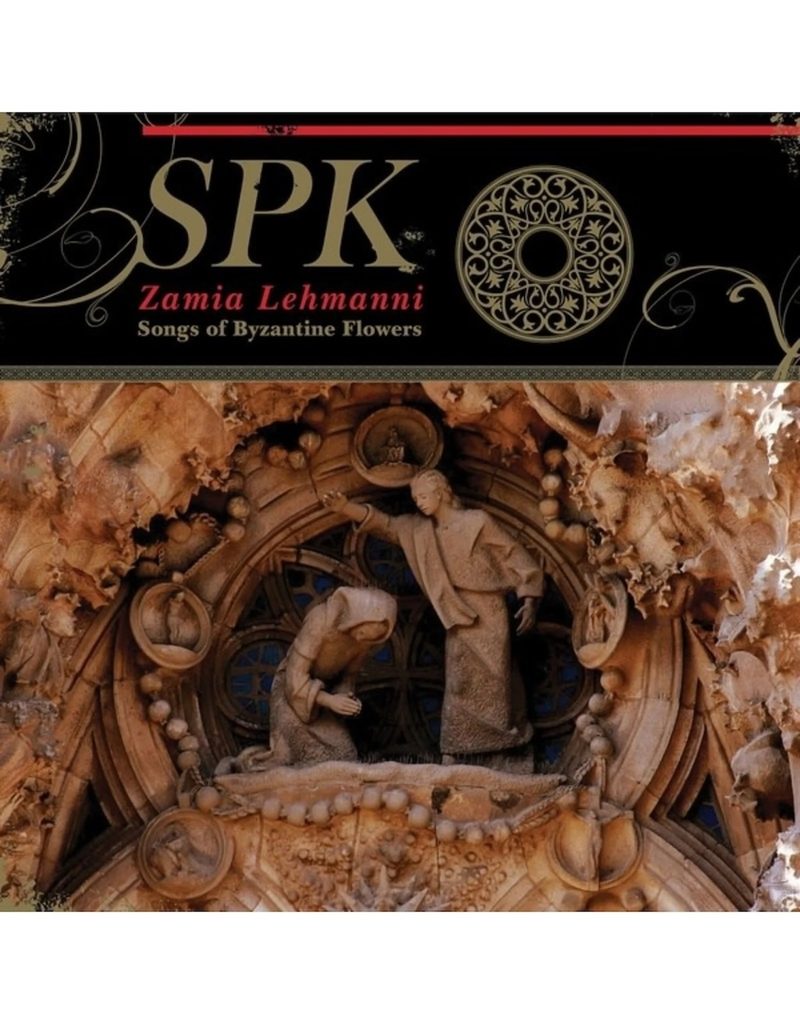
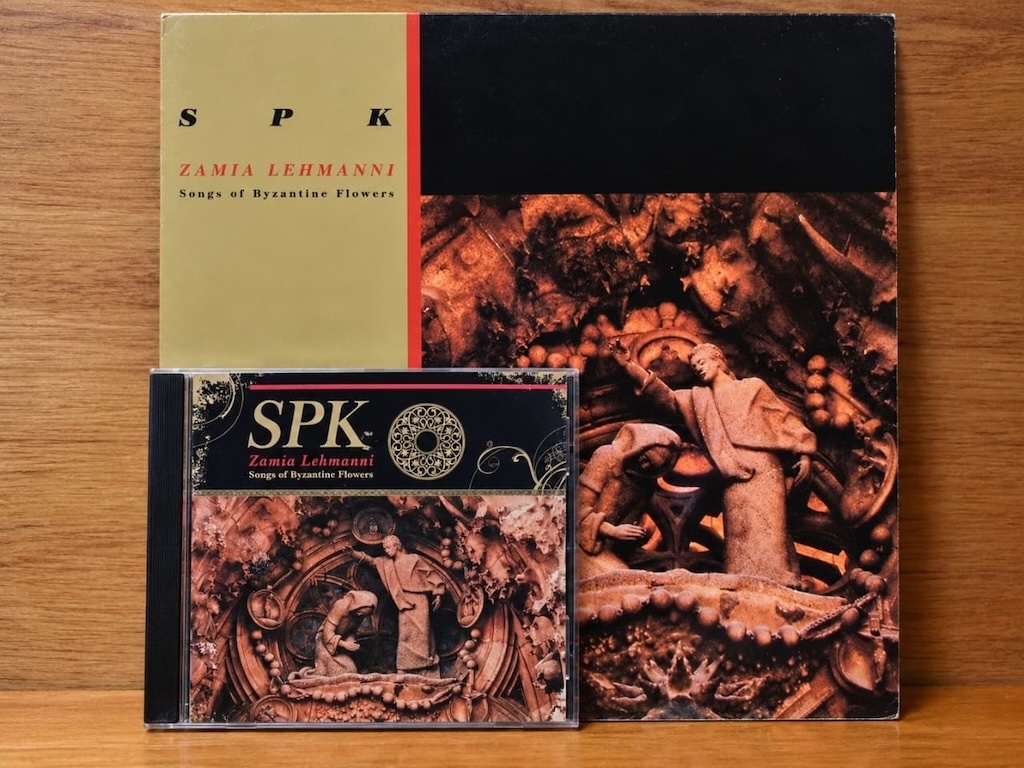
SPK / Graeme Revell | ‘Zamia Lehmanni: Songs of Byzantine Flowers’, Side Effects (1986) — re-release by Cold Spring, February 2026
Por Jan Klaus
Hay discos que pertenecen inevitablemente a la época en que fueron realizados y otros, mucho más extraños, que parecen desprenderse de ella. Volver en 2026 a Zamia Lehmanni: Songs of Byzantine Flowers, publicado originalmente en 1986 por Side Effects y posteriormente recuperado por Cold Spring, significa para mí enfrentarme nuevamente a una obra que llevo escuchando más de treinta y cinco años y que, sin embargo, continúa produciéndome una sensación difícil de explicar: sigue sonando nueva. Mi amigo Graeme Revell ha dicho alguna vez, con esa modestia propia de quien ya ha recorrido un largo camino, que no se atreve a escucharla porque podría sonarle vieja: “I dare not to listen to it because it will sound old.” Yo pienso exactamente lo contrario. Ni siquiera diría que Zamia «ha envejecido bien», porque eso significaría todavía someterlo a una cronología; tengo más bien la impresión de que consiguió escapar de ella. No pertenece completamente al pasado ni tampoco al futuro: todavía es, permanece en alguna dimensión propia. Y entonces su título adquiere una resonancia casi perfecta: Zamia lehmanni pertenece a un linaje vegetal antiquísimo, un ser vivo capaz de persistir a través del tiempo. ¿Qué mejor título para un disco que ha hecho exactamente lo mismo?
Tengo desde hace años una reedición de Zamia y, sin embargo, nunca me había sentado realmente a leer sus extensas notas. La tipografía es diminuta y yo soy bastante corto de vista, pero hay además algo en mi manera de relacionarme con ciertos objetos y libros: a veces llegan a mis manos y no los abordo inmediatamente; espero, consciente o inconscientemente, alguna señal que me diga que ha llegado su momento. Esa señal llegó recién ahora. Así terminé, cuarenta años después de la aparición del disco, armado literalmente de una lupa especial, intentando descifrar aquellas letras microscópicas y sintiéndome por momentos como Walter Benjamin buscando fichas en una biblioteca. Bajo la lupa comenzó a abrirse otro disco dentro del disco. De aquellas pequeñas letras fueron apareciendo Deleuze y Guattari, la desterritorialización y las líneas de fuga; la biología, el virus y la mutación; después Bizancio, Persia, Grecia y Roma; luego los instrumentos que durante siglos viajaron de una cultura a otra. Era extraño: llevaba más de treinta y cinco años escuchando aquella música y, sin embargo, una parte de ella había permanecido todo ese tiempo oculta delante de mis ojos.
Fue entonces cuando pensé en el concepto de Terma, perteneciente a las tradiciones tibetanas y Bön: un tesoro, una enseñanza o un conocimiento que permanece oculto hasta que existen las condiciones adecuadas para ser descubierto. No pretendo decir que Graeme concibiera Zamia como un Terma; esa asociación es enteramente mía. Pero así ha funcionado el disco para mí. Primero estuvo la música; después vinieron los libros, los viajes, las conversaciones, la filosofía, la historia y la experiencia, y sólo mucho más tarde aparecieron ciertas claves capaces de iluminar aquello que a los dieciséis o diecisiete años yo había reconocido intuitivamente sin saber todavía cómo nombrarlo. Zamia ha sido para mí una especie de revelación diferida: el disco permaneció allí; quien tuvo que atravesar el tiempo fui yo.
Graeme Revell: buscar el mundo antes de Internet
Graeme Revell nació en Auckland, Nueva Zelanda, en 1955, y su formación y sus intereses siempre excedieron ampliamente aquello que solemos entender por un músico. Economía, ciencias políticas, geografía, planificación, literatura, filosofía, psiquiatría, tecnología y música fueron cruzándose en su trayectoria. Antes de convertirse posteriormente en un reconocido compositor cinematográfico había sido uno de los fundadores de SPK, proyecto que llevó la música industrial hacia algunos de sus territorios más radicales. Pero Zamia representa otra cosa. Aunque apareció bajo el nombre de SPK, siempre lo he sentido como una obra profundamente personal de Graeme, como si hubiera llegado el momento de abandonar un territorio ya conocido para descubrir otro.
Hay una imagen de aquellos años que ahora me resulta particularmente hermosa: Graeme Revell y Sinan Leong recorriendo el Londres de los años ochenta en busca de libros, discos, grabaciones, instrumentos, artefactos y conocimientos. Escuchaban colecciones de músicas tradicionales procedentes de diferentes lugares del planeta, recorrían librerías, viajaban, registraban sonidos y reunían instrumentos. Hoy resulta difícil imaginar lo que significaba investigar de esa manera. El mundo no aparecía inmediatamente escribiendo dos palabras en una pantalla: había que buscarlo físicamente, recorrerlo, encontrar los objetos y escuchar los discos. Conozco, en otra escala, esa experiencia, porque cuando apareció Internet yo tampoco tenía conexión en mi casa. Iba a la Universidad Católica y podía pasar parte del fin de semana buscando información e imprimiendo entrevistas. Aquel Internet era fundamentalmente texto; había que encontrar una pista, seguirla y luego encontrar otra. Todavía existía algo de arqueología en la búsqueda del conocimiento.
En ese contexto, la aparición del Fairlight CMI resulta fundamental. Aquella extraordinaria y costosísima máquina permitía registrar sonidos, almacenarlos, fragmentarlos y reorganizarlos. Para un músico que había ido reuniendo sonidos e instrumentos de diferentes culturas, aquello abría posibilidades inmensas. Me gusta imaginar el Fairlight dentro de Zamia como una especie de Bizancio electrónico, una máquina donde materiales provenientes de territorios muy alejados podían encontrarse, mezclarse, mutar y reaparecer convertidos en otra cosa.
Bizancio: un lugar por donde pasan las cosas
Bizancio es una de las claves fundamentales del álbum, pero no me interesa únicamente como civilización desaparecida. Me interesa como territorio de tránsito y transformación: Grecia y Roma, el cristianismo, las culturas semíticas, Persia, el mundo árabe y las rutas hacia Asia; religiones, instrumentos, imágenes, conocimientos y formas musicales atravesando fronteras. Nada permanece completamente en su lugar: los instrumentos migran, las ideas migran y hasta los dioses migran. En este sentido, Bizancio deja de ser solamente una referencia histórica para convertirse en una imagen de aquello que ocurre cuando los territorios se encuentran y ninguno consigue permanecer completamente intacto.
Aquí las lecturas de Deleuze y Guattari adquieren una importancia especial: territorio, desterritorialización, rizoma, nomadismo, líneas de fuga y aquella posibilidad de abandonar una organización para encontrar nuevos movimientos y nuevos territorios. Incluso la figura del cuerpo sin órganos y sus formas de proliferación parece resonar con la presencia que tienen en Zamia la biología, la mutación, el virus y los organismos. Algo abandona un territorio, se desplaza y vuelve a organizarse en otra parte. El propio SPK debía abandonar por un momento su territorio industrial para encontrar una nueva tierra, sin renunciar por ello a la experimentación que lo había llevado hasta allí.
Alrededor de la obra comienza entonces a formarse una constelación extraordinaria: Gaston Bachelard, Michel Foucault, Joris-Karl Huysmans, Charles Baudelaire, Lautréamont, Arthur Rimbaud, Victor Hugo, Samuel Beckett, W. B. Yeats y J. G. Ballard, además de Deleuze y Guattari. No forman una escuela ni una doctrina; son puntos dispersos que, vistos desde cierta distancia, comienzan a dibujar una figura. En Huysmans, por ejemplo, encuentro hoy aquella voluntad de controlar un mundo que se vuelve amenazante, mientras que en Zamia parece ocurrir lo contrario: se abren las puertas para que entren sonidos, organismos, geografías y vestigios. Baudelaire aporta otra clave posible: la belleza oscura, la belleza que puede aparecer precisamente allí donde la modernidad vuelve inestable nuestra antigua idea de lo bello.
Y entre esas referencias aparece también el arte del connotado Antoni Gaudí, cuya arquitectura parece pertenecer naturalmente a este universo: construcciones que parecen organismos, piedras que parecen haber crecido y formas donde lo mineral, lo vegetal, lo arquitectónico y lo espiritual dejan de ser categorías completamente separadas. La dimensión visual de Zamia tampoco puede desligarse de su música: Graeme Revell participa en el diseño y las fotografías corresponden a Jürgen Rick. El objeto físico —sus fotografías, textos, diseño y pequeñas letras que ahora debo leer con una lupa— pertenece al mismo territorio que la música. Zamia no es simplemente una sucesión de composiciones: es un pequeño mundo.
Todo esto se acerca bastante a algo que he llamado Conexión Imparable: un símbolo conduce hacia un libro; un libro conduce hacia un instrumento; el instrumento hacia una geografía; la geografía hacia una religión, una planta o una civilización, y desde allí regresamos nuevamente a la música. No significa que todo sea lo mismo ni que exista una explicación secreta capaz de reducirlo todo a una única fórmula. Significa, más bien, que las cosas pueden conectarse sin perder sus diferencias, y que precisamente de esas conexiones puede nacer algo que antes no existía.
Invocation (To Secular Heresies) (Invocación [a las herejías seculares])
La primera composición no se limita a comenzar el disco: abre una puerta. Campanas balinesas, cuencos metálicos, percusión tibetana, orquesta, voces y cantos producen una apertura épica, panorámica, sublime y majestuosa, casi una ceremonia de entrada. Pero la primera paradoja está ya escrita en el título: herejías seculares. Una herejía necesita una ortodoxia y, por lo tanto, la pregunta aparece inmediatamente: ¿cuáles son nuestras ortodoxias seculares? SPK había sido ya una herejía frente a las convenciones musicales, pero Zamia se atreve a ser hereje incluso respecto de la propia herejía industrial. Deja de sonar como aquello que supuestamente debía sonar SPK. La experimentación ya no consiste en continuar destruyendo el mismo territorio, sino en abandonarlo y descubrir qué existe más allá. La línea de fuga comienza aquí: la primera composición es la puerta y, al atravesarla, sabemos que el viaje ya ha comenzado.
Palms Crossed in Sorrow (Palmas cruzadas en señal de dolor)
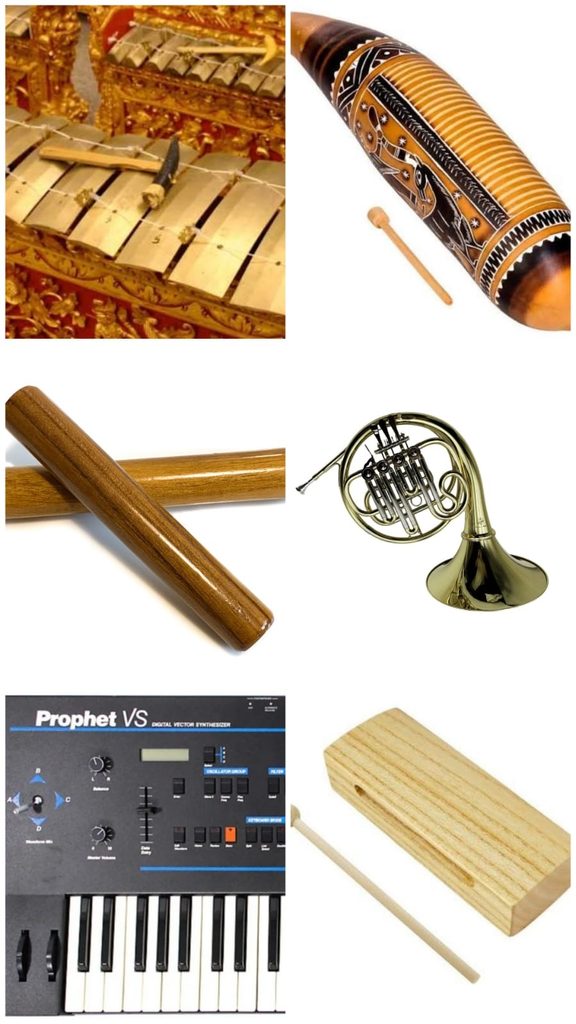
Una vez atravesada esa puerta, mi antigua edición en vinilo adquiere en esta composición una espacialidad extraordinaria: por momentos parece que uno estuviera físicamente allí donde los instrumentos están siendo ejecutados. Flautas africanas, claves, marimbas, cuencos metálicos, sintetizador Prophet, toms, voces y bloque de madera construyen un espacio donde madera, metal, aire y electrónica comienzan a convivir. Para mí ese lugar tiene inmediatamente un nombre: Constantinopla. No pretendo reconstruir musicológicamente la Constantinopla histórica, sino describir una ciudad imaginaria, un punto de encuentro donde las cosas llegan desde distintas direcciones y ninguna permanece completamente igual después de encontrarse con las otras. La tecnología no destruye lo antiguo y los instrumentos tradicionales no rechazan la tecnología; ambos se reconocen y se transforman. Si la primera composición era la puerta, en la segunda ya estamos en Constantinopla.
Romanz in Moll (Romance in a Minor Key) (Romance en tonalidad menor)
Aquí entramos en un recinto todavía más oscuro. Campanas, coro, orquesta, piano y el ambiente de una imprenta o fábrica de impresión construyen una música suspendida entre dos mundos. El piano posee además una sonoridad que me recuerda a un piano preparado: algo familiar ha sido ligeramente desplazado y, precisamente por eso, comienza a resultar extraño. Lo sagrado está presente casi por completo, pero lo profano nunca desaparece; detrás del coro continúa funcionando la máquina. Aparece entonces una oscuridad milenaria, saturada de resonancias musulmanas, cristianas y ortodoxas, junto con aquella elegancia romana del Imperio romano de Oriente. No digo que la composición represente literalmente esas tradiciones: describo las imágenes que la música despierta en mí. Lo importante es que ninguna expulsa a la otra. El coro y la fábrica pueden existir simultáneamente, del mismo modo que pueden hacerlo la oración y la máquina.
In the Dying Moments (En los momentos de la muerte)
Aquí el paisaje se vuelve solemne. Bajos, coros, claves de madera, percusión, cornos, planchas metálicas y voces construyen algo simultáneamente industrial y medieval, pero sobre todo escucho una épica absolutamente intermedia que no consigo situar completamente en Europa ni completamente en Oriente. De pronto la fábrica deja de pertenecer al siglo XX y entre las planchas metálicas aparecen caballeros y sarracenos; los cornos parecen anunciar una batalla que ocurrió hace siglos y que, sin embargo, todavía no termina. Damasco queda en algún lugar y Jerusalén aparece en el horizonte, mientras los muertos observan desde una fábrica abandonada poblada por los fantasmas de quienes presenciaron todo aquello que ocurrió y todo aquello que fue. Ya no sabemos si escuchamos el metal de la fábrica o el metal de las armas. No es simplemente un choque cultural: es un choque de ethos, un choque de espíritus. Oriente y Occidente se enfrentan, pero ninguno consigue permanecer intacto; del enfrentamiento surge un tercer territorio que ya no pertenece completamente a ninguno de los dos.
In Flagrante Delicto (Introduction) (In flagrante delicto [Introducción])
Esta composición me devuelve directamente a mi adolescencia. Fue una de las primeras músicas de este universo que escuché, cuando tendría unos dieciséis o diecisiete años, a través de una compilación cuyo título todavía quiero comprobar antes de cerrar definitivamente esta reseña. Entonces no entendía casi nada de todo esto: no conocía las referencias, no conocía las teorías y no podía imaginar la cantidad de libros que terminarían apareciendo décadas después alrededor de aquella música. La sentía cercana a la música religiosa, a la música clásica, a algo antiguo y solemne cuyo lenguaje todavía no poseía, pero había algo que comprendía perfectamente: era bella. Siempre he pensado que la belleza posee una dimensión intuitiva; uno puede desconocer el origen de una música, ignorar sus códigos y no saber todavía explicar aquello que escucha, pero reconocer su belleza. Primero estuvo esa sensación y los libros llegaron después. Incluso el título guardaba una pequeña sorpresa: in flagrante delicto, aquello que es sorprendido mientras el delito todavía está, metafóricamente, ardiendo; flagrare, arder, estar en llamas. En un lenguaje bastante menos solemne podríamos decir simplemente: ‘te quemaste’. Esta pieza fue creada con violonchelos, cadenas, orquesta y sonidos ambientales de una estación ferroviaria.
In Flagrante Delicto (In flagrante delicto / En el acto mismo del delito)
Si la introducción descubre la transgresión mientras todavía está caliente, la segunda parte muestra sus consecuencias. Cello, cadenas, coro, orquesta, voces y elementos ambientales construyen una composición grandiosa y profundamente punitiva, atravesada por el castigo, el arrepentimiento y el destino, pero también por algo expiatorio y liberador. La liberación no llega gratuitamente ni evitando lo punitivo: se produce atravesándolo, y para que exista expiación debe existir sacrificio. Aquí aparece inevitablemente Georges Bataille. Bataille murió en 1962, mucho antes de que pudiera escuchar este disco, pero debería haberlo escuchado. Yo conocí primero Zamia y sólo posteriormente llegué a Bataille; hoy sus libros me proporcionan palabras para algunas cosas que entonces únicamente podía sentir: deseo, prohibición, transgresión, sacrificio, pecado y sacralidad. No estoy proponiendo una influencia de Bataille sobre Graeme; la conexión pertenece a mi propia lectura. Lo fascinante es que esta pieza parece recuperar la dimensión sagrada no sólo del deseo, sino también del pecado, algo profundamente secularizado en nuestra época. En aquel universo que imaginamos alrededor de Bizancio, religión, cuerpo, culpa, poder, castigo y salvación no estaban distribuidos en compartimentos independientes. De esta manera regresamos, casi sin advertirlo, a las Secular Heresies del comienzo: ¿qué ocurre con la herejía cuando desaparece lo sagrado?, ¿qué queda del pecado cuando ya no sabemos respecto de qué estamos pecando? Quizás lo secular nunca consiguió desprenderse completamente de aquello que pretendía dejar atrás.
Alocasia Metallica (Alocasia metálica)
Con esta pieza el mapa vuelve a abrirse. Gamelán balinés de teatro de títeres, claves, congas, flauta javanesa, sintetizador Prophet y toms nos desplazan hacia el sudeste asiático y Oceanía, mientras el propio título reúne materias aparentemente incompatibles: una planta tropical cuya apariencia parece metálica, algo vivo que parece construido de metal. Lo orgánico y lo industrial dejan nuevamente de ser opuestos. Aquí reaparece también el hemisferio sur: Graeme en Nueva Zelanda y yo en Chile. Hace poco, en una conversación, apareció aquella frase suya: «And to you from New Zealand. Southern Hemisphere Rules!! Hahaha.” Era simplemente una broma, una complicidad entre dos personas separadas por una distancia enorme pero situadas en el mismo hemisferio. Sin embargo, poco después me encontré con mi lupa leyendo en las notas sobre geografía, desplazamientos, culturas, territorios y migraciones, y nuevamente apareció la Conexión Imparable. No pretendo convertir los paisajes, los espíritus o incluso los polos magnéticos del hemisferio sur en una explicación científica; me interesa como intuición poética. Quizá quienes habitamos estos territorios tan alejados de los antiguos centros europeos estamos atravesados de otra manera por el paisaje, los océanos, las distancias y los vestigios de culturas anteriores. Por eso siento Zamia como una obra profundamente decolonial, utilizando la palabra en un sentido anterior a ciertas caricaturas contemporáneas: no como consigna, sino como la posibilidad efectiva de abandonar el centro y descubrir que existen muchos otros centros posibles.
“Necropolis” (Necrópolis)
Llegamos aquí a uno de los lugares más oscuros del recorrido. Cantos gregorianos, orquesta, piano, violín y diferentes sonidos ambientales levantan lentamente una arquitectura funeraria. Todavía quedan rastros de lo industrial, pero aparece una armonía que años más tarde sería desarrollada de maneras bastante más comerciales por otras bandas que no necesitamos nombrar. El propio título abre la imagen: estamos en la ciudad de los muertos. Nuevamente las épocas dejan de estar ordenadas cronológicamente; lo medieval y lo industrial, lo religioso y lo material, la memoria y el presente ocupan simultáneamente el mismo lugar. Zamia no parece interesado en reconstruir una época ni en ofrecernos una postal histórica de ella: recoge sus vestigios, sus sonidos y sus fantasmas y los obliga a convivir en el presente.
The Garden of Earthly Delights (El jardín de las delicias terrenales)
Después de la ciudad de los muertos aparece, inesperadamente, un jardín. Las flautas de Nueva Guinea, el sintetizador Prophet, las congas ejecutadas a un tempo lento y las voces transforman completamente el paisaje, y aquí siento que finalmente encontramos cierta paz. Hemos atravesado Bizancio, Persia, el mundo de los cruzados y los sarracenos, la fábrica, el delito, el castigo, el sacrificio y la necrópolis, y ahora pareciera que escapamos por la otra frontera de nuestro mapa imaginario para continuar hacia el Lejano Oriente y, más específicamente, hacia Oceanía. Allí aparece una tranquilidad que el disco hasta entonces prácticamente no nos había permitido conocer. La fuga no conduce al vacío: conduce a otro territorio. Después de la batalla, la transgresión, el castigo y la ciudad de los muertos, encontramos finalmente un jardín.
The Doctrine of Eternal Ice (La doctrina del hielo eterno)
Y finalmente todo comienza a detenerse. Las notas que tengo delante no indican instrumentación para esta composición; por su sonoridad podría imaginar nuevamente una importante intervención electrónica y quizá la presencia del Prophet, pero no lo sé y prefiero conservar la duda. Es un cierre majestuoso, digno de uno de los discos más elegantes que, a mi juicio, produjo la década de los ochenta. Después de tantas migraciones, desplazamientos y líneas de fuga, algo finalmente se inmoviliza: Grecia, Roma, Persia, Bizancio, Londres, Java, Nueva Guinea y Nueva Zelanda parecen quedar suspendidos bajo el mismo hielo. Pero no siento ese hielo como muerte, sino como permanencia, como aquello que ya no necesita desplazarse porque ha encontrado alguna forma de existir fuera del tiempo.
Y entonces regreso inevitablemente a mi lupa, al Terma y también al muchacho de dieciséis o diecisiete años que escuchaba aquella música sin saber todavía nada de Deleuze y Guattari, Huysmans, Baudelaire, Bataille, Bachelard, Bizancio o las migraciones de los instrumentos. Primero apareció la música; después llegaron los libros y finalmente la propia vida fue proporcionando otras claves. Más de treinta y cinco años después sigo mirando y escuchando el mismo objeto y descubriendo que todavía guarda cosas que no había visto ni oído. Quizás por eso Zamia Lehmanni: Songs of Byzantine Flowers continúa fascinándome: sus flores bizantinas parecen haber nacido entre civilizaciones, máquinas, religiones, plantas, libros, cuerpos, muertos, jardines y paisajes; algunas parecen provenir de Grecia y Roma, otras haber atravesado Persia y Bizancio, otras llegar desde Java o Nueva Guinea y algunas quizá haber germinado en las librerías del Londres de los años ochenta, mientras Graeme Revell y Sinan Leong buscaban sonidos, instrumentos, artefactos y conocimientos con los cuales construir un territorio que todavía no existía.
Y entonces vuelvo finalmente al título: Zamia lehmanni, un ser vivo perteneciente a un linaje antiquísimo que ha conseguido persistir a través del tiempo. Graeme, con su característica modestia, puede pensar que hoy el disco sonará viejo; yo sigo escuchándolo nuevo. Las flores bizantinas todavía están abiertas. ¿Qué mejor título? Quizás por eso sigo buscando en lo viejo algo nuevo, para descubrir una y otra vez que algunas cosas, sencillamente, no envejecen.
SPK / Graeme Revell | ‘Zamia Lehmanni: Songs of Byzantine Flowers’, Side Effects (1986) — re-release by Cold Spring, February 2026
By Jan Klaus
There are records that inevitably belong to the era in which they were created, and others—far more peculiar—that seem to detach themselves from it. Revisiting Zamia Lehmanni: Songs of Byzantine Flowers—originally released in 1986 by Side Effects and later reissued by Cold Spring—in 2026 means confronting a work I have been listening to for over thirty-five years, yet one that continues to evoke a feeling difficult to articulate: it still sounds new. My friend Graeme Revell once remarked, with the characteristic modesty of someone who has traveled a long path, that he dares not listen to it for fear it might sound old. I believe the exact opposite. I wouldn’t even say that Zamia has “aged well,” as that would still imply subjecting it to a chronology; rather, I have the impression that it managed to escape chronology altogether. It belongs neither entirely to the past nor to the future—it simply is, existing within a dimension of its own. In this light, its title takes on an almost perfect resonance: Zamia Lehmanni belongs to an ancient botanical lineage—a living being capable of persisting through time. What better title for a record that has done precisely the same?
I have owned a reissue of Zamia for years, yet I had never truly sat down to read its extensive liner notes. The typeface is minuscule, and I am quite nearsighted; but there is also something about how I engage with certain objects and books—sometimes they come into my possession, yet I don’t approach them immediately. I wait—consciously or unconsciously—for some sign that their moment has arrived. That sign has only just appeared. And so, forty years after the record’s debut, I found myself—literally armed with a special magnifying glass—trying to decipher those microscopic letters, feeling at times like Walter Benjamin searching for index cards in a library. Beneath the lens, another record began to unfold from within the record itself. From those small letters emerged Deleuze and Guattari, deterritorialization, and lines of flight; biology, the virus, and mutation; then Byzantium, Persia, Greece, and Rome; and finally, the instruments that traveled from one culture to another over the centuries. It was strange: I had been listening to that music for more than thirty-five years, yet a part of it had remained hidden in plain sight the entire time.
That was when I thought of the concept of terma —from Tibetan and Bön traditions—referring to a treasure, a teaching, or a piece of knowledge that remains concealed until the right conditions arise for it to be discovered. I am not suggesting that Graeme conceived Zamia as a terma; that association is entirely my own. But that is how the record has functioned for me. First came the music; then followed books, travels, conversations, philosophy, history, and experience. Only much later did certain keys emerge—keys capable of illuminating what I had intuitively recognized at the age of sixteen or seventeen, even if I didn’t yet know how to name it. For me, Zamia has been a kind of deferred revelation: the record remained where it was; it was I who had to traverse time.
Graeme Revell: Searching for the World Before the Internet
Graeme Revell was born in Auckland, New Zealand, in 1955. His background and interests always extended well beyond what we typically associate with a «musician.» Economics, political science, geography, urban planning, literature, philosophy, psychiatry, technology, and music all intersected throughout his career. Before becoming a renowned film composer, he was a founding member of SPK—a project that pushed industrial music into some of its most radical territories. Yet Zamia represents something else. Although it was released under the name SPK, I have always perceived it as a deeply personal work by Graeme—as if the time had come to leave behind a familiar territory in order to discover a new one. There is an image from those years that now strikes me as particularly beautiful: Graeme Revell and Sinan Leong traversing 1980s London in search of books, records, recordings, instruments, artifacts, and knowledge. They would listen to collections of traditional music from various corners of the globe, scour bookstores, travel, record sounds, and gather instruments. Today, it is difficult to imagine what it meant to conduct research in that way. The world did not appear instantly at the stroke of a few keys on a screen; one had to seek it out physically, travel through it, track down objects, and listen to records. I am familiar with this experience—albeit on a different scale—because when the Internet first emerged, I, too, lacked a connection at home. I would go to the Catholic University, where I might spend part of the weekend searching for information and printing out interviews.
That early Internet was essentially text-based; one had to find, following a lead, pursuing it, and then discovering another. There was still a sense of archaeology in the quest for knowledge.
In this context, the emergence of the Fairlight CMI was pivotal. This extraordinary—and incredibly expensive—machine made it possible to record, store, fragment, and rearrange sounds. For a musician who had been gathering sounds and instruments from diverse cultures, this opened up immense possibilities. I like to imagine the Fairlight, within the world of Zamia, as a kind of electronic Byzantium—a machine where materials from far-flung territories could meet, blend, mutate, and re-emerge as something entirely new.
Byzantium: a place through which things pass
Byzantium is a key element of the album, though not merely as a vanished civilization. I am interested in it as a territory of transit and transformation: Greece and Rome, Christianity, Semitic cultures, Persia, the Arab world, and the routes toward Asia—religions, instruments, images, knowledge, and musical forms all crossing borders. Nothing remains entirely in its place: instruments migrate, ideas migrate, and even gods migrate. In this sense, Byzantium ceases to be just a historical reference and becomes an image of what happens when territories collide—leaving none of them entirely intact.
Here, the writings of Deleuze and Guattari take on special significance: territory, deterritorialization, the rhizome, nomadism, lines of flight, and the possibility of abandoning one structure to discover new movements and new territories. Even the concept of the «body without organs»—and its modes of proliferation—resonates with the presence of biology, mutation, viruses, and organisms within Zamia. Something leaves one territory, travels elsewhere, and reorganizes itself in a new setting. SPK itself had to step away from its «industrial» territory to find a new land—without, however, abandoning the spirit of experimentation that had brought it there in the first place. Around this work, an extraordinary constellation begins to take shape: Gaston Bachelard, Michel Foucault, Joris-Karl Huysmans, Charles Baudelaire, Lautréamont, Arthur Rimbaud, Victor Hugo, Samuel Beckett, W. B. Yeats, and J. G. Ballard, as well as Deleuze and Guattari. They do not constitute a school or a doctrine; rather, they are scattered points that, when viewed from a certain distance, begin to trace a figure. In Huysmans, for instance, I now discern a desire to exert control over a world that has grown threatening, whereas in Zamia, the opposite seems to occur: the doors are thrown open to admit sounds, organisms, geographies, and vestiges. Baudelaire offers another potential key: a dark beauty—a beauty that can emerge precisely where modernity renders our traditional conception of the beautiful unstable.
Among these references, we also find the art of the renowned Antoni Gaudí, whose architecture seems to belong, quite naturally, to this universe: structures that resemble living organisms, stones that appear to have grown, and forms in which the mineral, the vegetal, the architectural, and the spiritual cease to be entirely distinct categories. The visual dimension of Zamia is likewise inseparable from its music: Graeme Revell contributed to the design, and the photographs are the work of Jürgen Rick. The physical object—its photographs, texts, design, and the tiny print that I must now read with a magnifying glass—inhabits the same territory as the music. Zamia is not merely a sequence of compositions; it is a small world unto itself.
All of this closely resembles what I have termed an «Unstoppable Connection»: one symbol leads to a book; a book leads to an instrument; the instrument to a geography; that geography to a religion, a plant, or a civilization—and from there, we find our way back to the music. This does not imply that everything is identical, nor that there exists some secret explanation capable of reducing it all to a single formula. It means, rather, that things can connect without losing their differences, and that precisely from those connections, something that did not exist before can emerge.
Invocation (To Secular Heresies)
The first composition does more than just begin the album: it opens a door. Balinese bells tree, metal bowls, Tibetan percussion, an orchestra, voices, and chants create an epic, panoramic, sublime, and majestic opening—almost an introductory ceremony. Yet, the first paradox is already embedded in the title: “secular heresies.” A heresy requires an orthodoxy; thus, the question immediately arises: what are our secular orthodoxies? SPK had already functioned as a heresy against musical conventions, but Zamia dares to be heretical even toward the industrial heresy itself. It no longer sounds like what SPK was supposedly expected to sound like. Experimentation no longer consists of continuing to destroy the same territory, but rather in leaving it behind to discover what lies beyond. The line of flight begins here: the first composition is the gateway, and as we pass through it, we know the journey has already begun.
Palms Crossed in Sorrow
Once through that gateway, my old vinyl copy reveals an extraordinary sense of space in this piece—at times, it feels as though one were physically present where the instruments are being played. African flutes, claves, marimbas, metal bowls, a Prophet synthesizer, toms, voices, and a woodblock construct a space where wood, metal, air, and electronics coexist. For me, this place immediately has a name: Constantinople. I am not attempting a musicological reconstruction of the historical Constantinople, but rather describing an imaginary city—a meeting point where elements arrive from various directions, and none remains entirely the same after encountering the others. Technology does not destroy the ancient, nor do traditional instruments reject technology; instead, they recognize and transform one another. If the first composition was the gateway, then in the second, we have arrived in Constantinople.
Romanz in Moll (Romance in a Minor Key)
Here, we enter an even darker space. Bells, a choir, an orchestra, a piano, and the ambience sounds of a printing factory create a piece of music suspended between two worlds. The piano, moreover, possesses a timbre that recalls a “prepared piano”—something familiar has been slightly shifted, and for that very reason, it begins to feel strange. The sacred is almost entirely present, yet the profane never disappears; behind the choir, the machinery continues to run. An ancient darkness emerges—saturated with Muslim, Christian, and Orthodox resonances—interwoven with the Roman elegance of the Eastern Roman Empire. I do not mean to suggest that the composition literally represents these traditions; rather, I am describing the images that the music evokes within me. The important thing is that neither one excludes the other. The choir and the factory can coexist, just as prayer and the machine can.
In the Dying Moments
Here, the landscape takes on a solemn tone. Bass tones, choirs, woodblocks, percussion, horns, metal sheets, and voices construct something that is simultaneously industrial and medieval—yet, above all, I hear an epic quality that exists in a liminal space, one I cannot fully situate in either Europe or the East. Suddenly, the factory no longer belongs to the 20th century; amidst the metal sheets, knights and Saracens emerge. The horns seem to herald a battle that took place centuries ago—a battle that, in some sense, has yet to end. Damascus lies somewhere in the distance, and Jerusalem appears on the horizon, while the dead look on from an abandoned factory—a place now inhabited by the ghosts of those who witnessed everything that transpired, everything that once was. We can no longer tell whether the metal we hear belongs to the factory or to weaponry. It is not merely a clash of cultures; it is a clash of ethos, a clash of spirits. East and West confront one another, yet neither remains unchanged; from this confrontation, a third territory emerges—one that no longer belongs entirely to either side.
In Flagrante Delicto (Introduction)
This piece transports me straight back to my adolescence. It was among the first tracks I ever heard from this musical universe—back when I was sixteen or seventeen—on a compilation whose exact title I intend to verify before concluding this review. At the time, I understood almost nothing of it: I was unfamiliar with the references and the underlying theories, and I could never have imagined the vast number of books that would appear decades later, centered around this very music. I sensed a kinship with religious music, with classical music—with something ancient and solemn whose language I had yet to master—but there was one thing I understood perfectly: it was beautiful. I have always believed that beauty possesses an intuitive dimension; one may be unaware of the origin of a piece of music, unfamiliar with its codes, and unable to explain what one is hearing—yet still recognize its beauty. First came that sensation; the books followed later. Even the title held a small surprise: in flagrante delicto—something caught in the act, while the offense is, metaphorically speaking, still burning (flagrare: to burn, to be in flames). In far less solemn language, one might simply say: «you got burned.» This piece was made with cellos, chains, orchestra and railway yard ambience.
In Flagrante Delicto (Caught in the very act of the offense)
If the introduction uncovers the transgression while it is still «hot,» the second part reveals its consequences. Cello, chains, a choir, an orchestra, various voices, and ambient elements combine to form a grand, deeply punitive composition—one permeated by the presence of punishment, repentance and destiny, but also something expiatory and liberating. Liberation does not come for free, nor by avoiding the punitive; it is achieved by passing through it—and for expiation to exist, there must be sacrifice. Here, inevitably, Georges Bataille enters the picture. Bataille died in 1962, long before he could have heard this record, but he ought to have heard it. I discovered Zamia first, and only later came to Bataille; today, his books provide me with words for things I could once only feel: desire, prohibition, transgression, sacrifice, sin, and the sacred. I am not suggesting that Bataille influenced Graeme; the connection is a product of my own interpretation. What is fascinating is that this piece seems to reclaim the sacred dimension—not only of desire, but also of sin—something that has become profoundly secularized in our own era. In the universe we imagine surrounding Byzantium, religion, the body, guilt, power, punishment, and salvation were not partitioned into separate, independent compartments. In this way, we return—almost without realizing it—to the Secular Heresies mentioned at the start: what becomes of heresy when the sacred disappears? What remains of sin when we no longer know against what, exactly, we are sinning? Perhaps the secular realm never truly managed to break free from what it sought to leave behind.
Alocasia Metallica
With this piece, the map opens up once more. Balinese puppet-theater gamelan, claves, congas, a Javanese flute, a Prophet synthesizer, and toms transport us toward Southeast Asia and Oceania—while the title itself brings together seemingly incompatible elements: a tropical plant with a metallic appearance—something living that looks as though it were constructed from metal. Once again, the organic and the industrial cease to be opposites. The Southern Hemisphere also reappears here: Graeme in New Zealand, and I in Chile. Not long ago, in the course of a conversation, he remarked: “And to you from New Zealand. Southern Hemisphere Rules!! Hahaha.” It was simply a joke—a shared understanding between two people separated by a vast distance, yet both situated in the same hemisphere. Shortly thereafter, however, I found myself poring over notes on geography, movement, cultures, territories, and migration—and once again, the «Unstoppable Connection» emerged. I do not intend to turn the landscapes, the spirits, or even the magnetic poles of the Southern Hemisphere into a scientific explanation; rather, I am interested in them as a poetic intuition. Perhaps those of us who inhabit these territories—so far removed from the old European centers—are shaped in a distinct way by the landscape, the oceans, the vast distances, and the vestiges of earlier cultures. That is why I perceive Zamia as a profoundly decolonial work—using the term in a sense that predates certain contemporary caricatures: not as a mere slogan, but as a genuine possibility to step away from the «center» and discover that many other potential centers exist.
Necropolis
Here, we arrive at one of the darkest points in the journey. Gregorian chants, an orchestra, piano, violin, and various ambient sounds slowly construct a funerary architecture. Traces of the industrial era remain, yet a harmony emerges—one that, years later, would be developed in far more commercial ways by other bands (whom we need not name). The title itself sets the scene: we are in the city of the dead. Once again, eras are no longer arranged chronologically; the medieval and the industrial, the religious and the material, memory and the present—all occupy the same space simultaneously. Zamia does not seem interested in reconstructing a specific era or offering a historical postcard of it; instead, it gathers its vestiges, its sounds, and its ghosts, compelling them to coexist within the present.
The Garden of Earthly Delights
Following the city of the dead, a garden appears—unexpectedly. New Guinean flutes, a Prophet synthesizer, congas played at a slow tempo, and voices completely transform the landscape; here, I feel we have finally found a measure of peace. We have traversed Byzantium, Persia, the world of the Crusaders and the Saracens, the factory, crime, punishment, sacrifice, and the necropolis—and now, it seems, we are escaping across the far border of our imaginary map, continuing toward the Far East—specifically, toward Oceania. There, a sense of tranquility emerges—a state the album had, until this point, scarcely allowed us to experience. This escape does not lead into a void; it leads to a different territory. After the battle, the transgression, the punishment, and the city of the dead, we finally discover a garden.
The Doctrine of Eternal Ice
And, at last, everything begins to come to a halt. The notes before me do not specify the instrumentation for this piece; judging by its sound, I might once again imagine a significant contribution from electronic [elements] and perhaps the presence of the Prophet—though I cannot be certain, and I prefer to leave it a mystery. It is a majestic conclusion, worthy of one of the most elegant records produced, in my view, during the 1980s. After so many migrations, displacements, and lines of flight, something finally comes to a standstill: Greece, Rome, Persia, Byzantium, London, Java, New Guinea, and New Zealand all seem to hang suspended beneath the very same ice. Yet, I do not perceive this ice as death, but rather as permanence—as something that no longer needs to move, having found a way to exist outside of time.
And so, I inevitably return to my magnifying glass, to Terma, and to the sixteen- or seventeen-year-old boy who listened to that music—knowing nothing, as yet, of Deleuze and Guattari, Huysmans, Baudelaire, Bataille, Bachelard, Byzantium, or the migrations of musical instruments. First came the music; then the books arrived; and, eventually, life itself provided further keys. More than thirty-five years later, I continue to examine and listen to this same object, discovering that it still holds things I had neither seen nor heard before. Perhaps this is why Zamia Lehmanni: Songs of Byzantine Flowers continues to fascinate me: its Byzantine flowers seem to have sprung up amidst civilizations, machines, religions, plants, books, bodies, the dead, gardens, and landscapes. Some appear to originate from Greece and Rome; others seem to have traversed Persia and Byzantium; some arrived from Java or New Guinea; and others, perhaps, germinated in the bookstores of 1980s London, while Graeme Revell and Sinan Leong searched for the sounds, instruments, artifacts, and knowledge with which to construct a territory that did not yet exist.
And so, I return, finally, to the title: Zamia Lehmanni—a living being belonging to an ancient lineage that has managed to endure through time. Graeme, with his characteristic modesty, might think that the record sounds dated today; I keep finding new things in it. The Byzantine flowers are still in bloom. What better title could there be? Perhaps that is why I continue to look for something new within the old—to discover, time and again, that some things simply do not grow old.
https://coldspring.bandcamp.com/track/invocation-to-secular-heresies