
Hackedepicciotto
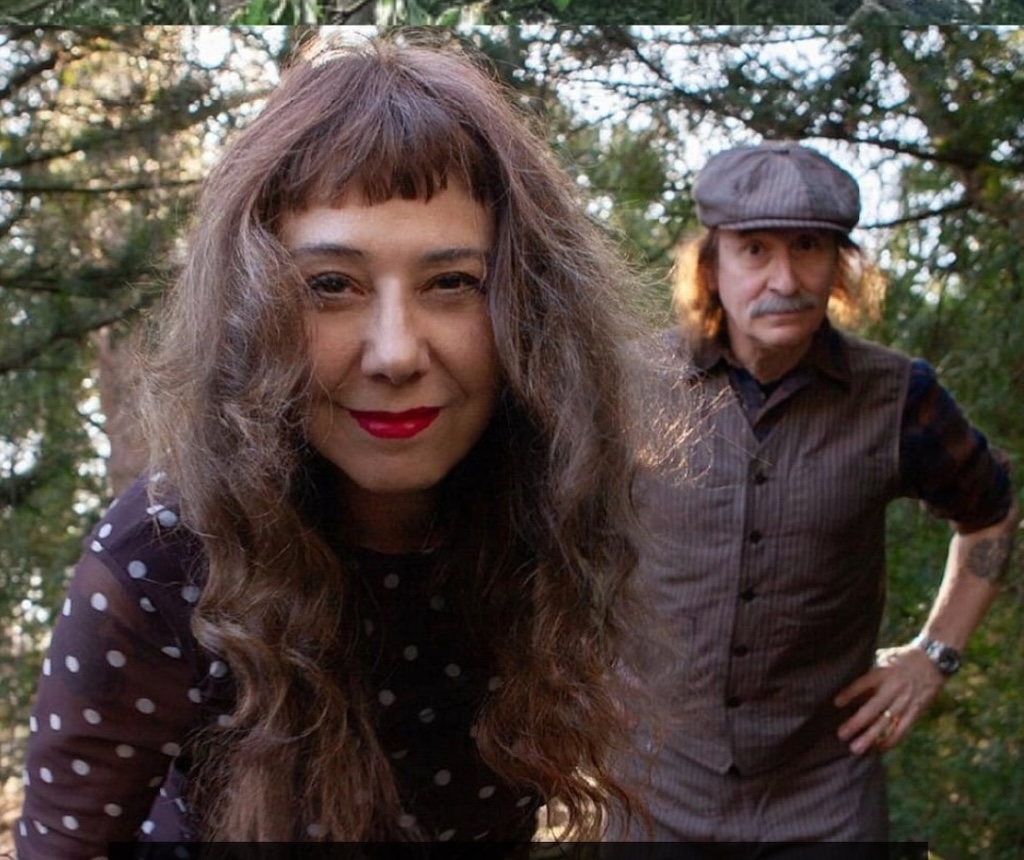
Hace veinticinco años comenzaron a colaborar Alexander Hacke —bajista y miembro original de la banda industrial Einstürzende Neubauten— y Danielle de Picciotto, artista visual, música y cofundadora del legendario festival electrónico Love Parade. Su proyecto conjunto se presenta bajo el nombre artístico de Hackedepicciotto.
Después de vivir catorce años de forma itinerante por Europa, decidieron establecerse en un bosque a las afueras de Berlín. Este espacio se ha transformado en su refugio: un claro en medio de la frondosa naturaleza que funciona como faro para mantener un estilo de vida saludable y canalizar energía positiva a través de su obra. Esta filosofía les permite estar «listos para reaccionar, denunciar y defender», alineándose con el propósito del dúo de «intentar transmitir una sensación de esperanza y urgencia».
En el ámbito musical, Hacke toma prestado el término «Industrial pastoral» para definir la identidad actual de Hackedepicciotto. Su propuesta es una mezcla de darkwave, ambient drone y matices neoclásicos; una identidad sonora que se plasma en guitarras melódicas, voces místicas, pasajes sinfónicos y atmósferas envolventes. Esta descripción musical es lo que podemos encontrar en su nuevo álbum “Lichtung” —editado el 10 de julio de 2026 por el legendario sello Mute-.
Agradecemos a Ed Benndorf, de la distribuidora berlinesa Dense, por gestionar esta entrevista y entregarnos su permanente apoyo. Desde luego, extendemos nuestro agradecimiento a Hackedepicciotto por compartir sus propósitos e ideales musicales.
El título del álbum, “Lichtung”, evoca bellamente la imagen de un claro luminoso oculto en medio de un bosque denso y oscuro. Tras catorce años de una intensa vida nómada, ¿qué les impulsó a cambiar de estilo de vida y establecerse?
Alexander: “Tuvimos la oportunidad de mudarnos a esta casa en las afueras de Berlín, en el extremo sur de la ciudad, a un precio muy justo. Este barrio se llama Lichtenrade, derivado de ‘Lichtenrode’, la antigua expresión alemana para abrir un claro en el bosque, que inspiró el nombre del álbum”.
Danielle: “Nunca habíamos planeado ser nómadas por tanto tiempo. Simplemente nos negamos a ceder ante la gentrificación y pagar un alquiler exorbitante, lo que nos habría obligado a buscar trabajos ocasionales, lo cual, a su vez, nos habría distraído de nuestro arte. Así que dejamos nuestra casa y comenzamos a viajar en busca de una alternativa. Cuando, después de 14 años, surgió la posibilidad de vivir en una casa grande por poco dinero, nuestro objetivo se había cumplido y pudimos establecernos de nuevo y concentrarnos en lo que mejor sabemos hacer: la música.”
Cuando el mundo exterior parece desmoronarse, ¿cómo logran proteger su estudio y su proceso creativo para que esta ansiedad externa no manche la pureza de su música?
Danielle: “Practicamos mucho meditación, tai chi y yoga. También leemos mucho (somos muy activos lectores) e intentamos aprender cosas que nos ayuden a mantener una visión positiva de la vida. Leer es importante: mantiene la mente activa y despierta. Así es más fácil detectar cuándo nos mienten y manipulan. Comemos muy sano, somos veganos, no bebemos alcohol ni fumamos. Puede sonar un poco hippie, pero lo vemos como algo radical.”
“También consideramos esto un trabajo energético: fortalecer la positividad en el mundo en lugar de sucumbir a la negatividad. En nuestra opinión, esta es la responsabilidad de los artistas hoy en día. Mantenernos fuertes y alerta. Listos para reaccionar, para denunciar, para defender. Nuestro arte nos da la fuerza para hacerlo y, a través de él, esperamos ayudar a otros a encontrar esperanza. Tener un hogar lo facilita, porque una no está tan expuesta a los cambios políticos como un nómada.”
Alexander: “Es una ventaja poder observar la locura desde dentro, con cierta distancia, un poco desapegado”.
Danielle, “Lichtung” es el primer álbum de la banda escrito e interpretado íntegramente en alemán. Como artista nacida y criada en Estados Unidos, ¿cómo influyó el hecho de explorar este nuevo territorio lingüístico en tu relación con tu propia voz y en tu forma de transmitir la carga emocional de las letras?
Danielle: “Fue un experimento muy interesante. Hablo alemán con fluidez, pero sigo soñando y pensando en inglés, así que escribir en alemán fue como resolver un rompecabezas intelectual, y no tanto un flujo de pensamiento intuitivo. El alemán es un idioma muy antiguo, con palabras que se remontan a la Edad Media o incluso a épocas anteriores. Muchas palabras están ligadas a un periodo histórico concreto y tienen significados y connotaciones muy diferentes. Esto dificulta escribir de forma espontánea. Además, tiene palabras muy largas y un ritmo distinto al del inglés. En definitiva, un territorio completamente nuevo. Pero me encantó investigar y aprender las diferentes maneras de construir frases para cantar en este idioma”.
Alexander, has compartido una metáfora impactante: “Si Neubauten era el bosque, ahora he llegado al claro”. ¿Cómo ha cambiado tu dinámica de trabajo diaria ahora que operas con total autonomía creativa en tu propio estudio casero, lejos de las estructuras históricas y las expectativas sonoras de la música industrial?
Alexander: “¡La autonomía es sin duda un estado muy liberador! Durante cuatro décadas y media, la ‘antigua’ banda fue mi prioridad. Cuando me llamaban, estaba disponible y preparado para afrontar todo lo que eso implicaba. Sin menospreciar nada de lo que logramos juntos, es genial no estar ya involucrado con este grupo de personas y lo que hagan está bien. Simplemente ya no es mi problema.”
Vuestra música suele ser catalogada como darkwave o «drone sinfónico». Sin embargo, en “Lichtung” te alejas de los bucles repetitivos y minimalistas de álbumes anteriores como «Menetekel» para explorar estructuras electrónicas más libres y pasajes de piano clásico. ¿Qué les impulsó a este cambio hacia composiciones más dinámicas y evocadoras?
Danielle: “Tanto Alexander como yo somos artistas a quienes nos encanta explorar, aprender y desarrollarnos. No nos interesa encontrar una fórmula única y repetirla el resto de nuestras vidas. Cuando creamos nuestro sonido en el desierto de Mojave, era muy monótono y sinfónico, sobre todo por mi zanfona. En Estados Unidos, este tipo de sonido tiene una historia diferente a la de Alemania. Al igual que con el idioma, aquí en Berlín la zanfona se considera un instrumento medieval, mientras que en Estados Unidos es más bien algo propio del desierto. Conservamos este elemento en nuestra música, pero queríamos que fuera más contemporánea, así que esta vez pusimos mayor énfasis en los sonidos electrónicos, dándoles voz propia y evitando la repetición. Añadir el piano, que echaba de menos, ayudó, y así surgió una nueva forma a partir de lo que habíamos compuesto, sorprendiéndonos por su frescura”.
Alexander: “Alguien lo llamó ‘Industrial Pastoral’. Creo que es una descripción perfecta y deberíamos usarla como definición de nuestro género a partir de ahora.”
“Lichtung” existe en un estado constante de dualidad entre la nostalgia por los años de viaje y una profunda esperanza en el futuro. Si tuvieras que resumir el mensaje principal que quieres que los oyentes se lleven consigo al salir de tu «espacio» musical, ¿cuál sería?
Alexander: “No me gusta el término, ni la idea de nostalgia, ya que es un anhelo por un pasado que nunca existió realmente. Y para mí, la esperanza es un concepto negociable y, por lo tanto, no tan poderoso como la fe, la creencia inquebrantable en un resultado positivo, el bien supremo, como en ‘Venceremos’. Nuestro instructor de Tai Chi comienza cada sesión con las palabras ‘despeja tu espacio y fluye’. Creo que ése es el mensaje: ‘hacer espacio para lo esencial’.
Danielle: “Creo que necesitamos fortalecernos, recordar cosas que nuestra sociedad ha olvidado: la bondad, la empatía y la paciencia. Necesitamos independizarnos de la carrera desenfrenada por el lucro y empezar a leer de nuevo, a alargar nuestra concentración y pensar con claridad. Se avecinan tiempos difíciles y vendrán más, y para sobrevivir necesitamos estar alerta. Con nuestra música intentamos transmitir una sensación de esperanza y urgencia”.
Finalmente, ahora que han establecido un espacio creativo permanente, ¿qué pueden compartir sobre sus próximos proyectos?
Danielle: “Formamos parte de una hermosa obra de teatro francesa de Sophie Pérez /Companie de Zerep llamada ‘Sturbzep’. Compusimos la música y también la interpretamos en vivo durante la función, lo cual disfrutamos muchísimo. Estaremos de gira con ellos un año más por Francia, Bélgica y Suiza. La obra es muy surrealista y hermosa, con un estilo subversivo y anárquico y los actores y el director son simplemente maravillosos. También componemos música para cine con regularidad (¡actualmente estamos trabajando en dos a la vez!) y Alexander está produciendo una increíble serie de librerías de sonido para Orchestral Tools. Como artista interdisciplinaria, también expongo mis dibujos con frecuencia y he comenzado un nuevo libro: ‘No hay paz para los condenados’”.
Alexander: “Nada es permanente, así que estamos disfrutando del momento.”
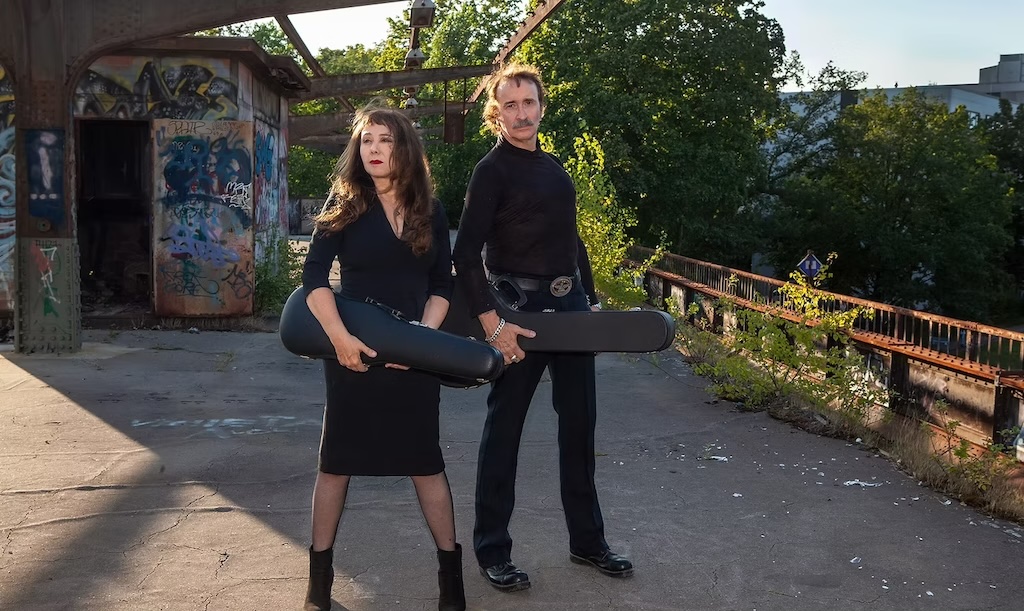
Twenty-five years ago, Alexander Hacke—bassist and original member of the industrial band Einstürzende Neubauten—and Danielle de Picciotto, visual artist, musician, and co-founder of the legendary electronic music festival Love Parade, began collaborating. Today, their joint project goes by the stage name Hackedepicciotto.
After spending fourteen years traveling around Europe, they decided to settle in a forest on the outskirts of Berlin. This space has become their sanctuary: a clearing amidst lush natural surroundings that serves as a beacon for maintaining a healthy lifestyle and channeling positive energy through their work. This philosophy enables them to be «ready to react, speak out, and defend,» in line with the duo’s aim to «try to convey a sense of hope and urgency.»
Musically, Hacke borrows the term «Pastoral Industrial» to define Hackedepicciotto’s current identity. Their sound seamlessly blends darkwave, ambient drone, and neoclassical nuances—a sonic identity expressed through melodic guitars, mystical vocals, symphonic passages, and immersive atmospheres. This musical description captures the essence of their new album, ‘Lichtung,’ released on July 10, 2026, by the legendary Mute label.
We would like to thank Ed Benndorf from the Berlin-based distributor Dense for arranging this interview and for his ongoing support. Of course, we also extend our gratitude to Hackedepicciotto for sharing their musical aims and ideals.
The album title, ‘Lichtung,’ beautifully conjures the imagery of a bright clearing hidden inside a dense, dark forest. Following 14 years of an intense nomadic existence, what ultimately prompted the decision to change your lifestyle and settle down?
Alexander: “We were given the opportunity to move into this house on the outskirts of Berlin, on the very southern tip of the city, for a very fair price. This district is called Lichtenrade, deriving from “Lichtenrode”, the old German for cutting a clearing into a forrest, which inspired the name of the album.”
Danielle: “We had never meant to be nomads for such a long time. We just refused to give in to gentrification and pay an overpriced rent which would have meant doing side jobs, which would in turn have distracted us from our
art. So we gave up our house instead and started traveling in search for an alternative. When the possibility came up after 14 years to be able to live in a large house for little money our goal had been achieved and we could settle down again and concentrate on what we do best: music.”
When the outside world feels like it is falling apart, how do you manage to shield your studio and creativeprocess so that this external anxiety doesn’t taint the purity of your music?
Danielle: “We work a lot on meditation, tai chi and yoga. We also read a lot (bookworms) and try to learn things that help us keep a positive view on things. Reading is important – it keeps your brain alive and awake. That way it is easier to see where we are being lied to and manipulated. We eat very healthily, are vegan, do not drink alcohol and do not smoke anymore. This may sound very hippyish but we see it as being radical.”
“We consider this also to be energy work – strengthening positivity in the world instead of giving in to negativity. This, in our opinion is the responsibility of artists now a days. Stay strong and alert. Ready to react, to expose, to defend. Our art gives us the strength to do this and through our art we hope to help others find hope. Having a home makes it easier because one is not quite as exposed as a nomad to political changes.”
Alexander: “Its an advantage to be able to look at the madness from inside, sort of removed, slightly detached.”
Danielle, ‘Lichtung’ marks the band’s first album written and performed entirely in German. As an artist born and raised in the United States, how did navigating this new linguistic territory alter your relationship with your own voice and your approach to conveying the emotional weight of the lyrics?
Danielle: “It was a very interesting experiment. I can speak German fluently but still dream and think in English so writing in German was like an intellectuall puzzle piece and less than an intuitive flow of thought. German is very old with words stemming from the midevil ages or even earlier. Many words are tied to a certain time period and hold very different meanings and conjuntations. This makes it tricky to write impulsively. It also has very long words and a different rhythm than English. So all in all completely new territory. But I loved researching and learning the different ways of moulding sentences to sing in this different language.”
Alexander, you’ve shared a striking metaphor: «If Neubauten was the forest, I’ve now reached the clearing.» How has your daily working dynamic shifted now that you are operating with total creative autonomy in your own home studio, away from the historical structures and sonic expectations of industrial music?
Alexander: “Autonomy certainly is a very liberating state of being! For four and a half decades the “old” band was my priority. When they called I made myself available and was prepared to deal with all that entailed. Without
devaluating anything we achieved together, it feels great to no longer be involved with this particular group of people and whatever they do is fine. It’s just not my problem anymore.”
Your music is often labeled as darkwave or symphonic drone. However, on ‘Lichtung,’ you move away from the repetitive, minimalist loops of previous albums like ‘Menetekel’ to explore freer electronic structures and classical piano passages. What prompted this shift toward more dynamic, breathing compositions?
Danielle: “Both Alexander and myself are artists that love exploring, learning and developing. We are not really interested in finding one single formula and repeating that for the rest of our lives. When we originally came up with our own sound in the Mojave desert it was very drony and symphonic – especially due to my hurdy gurdy. In the US this kind of drone has a different history than in Germany. As with the language, here in Berlin a hurdy-gurdy is looked on as a mideavel instrument, in the states its more of a desert thing. We still have this element in our music but we wanted it to be more contemporary so we put more emphasise on electronic sounds this time, giving them their own voice, and being a little less repetative. Adding the piano which I had been missing, helped and so a new form appeared out of what we had composed – surpriseing us with its freshness.
Alexander: Someone called it “Pastoral Industrial”. I think that’s a perfect description and we should use this as the definition of our genre from now on.”
‘Lichtung’ exists in a constant state of duality between nostalgia for your traveling years and a profound hope for the future. If you had to summarize the core message you want listeners to carry with them as they step out of your musical «clearing,» what would it be?
Alexander: “I don’t like the term, or the idea of nostalgia, as it is a longing for a past that never really existed. And to me Hope is a negotiable concept and therefore not as powerful as Faith, the unshakable believe in a positive outcome, the ultimate Good, as in ‘We shall overcome.’ Our Tai Chi instructor starts each session with the words ‘clear your space and get into the flow.’ I think that’s the message: ‘make room for the essential.’”
Danielle: “I think we need to strengthen ourselves, to remember things our society has forgotten: kindness, empathy and patience. We need to make ourselves independent of the rat race chasing profit and start Reading again, lengthening our concentration and thinking clearly. Hard times are upon us and more will be coming and to be able to survive we need to be awake. Within our music we try to convey a feeling of hope and urgency.”
Finally, now that you have established a permanent creative haven, what can you share about your upcoming projects?
Danielle: “We are part of a beautiful french theatre piece by Sophie Pérez /Companie de Zerep called ‘Sturbzep.’ We composed the music for this and are also performing it live during the performance which we enjoy very much. We will be touring with them for another year through France, Belgium and Switzerland. The piece is very surrealistic and beautiful in a subversive, anarchic fashion and the actors and director just wonderful. We also compose film music on a regular basis (currently working on two at the same time!) and Alexander is producing an amazing series of sound librairies for Orchestral Tools. As I am an interdisciplinary artist I also exhibit my drawings regularily and have started a new book. No peace for the damned.”
Alexander: “Nothing is permanent so we are enjoying the ride.”
