
Rapoon
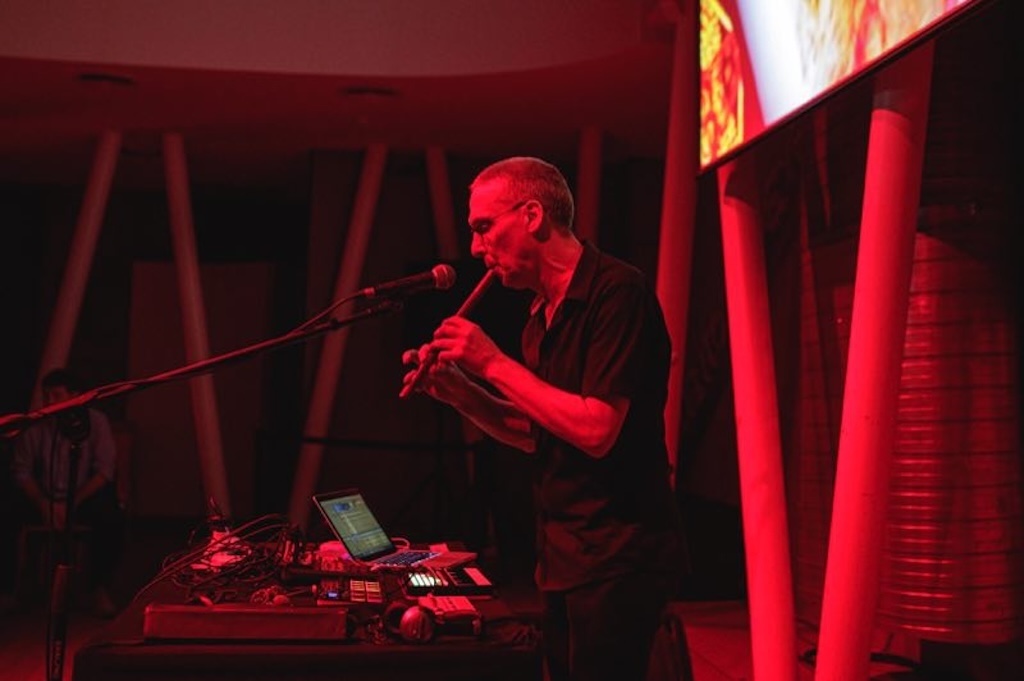
Robin Storey, la fuerza creativa detrás del proyecto etno-ambiental Rapoon, sigue siendo una de las figuras más prolíficas e influyentes de la música experimental postindustrial.
Desde que cofundó el legendario colectivo :zoviet*france: en 1980 y posteriormente lanzó su carrera en solitario en 1992, Storey ha combinado magistralmente arquitecturas de loops hipnóticos, percusión de Oriente Medio y África, y drones orgánicos resplandecientes. Su estilo característico fusiona con naturalidad texturas acústicas primitivas con manipulaciones de estudio vanguardistas, construyendo paisajes sonoros que transmiten una sensación de estar suspendido en un estado atemporal en lugares remotos.
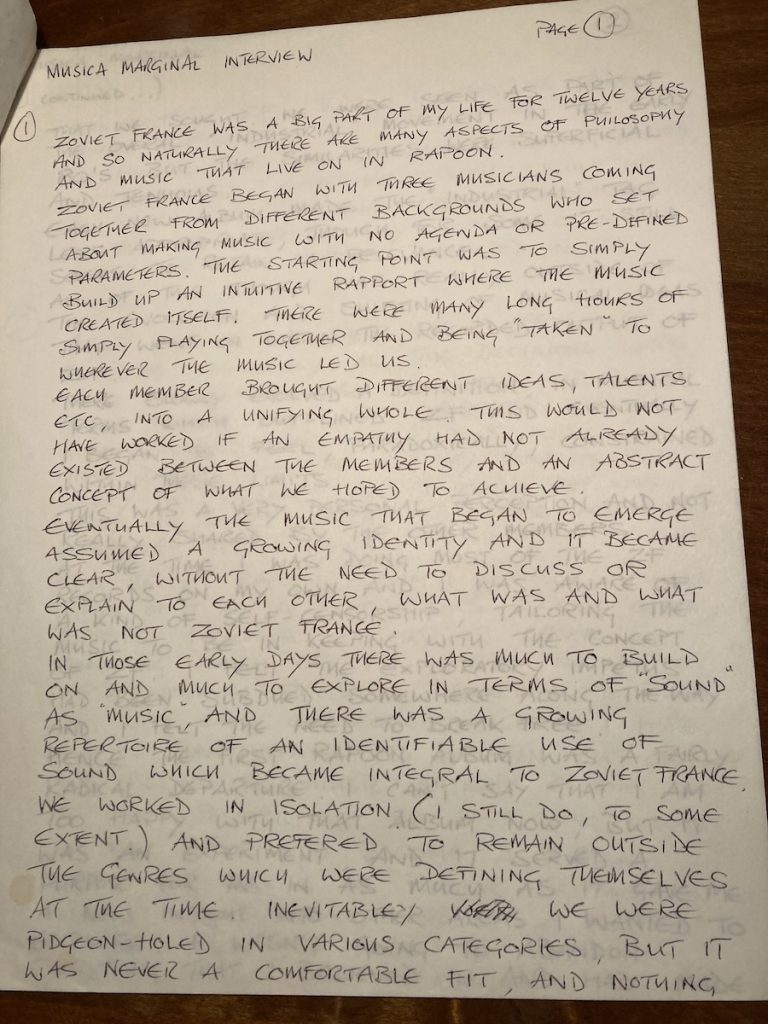
“Su álbum “Grain Of Light” (reseñado en Loop en mayo de este año: https://loop.cl/rapoon-grain-of-light/), lanzado este año, ha sido motivo para realizar una segunda entrevista a Robin Storey. La primera, publicada en el n° 7 del fanzine “Música Marginal” en 1996 (revisa este link: https://loop.cl/musica-marginal-no-7/).
Nuevamente estamos agradecidos de contar con la visión que rodea el universo musical de Rapoon.
Cuando lanzaste Rapoon en 1992, ¿qué influencias sonoras o culturales específicas te inspiraron a crear esta fusión única de loops ambientales y ritmos étnicos?
“Cuando empecé a trabajar como Rapoon, vivía en una zona de Newcastle conocida como el West End. No era una zona particularmente acomodada y, por aquel entonces, había una población india bastante numerosa concentrada en esa área. Siempre me había gustado la música étnica, aunque no me identificaba como tal. Los ritmos y las estructuras me resultaban más familiares que la música occidental.
Me gustaba la cualidad hipnótica de los ritmos y me encantaba el canto, especialmente las voces femeninas. Compré un par de casetes en una tienda local y las voces de ‘Dream Circle’ (DOVe Records, 1992) provienen de uno de ellos. En aquel momento trabajaba como ingeniero audiovisual independiente, así que tenía acceso a equipos de alta gama. Tomé prestado algo de material, me lo llevé a casa y creé ‘Dream Circle’ en un fin de semana.
No tenía ni idea de que se convertiría en un álbum emblemático, pero sí sé que me sentí inspirado cuando lo creé”.
¿Cómo interactúan tu arte visual y tu música? ¿Tus pinturas y paisajes sonoros surgen de la misma fuente conceptual, o se influyen mutuamente de una manera más directa y recíproca?
“El arte visual fue mi primer amor y sigue siendo una práctica necesaria. Alterno entre ambos medios y se influyen mutuamente, a veces directamente, como en la obra de arte de ‘Can you hear that rain?’ (Ultra Gash Records, 2022), otras veces de una manera más abstracta y meditativa.
No podría imaginar mi vida sin practicar estas dos disciplinas. Últimamente, la escritura también se ha vuelto más importante y actualmente estoy escribiendo algunas novelas cortas para una antología de obras escritas”.
¿Cómo influye tu entorno físico actual en tu trabajo? ¿Hay paisajes específicos, texturas locales o elementos culturales en tu entorno que se reflejen en tus paisajes sonoros?
“Al norte de Newcastle se encuentra la hermosa costa de Northumbria y las cautivadoras colinas de Cheviot. Ambas son agrestes y poco pobladas.
La costa rezuma historia y creo que allí se concentra la mayor cantidad de castillos, tanto en la costa como en el interior, que en cualquier otro lugar del Reino Unido.
Holy Island y las islas Farne también son hermosas y remotas. En las colinas de Cheviot hay cientos de yacimientos de antiguos monumentos de piedra y asentamientos fortificados. Me encanta caminar por las colinas de Cheviot; son tan salvajes y libres. El álbum ‘The Fires of the Borderlands’ se relaciona específicamente con estos antiguos senderos que atraviesan las colinas que limitan con Escocia, por donde merodeaban los asaltantes fronterizos.
Mi apellido pertenece a uno de los clanes de asaltantes, los Storey, que saqueaban a lo largo de la frontera en los siglos XV y XVI”.
La presencia de aparentes pasos y ruidos ambientales en “Touching of Dreams” (del álbum “Grain Of Light”, Unexplained Sounds Group, 2026) crea una impactante sensación de presencia física. ¿Estos elementos pretenden anclar al oyente en un espacio tangible, o representan la intrusión de la realidad consciente en un estado onírico?
“Siempre he utilizado ruidos ambientales para aumentar la sensación de separación de esta realidad. Actúan, con suerte, como una conexión con el mundo físico y un desapego de él. Como un sueño despierto.
Intento crear música que no esté limitada a ningún espacio o género en particular. Utilizo muchas referencias y elementos para expandir el momento de ser y escuchar. Espero que se entienda y no suene demasiado
pretencioso”.
Dada la extensa discografía de Rapoon, ¿en qué territorios emocionales o sonoros inexplorados estás más interesado en profundizar próximamente?
“En referencia a la respuesta anterior, intento incluir elementos de sonidos y estilos musicales no relacionados. En gran medida y de la misma manera que William Burroughs usó recortes para crear nuevas formas de escritura.
Siempre empiezo de cero e improviso sin límites preestablecidos. El concepto detrás de la narrativa musical se revela en el proceso. Trabajo todos los días… Vi un comentario gracioso en Facebook sobre uno de mis últimos lanzamientos… alguien escribió: ‘¿Acaso Rapoon nunca duerme?’. Bueno, sí duermo, pero me encanta crear música y obras de arte, y nunca me canso de hacerlo. He tenido mucha suerte de que todavía haya gente que quiera escucharme”.
Robin Storey, the creative force behind Rapoon, remains one of the most prolific and influential figures in post-industrial experimental music. Since co-founding the legendary collective :zoviet*france: in 1980 and launching his solo career in 1992, Storey has masterfully blended hypnotic loops, Middle Eastern and African percussion, and shimmering organic drones. His signature style fuses primitive acoustic textures with avant-garde studio manipulation, constructing soundscapes that suspend the listener in a timeless, remote geography.
His album ‘Grain Of Light’ (reviewed at Loop in May this year: https://loop.cl/rapoon-grain-of-light/), released this year, has provided the occasion for a second interview with Robin Storey. The first one was published in issue 7 of the fanzine “Música Marginal” in 1996 (check out this link: https://loop.cl/musica-marginal-no-7/).
When you launched Rapoon in 1992, what specific sonic or cultural influences inspired you to move toward this unique fusion of ambient loops and ethnic rhythms?
“At the time I began working as Rapoon I was living in an area of Newcastle known as the West End. It was n17,5 ot a particularly ‘well off’ area and there was, at the time, a fairly large Indian population which centred around that area. I had always loved ethnic music without actually identifying as such. The rhythms and structures seemed more familiar to me than Western music.
I liked the trance -like quality of the rhythms and I loved the singing, especially the female voices. I bought a couple of cassettes from a local shop and the vocals on ‘Dream Circle’ (DOVe Records, 1992) came from one of those. I was working, at the time, as a free-lance audio-visual engineer and so I had access to some high-end equipment. I borrowed some and took it home and created ‘Dream Circle’ over one weekend. I had no idea it would become a defining album but I do know I felt inspired when I created it.”
How do your visual art and music interact? Do your paintings and soundscapes spring from the same conceptual source, or do they inform each other in a more direct, reciprocal way?
“Visual art was my first love and remains a necessary practice. I alternate between the two mediums and they do both inform each other, sometimes directly, such as the artwork for ‘Can you hear that rain’ (Ultra Gash Records, 2022) other times it is in a more abstract and meditative way. I could not imagine living without doing both of these disciplines. Of late writing has also become more important and I am currently writing some short novels for an anthology of written works.”
How does your current physical environment influence your work? Are there specific landscapes, local textures, or cultural elements in your surroundings that find their way into your soundscapes?»
“To the North of Newcastle is the beautiful Northumbrian coastline and the beguiling Cheviot hills. Both are rugged and little-populated. The coastline reeks of history and I believe there is the greatest concentration of Castles along the coast and inland than there is anywhere else in the UK.
Holy Island and the Farne islands are also beautiful and remote. In the Cheviot hills there are hundreds of sites of ancient Stone monuments and hill fort settlements. I love walking in the Cheviots it is so wild and free. The album ‘The Fires of the Borderlands’ (Release Entertainment, 1988) specifically relates to these old walkways through the hills bordering Scotland where the ‘Border Reivers’ roamed.
My name belongs to one of the Reiver clans ‘The Storeys’ who plundered along the border in the 15th and 16th century.”
The presence of apparent footsteps and environmental noises in ‘Touching of Dreams’ (on ‘Grain Of Light,’ Unexplained Sounds Group, 2026) creates a striking sense of physical presence. Are these elements meant to ground the listener in a tangible space, or do they represent the intrusion of waking reality into a dream state?
“I have always used environmental noises to add to a sense of separateness from this reality. They act, hopefully, as a connection with the physical world and a detachment from it. Like a waking dream. I try to make music that is not bound by any particular space or genre I use many references and elements to expand on the moment of being and listening. I hope that makes sense and doesn’t sound too pretentious?”
Given Rapoon’s massive discography, what uncharted emotional or sonic territories are you most eager to dive deeper into next?
“In reference to the last answer I am trying to include elements of unassociated sounds and musical styles. In much the same way as William Burroughs used cut ups to create new forms of writing. I always start from a blank sheet and improvise without any pre-determined boundaries. The concept behind the musical narrative reveals itself in the process. I work every day…. I saw an amusing comment on FaceBook about one of the latest releases….someone wrote ‘does Rapoon never sleep?’ Well I do sleep, but I love creating music and artworks and I never tire of doing so. I have been very lucky that I still have people who want to listen to it.”
