Stephen Thrower
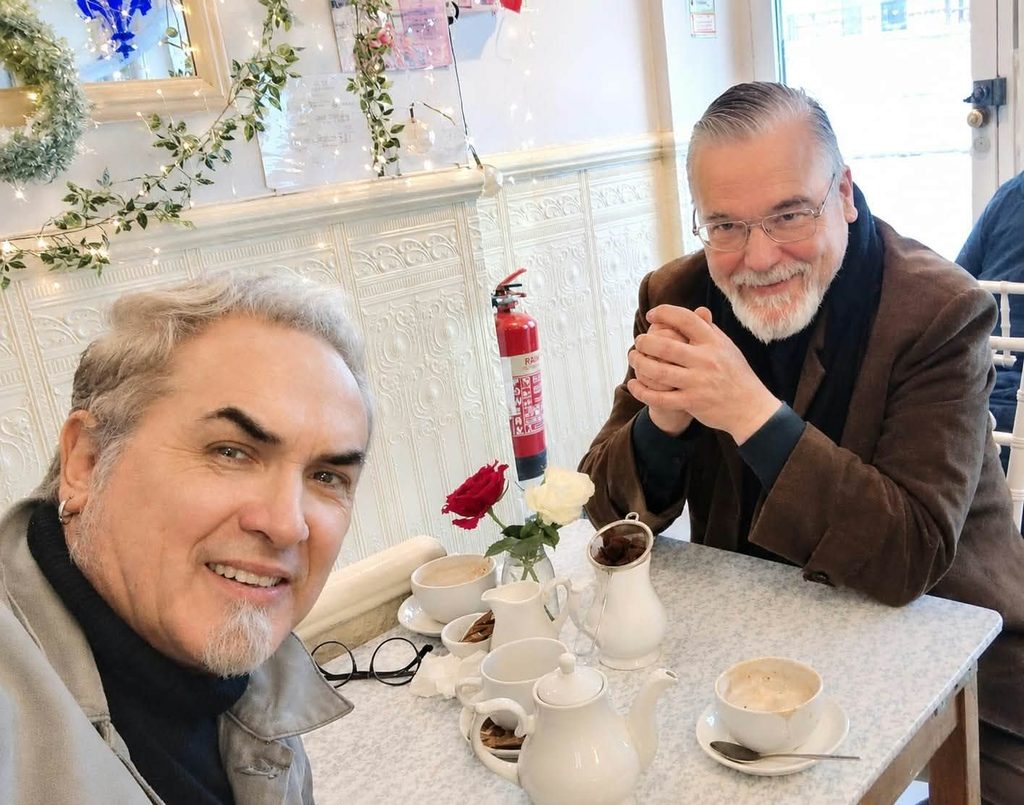
Debo comenzar con una advertencia que es también una declaración de principios: cualquier cosa que escriba sobre Stephen Thrower estará inevitablemente sesgada. Es alguien a quien admiro desde muy joven y, por esas vueltas extrañas que a veces da la vida —algo que ya he comentado en artículos anteriores—, con los años tuve la posibilidad no sólo de conocerlo, sino también de trabajar con él y ayudarlo en algunos de sus libros. Lo que alguna vez fue la admiración distante por un músico al que escuchaba desde Chile, terminó convirtiéndose en algo bastante más cercano: conversar con él, compartir un café y un pastel en el Soho londinense, hablar de música, cine y libros y conocer finalmente a la persona detrás de una obra que había seguido durante buena parte de mi vida. Stephen es, en ese sentido, alguien a quien hoy puedo considerar, de cierta manera, un amigo. Por lo mismo, esta curatoría no pretende esconder el afecto ni fingir una objetividad que sencillamente no existe.
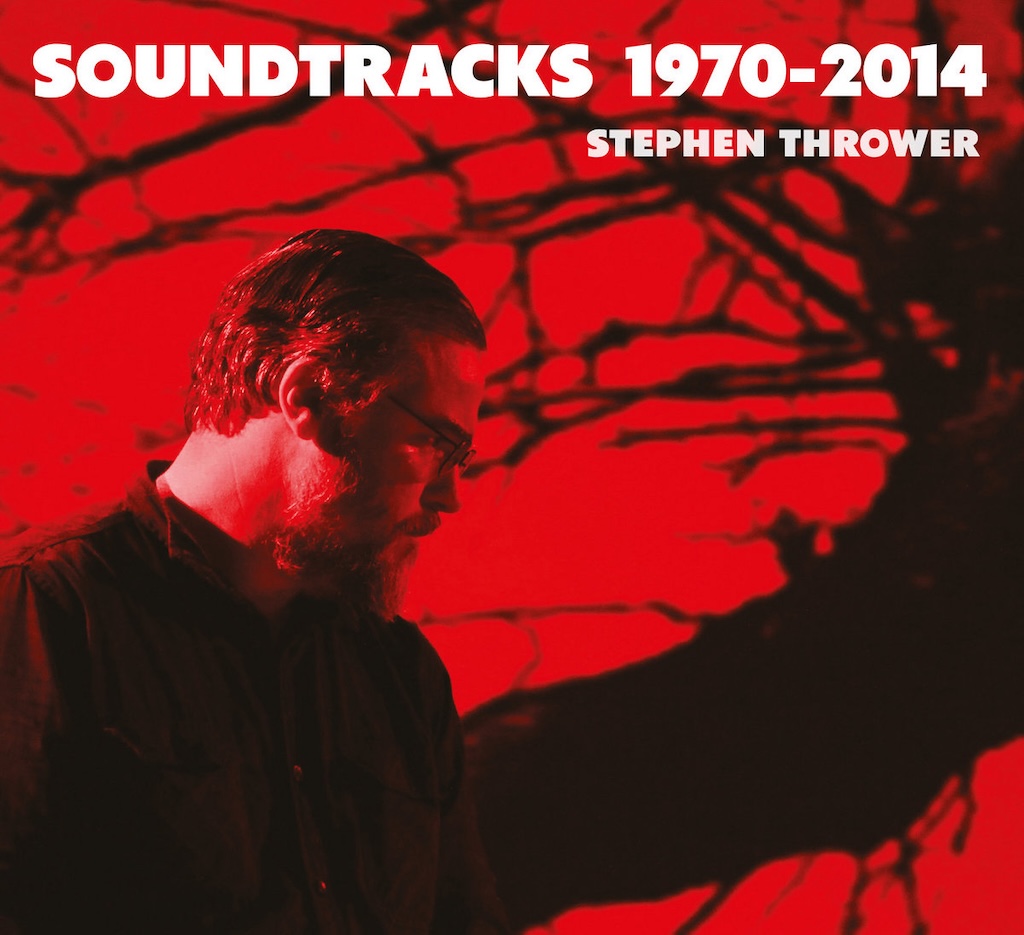
La ocasión para volver sobre su trabajo es “Soundtracks 1970–2014”, publicado el 16 de junio de 2026 por el sello vienés Klanggalerie. El disco reúne diecisiete composiciones de Stephen realizadas para distintas películas y proyectos cinematográficos, entre ellos “Down Terrace” de Ben Wheatley, Hell’s Ground (Zibahkhana) —la primera película paquistaní del género gore— y varios cortometrajes eróticos del pionero gay Peter De Rome. Toda la música fue compuesta e interpretada por Thrower. Aunque aparece formalmente como un nuevo álbum, su naturaleza es claramente compilatoria: recoge música procedente de diferentes momentos de su trayectoria, recupera piezas publicadas anteriormente y las reorganiza como una retrospectiva de su trabajo para el cine.
Antes de entrar en el disco conviene recorrer, aunque sea de manera sintética, el inmenso territorio del que proviene su autor. Stephen Thrower es músico, compositor, escritor y una de esas figuras difíciles de reducir a una sola actividad. Antes de Coil fue cofundador de Possession, proyecto experimental surgido a comienzos de los años ochenta y que dejó registro de aquella temprana exploración sonora. En 1984 apareció como invitado en “Scatology”, primer álbum de Coil, y posteriormente se incorporó al grupo, permaneciendo allí hasta 1992 y contribuyendo a un total de siete discos. A mi juicio, aquella encarnación de Coil continúa siendo una de las más fascinantes de toda su historia: juguetona, malsana, ritual, experimental y situada todavía en una zona donde lo analógico, lo industrial y una electrónica casi artesanal podían convivir con absoluta naturalidad.
Entre 1999 y 2015 Thrower trabajó como Cyclobe junto a su compañero Ossian Brown, también proveniente de ese complejo entramado británico vinculado a Coil, Current 93 y Death in June. Cyclobe publicó cuatro álbumes — “Luminous Darkness”, “The Visitors», «Wounded Galaxies Tap At The Window” y “Sulphur-Tarot-Garden” —a través de su propio sello Phantomcode, y participó además en el proyecto de remezclas de Nurse With Wound que desembocó en “Paraparaparallelogrammatica”. Más tarde Stephen continuó su recorrido junto a nuestro querido David Knight (Arkkon), en UnicaZürn, otro proyecto donde instrumentos de viento, teclados, guitarras tratadas y electrónica siguen operando dentro de ese territorio ambiguo entre música contemporánea, improvisación, psicodelia y sonido espectral.
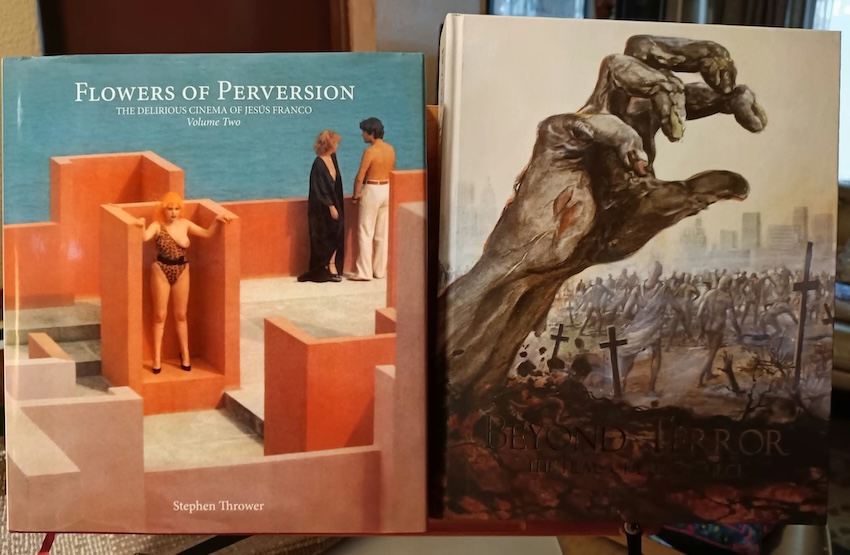
Pero hablar de Stephen solamente como músico sería dejar fuera una parte fundamental del personaje. Es también un profundo conocedor del cine de culto, del horror y del exploitation, autor de trabajos monumentales dedicados a Lucio Fulci, Jess Franco y al cine grindhouse estadounidense, entre ellos “Nightmare USA”. Tuve incluso la fortuna de colaborar con él en uno de sus trabajos relacionados con Jess Franco. Su investigación sobre Franco ocupa dos grandes volúmenes, además de publicaciones complementarias, mientras que sus libros sobre Fulci constituyen otra referencia obligatoria para quienes se interesen por el cine de terror italiano. Cine y música no son, por lo tanto, dos actividades paralelas dentro de su vida: forman parte de una misma arquitectura intelectual y estética.
Hay además una pequeña anécdota cinematográfica que no debería quedar fuera. Stephen no sólo ha escrito sobre cine, compuesto para él y trabajado junto a cineastas: también tuvo su breve momento frente a la cámara. Apareció como extra en “Caravaggio” (1986), de Derek Jarman, película en la que recuerdo verlo en una escena como una especie de sacristán. Es una aparición fugaz, casi un guiño, pero resulta perfecta dentro de esta historia: Thrower no sólo observó el cine desde fuera, también llegó a habitarlo literalmente por unos instantes. Su relación con el universo de Jarman fue además más amplia, con pequeñas apariciones también en “Imagining October” y “The Last of England”.
Cuando finalmente conocí a Steve en persona tomé una decisión bastante consciente: no quería convertir aquel encuentro en el típico interrogatorio del admirador. No le pregunté sobre Coil, Cyclobe ni UnicaZürn. Incluso tuve la oportunidad de compartir con Dave y con ambos juntos, pero preferí no transformar esas conversaciones en una entrevista retrospectiva sobre sus carreras. Lo único que no pude evitar fue preguntarle si existía algo nuevo “en la parrilla”, alguna futura edición de la que todavía nos pudiera hablar. Steve me miró, sonrió con aquella expresión entre coqueta y pícara que tiene y no respondió absolutamente nada.
Lo que sí tuvimos fue una conversación acerca de nuestras influencias y, quizá más importante todavía, acerca del acto mismo de escuchar. Porque Steve es y ha sido siempre un gran escuchador de música. A través de él fui conociendo o profundizando en artistas que hasta entonces no había explorado con la misma atención, como Half Japanese o Chrome. Al mismo tiempo descubrimos afinidades que venían de mucho antes: compartimos, por ejemplo, el gusto por Cabaret Voltaire, una banda que en mi caso escucho desde muy joven y que forma parte de mi propia historia musical. Ese intercambio confirmó algo que ya intuía: Stephen no es solamente alguien que produce música extraordinaria, sino alguien que sabe escuchar, relacionar, recomendar y abrir puertas hacia otros territorios sonoros.
Recuerdo también que me contó acerca de uno de sus primeros trabajos, en un lugar donde de alguna forma existía acceso a discos que podían ser consultados o prestados. No recuerdo con precisión el funcionamiento exacto de aquel espacio, pero inmediatamente pensé en lo que alguna vez hizo el Goethe-Institut en Santiago, donde uno podía pedir un disco, llevarlo a casa, escucharlo, grabarlo y devolverlo: una maravillosa forma de circulación cultural. Y hay un detalle de aquella historia que nunca olvidé. Uno de los primeros discos que Stephen vio allí fue un álbum de Henry Cow. Para mí aquello no era un dato menor, porque también sigo a Henry Cow desde muy joven. Esa simple imagen ya dice bastante del tipo de artista y, sobre todo, del tipo de oyente que tenemos delante.
En Thrower conviven tradiciones que, observadas superficialmente, podrían parecer contradictorias. Por un lado están el punk, el post-punk, la música industrial, la experimentación de Throbbing Gristle y toda aquella ruptura cultural de fines de los setenta. Pero por otro existe también una relación con un rock menos convencional, más elaborado y oblicuo, incluso —si utilizamos el término con cierta amplitud— canterburiano, In Opposition o experimental progresivo; Henry Cow, Can, Faust, Popol Vuh, Pere Ubu: músicas que exigen una escucha menos dependiente de la fórmula y mucho más atenta a la textura, el accidente, la composición y el sonido mismo.
Si a aquello agregamos el fuerte imaginario fantástico y de ciencia ficción de las décadas de 1960 y 1970, la televisión británica, la psicodelia, el ocultismo y la sombra permanente de la Guerra Fría, obtenemos un caldo de cultivo extraordinario, una auténtica sopa de sentido. Jack Parsons puede convivir perfectamente con The Twilight Zone y, de manera muy especial, con Doctor Who, del cual Stephen es un fanático. Pero hay además algo generacional que me parece importante: Steve proviene de un tiempo que imaginó con enorme intensidad el futuro y terminó entrando, décadas después, en un presente que tuvo a Blade Runner como una de sus grandes profecías estéticas. Ese futuro húmedo, urbano, tecnológico, decadente y todavía profundamente humano dejó de pertenecer exclusivamente a la ciencia ficción para convertirse, al menos parcialmente, en paisaje contemporáneo. Stephen pertenece justamente a una generación que vio cómo muchas de aquellas imágenes del mañana comenzaban poco a poco a alcanzarnos.
También aparece tempranamente Clive Barker y, por supuesto, la historia de aquella música que John Balance, Peter Christopherson y Stephen Thrower compusieron como Coil para Hellraiser, aunque finalmente no fuera utilizada en la película. Ese episodio resume de algún modo muchas de las fuerzas que continúan circulando en la obra de Thrower: horror, sensualidad, ritual, materia orgánica, tecnología y una belleza que nunca termina de separarse completamente de lo perturbador.
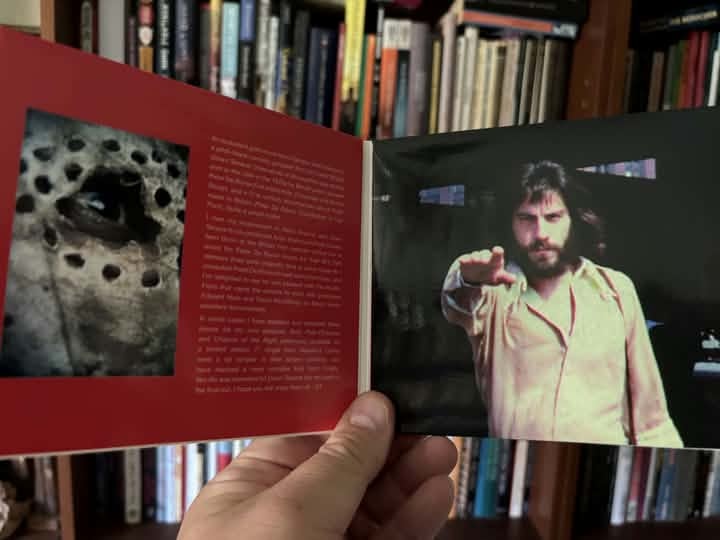
Ese mismo entramado permite aproximarse mejor a “Soundtracks 1970–2014”. Thrower conoce profundamente las bandas sonoras asociadas al cine que ama. Entre los compositores que ha reconocido como referentes podemos mencionar a Ennio Morricone, Fabio Frizzi, Bernard Herrmann, Berto Pisano y Bruno Nicolai. Cada uno representa maneras distintas de trabajar la melodía, la disonancia, el erotismo, el jazz, la psicodelia, la electrónica, la tensión y el horror. Si a esto agregamos el universo de Lucio Fulci, Jess Franco, Hammer y Hammer House of Horror, David Cronenberg, Videodrome, The Thing y toda aquella ciencia ficción y horror de los setenta y ochenta, comenzamos a visualizar la biblioteca interior desde la cual Stephen compone. Buena parte de ese cine ha sido recuperado y restaurado durante los últimos años por sellos como Severin Films, permitiendo que nuevas generaciones puedan volver a entrar en aquel extraordinario archivo audiovisual.
En determinados momentos de “Soundtracks” aparece, sin embargo, una zona difícil de describir mediante categorías tradicionales. Yo distinguiría al menos tres territorios que se cruzan constantemente en esta música: porno-espionaje, sadomasoquismo estival y horror retro- Riviera.
El porno-espionaje reúne erotismo, intriga, clandestinidad y una sofisticación ligeramente peligrosa: habitaciones de hotel, información que circula, cuerpos que también parecen guardar secretos y una música donde el deseo nunca está completamente separado de la amenaza.
El sadomasoquismo estival, en cambio, pertenece al sol, al cuerpo y a una cierta decadencia elegante. No es la oscuridad de una mazmorra, sino algo mucho más luminoso y perverso: piscinas, terrazas, piel al sol, lujo, juegos de dominación y una sensualidad que bajo su superficie contiene siempre algo inquietante.
Y finalmente está lo que podríamos llamar horror retro- Riviera: villas mediterráneas, automóviles descapotables, copas junto al mar, jardines perfectamente cuidados y, detrás de todo aquello, la sensación de que algo terrible está a punto de ocurrir. Un horror que no nace de la ruina ni de la oscuridad, sino precisamente de la belleza, del ocio y de una sofisticación llevada hasta un punto casi malsano.
Stephen Thrower parece moverse con absoluta naturalidad entre estos tres territorios, mezclando lounge, psicodelia, electrónica, erotismo, suspense y una amenaza permanente. Jess Franco, desde luego, habita en algún rincón de todos ellos.
También resulta interesante escuchar cómo Thrower utiliza la electrónica. Por momentos me parece más cercano a Isao Tomita que a Jean-Michel Jarre o Tangerine Dream. No hablo necesariamente de una influencia directa, sino de una afinidad perceptiva: aquella manera de utilizar el sintetizador como materia plástica, casi orquestal, capaz de construir espacios, colores y volúmenes antes que limitarse a producir secuencias. En varias piezas de “Soundtracks 1970–2014” encuentro precisamente eso: una electrónica más cercana a la pintura sonora, a la plasticidad tímbrica y a la ciencia ficción analógica que al desarrollo rítmico del krautrock electrónico o a una monumentalidad melódica más propia de Jarre.
No estamos hablando de influencia directa sino de una memoria sonora profundamente asimilada por alguien que lleva décadas mirando, estudiando y escuchando cine. Stephen no llega a una película como un músico al que simplemente se le solicita agregar algunos sonidos sobre una imagen; llega simultáneamente desde ambos territorios.
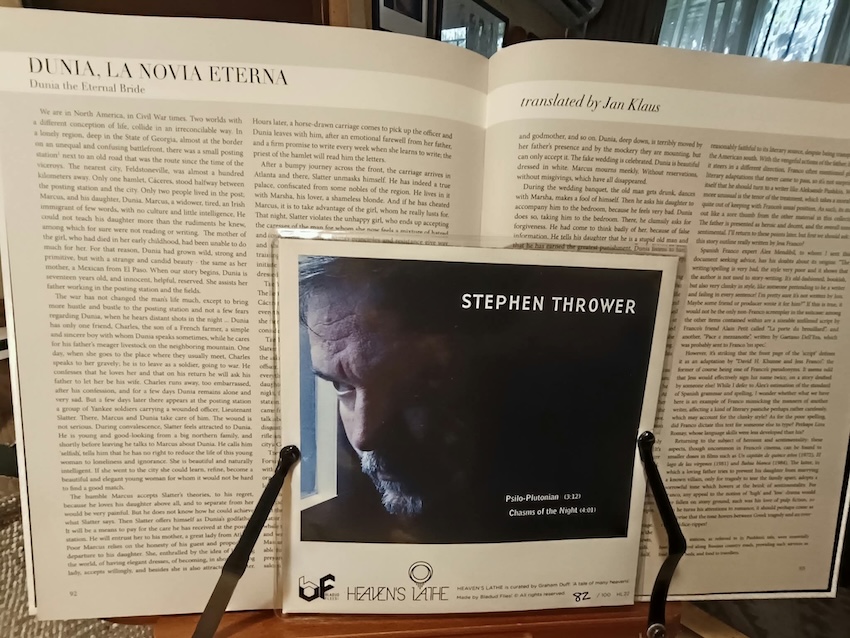
En términos discográficos podríamos considerar “Soundtracks 1970–2014” como su segundo gran álbum solista, después de “Trouser Bar”, aparecido originalmente en 2017. Ese disco ya contenía “Fire Island Kids Pt. 1, Encounter y “Fire Island Kids Pt. 2”, tres composiciones que reaparecen ahora en “Soundtracks”. Algo semejante ocurre con “Psilo-Plutonian” y “Chasms Of The Night”, editadas previamente como un siete pulgadas por Heaven’s Lathe, el exquisito sello curado por nuestro querido Graham Duff. Tenemos aquí en nuestras manos la copia número 82 de 100 de aquella edición. Llegó en abril de 2023 y recuerdo perfectamente haber estado prácticamente desde el inicio esperando que comenzara la venta. Las cien copias desaparecieron en cuestión de minutos; mi memoria dice que fueron muy pocos, aunque ahí Steve o Graham podrán corregirme. Lo importante es que aquel pequeño vinilo negro ya contenía las pistas número 2 y 10 del álbum que escuchamos hoy.
La entrada al disco es “Pollution”, y funciona precisamente como una entrada, casi literalmente. Es como llegar de noche frente a una vieja mansión y observar cómo lentamente se abren sus puertas. Todavía no sabemos quién aparecerá desde el interior: podría ser Barnabas Collins, Christopher Lee o incluso un Jess Franco con largos colmillos aguardándonos detrás de alguna cortina. Pero una cosa está clara: algo va a ocurrir. La pieza trabaja con esa anticipación, con la sensación del umbral. No necesita enseñarnos todavía aquello que habita dentro de la casa; le basta con conducirnos hasta la entrada. La mansión se ha abierto y nosotros, como oyentes, ya estamos entregados.
“Psilo-Plutonian” profundiza inmediatamente ese territorio nocturno. Es una composición oscura, cinematográfica y ligeramente malsana, una música que sugiere que algo se desplaza fuera de nuestro campo visual. Thrower no necesita mostrar el monstruo: basta con construir el espacio donde podría aparecer. Su oscuridad no proviene de la violencia sonora, sino de la insinuación, y esa capacidad de instalar una amenaza sin revelarla será una constante en varios momentos del álbum.
Con “Contaminated” entramos en otro universo. La pieza posee algo profundamente setentero y me remite al imaginario de la ciencia ficción de aquella época, incluso al universo de 2001: A Space Odyssey, de Stanley Kubrick. El sonido analógico es exquisito, cálido y al mismo tiempo inquietante. Curiosamente, no la siento particularmente cercana a Tangerine Dream, que quizá sería la asociación inmediata. Tampoco pienso tanto en Jean-Michel Jarre. Hay momentos en que la siento bastante más próxima a esa imaginación electrónica de Isao Tomita, donde el sintetizador adquiere una cualidad casi orquestal y pictórica. Más que una secuencia electrónica tradicional, Contaminated construye un espacio: laboratorios, sistemas de control, naves, tecnología, superficies, luces y habitaciones desconocidas. Tiene el sonido de un futuro imaginado cuando el futuro todavía era analógico.
“Chromosome Collapse”, ya desde el título, resulta extraordinaria. Posee un sonido cristalino, casi translúcido, aunque debajo de aquella claridad habita algo inquietante. Escuchándola mientras escribimos estas notas me atrevería a encontrar en ella algo de la factura del Coil ochentero de Stephen. Es peculiarmente juguetona, llena de pequeños movimientos y detalles, una electrónica de espíritu predigital que nunca termina de perder, sin embargo, su carácter lúgubre. Al fondo aparecen sonidos, voces encantadas, pequeñas presencias, como si detrás de la composición existiera otra habitación llena de espíritus. Es simultáneamente cristalina y fantasmal, lúdica y mortuoria.
“Fire Island Kids Pt. 1” abre un registro completamente diferente. Es una pieza jazzística de tomo y lomo: elegante, pulcra, prolija, exquisita. Mientras la escucho intuyo incluso la presencia del clarinete, aunque el instrumento específico en esta grabación debería confirmarse. Lo verdaderamente interesante es un dato que debemos conservar porque ilumina toda esta sección del disco. Peter De Rome le contó a Stephen que durante los años setenta acostumbraba proyectar sus cortometrajes acompañado por discos de Miles Davis y Olivier Messiaen. Cuando décadas más tarde Thrower recibió el encargo de crear nueva música para esas películas, escuchó aquellas referencias para comprender su clima y su instrumentación, pero sin intentar construir un pastiche de Davis. Y eso se escucha aquí: hay jazz, pero no reconstrucción nostálgica; existe sensualidad, pero también extrañeza. Thrower toma aquella memoria y la transforma en su propio lenguaje.
“Manifestation” funciona casi como un preludio o un intermezzo espacial. Algo se está fraguando. La música parece anunciar un acontecimiento que aún no termina de manifestarse, un umbral o una encrucijada. Su función no es necesariamente construir una narración autónoma, sino preparar la llegada de algo que todavía no vemos. Es la música del instante anterior a una aparición.
“Before The Affliction” es mucho más melancólica, nostálgica y desolada. Mientras la escuchaba miré el reflejo de la ventana, los árboles y el viento moviendo sus hojas y, de pronto, la música comenzó a confundirse con aquello que estaba viendo. Me llevó directamente a la campiña inglesa, a esos paisajes vinculados a Stephen que tuvimos la suerte de conocer. No puedo saber si esa asociación pertenece a la intención original de la pieza o exclusivamente a mi escucha, pero aparece con enorme fuerza: árboles, viento, cielo gris, distancia y una cierta soledad inglesa. Musicalmente posee además una amplitud casi sinfónica. Thrower parece estar componiendo no sólo una atmósfera sino un lugar.
“Yes-No” dura apenas treinta y siete segundos y no necesita más. Podría funcionar perfectamente dentro de una escena de Videodrome, de David Cronenberg. En ese punto resulta imposible no recordar también películas como The Thing, con todo aquel imaginario en el que tecnología, cuerpo, identidad, organismo y paranoia comienzan a confundirse. Es una señal breve, casi una advertencia: detrás de la imagen existe algo que todavía no hemos alcanzado a ver.
“Double Bubbles”, de poco más de un minuto, parece también construida para una escena muy precisa. La situaría más cerca de la ciencia ficción espacial que del horror. Tiene algo tecnológico y extraño, de desplazamiento hacia un ambiente que todavía no comprendemos. Su gran virtud es la economía: en apenas unos segundos instala un mundo completo.
La décima pista, “Chasms Of The Night”, es la otra pieza que ya conocíamos gracias al siete pulgadas de Heaven’s Lathe. Es delicada, pausada y elegantísima. Un piano marca el rumbo mientras los teclados crecen progresivamente hasta que aparece un sonido semejante a una alarma. Lo interesante es el contraste: la alarma permanece al fondo y la armonía parece envolverla, como si existieran dos realidades superpuestas. Hacia el final la composición experimenta una apertura psicodélica inesperada, algo casi tecnohippie, una forma de psicodelia electrónica que imagina un porvenir diferente. Y ahí aparece para mí Popol Vuh, particularmente aquella música asociada al cine de Werner Herzog y a la búsqueda del Dorado, donde el paisaje deja de ser un mero decorado y se transforma en experiencia metafísica.
También encuentro aquí algo de esos otros territorios que acabamos de definir: porno-espionaje, sadomasoquismo estival y, especialmente, horror de Riviera francesa. Hay en el refinamiento de la pieza, en su lento desarrollo y en esa alarma que permanece detrás de la armonía, algo que permite imaginar belleza y amenaza habitando exactamente el mismo paisaje. “Chasms Of The Night” comienza contenida y acaba abriendo una puerta hacia otra dimensión.
“Sores Of Unreality” es una de las piezas más oscuras del álbum hasta este punto. En menos de dos minutos podría funcionar perfectamente como introducción a una antigua serie de horror. Pienso en Dark Shadows, en Barnabas Collins, o incluso en el universo de Salem’s Lot. Es horror clásico, pero extraordinariamente refinado. No necesita estridencia ni violencia sonora: todo ocurre en la atmósfera y en aquella sensación de que algo antiguo acaba de entrar silenciosamente en escena.
En “Affected Area” Stephen trabaja con el órgano y la asociación resulta inmediata: El Fantasma de la Ópera, aquella antigua imagen en blanco y negro que probablemente tanto él como yo vimos alguna vez durante la infancia. La pieza parece construir precisamente un paisaje monocromo. El órgano es tremendo, pero todavía más impresionante es su reverberación, ese sonido enorme y arquitectónico que parece llenar un teatro abandonado. Allí ocurre algo que me interesa especialmente: el órgano deja de remitir solamente a una determinada película y activa una memoria anterior, una huella histórica depositada en la conciencia infantil. Castillos, teatros, sombras, monstruos trágicos, películas antiguas vistas en televisión. Affected Area no trabaja solamente con el horror, sino con la memoria del horror.
“Destroying Angel” introduce una dimensión más industrial. Hay algo maquinal en su pulso, aunque la composición nunca queda reducida a la frialdad mecánica porque lleva encima una poderosa carga trágica. Posee también un componente marcial, una sensación de marcha que no conduce hacia el triunfo sino hacia un destino inevitable. De allí surge una épica bastante particular, solemne y casi funeraria. Y también apocalíptica. No estamos ante un apocalipsis ruidoso o desbordado, sino frente a algo contenido, elegante, ceremonial. Industrial, trágica, marcial, épica y apocalíptica, pero siempre exquisita.
“Brown Study” posee características casi quirúrgicas. Hay texturas que recuerdan ciertos desarrollos sonoros de Coil, un territorio situado entre lo metálico y lo líquido, sonidos húmedos y viscosos que parecen incapaces de decidir si pertenecen a una máquina o a un organismo. La pieza vive justamente en esa indeterminación material. Lo orgánico aparece, pero nunca termina de adquirir una forma reconocible. Es como escuchar desde dentro un cuerpo desconocido o un mecanismo vivo cuya naturaleza no conseguimos identificar. Hay algo clínico y, al mismo tiempo, profundamente sensorial.
Con “Canopy” entramos en otra clase de pesadilla. La asociación que me produce es inmediatamente la de un pabellón psiquiátrico, un espacio de reclusión, vigilancia y encierro. Su sonido me recuerda algunos de los momentos más psiquiátricos de SPK o del Einstürzende Neubauten temprano, cuando pareciera que no sólo la música sino el propio espacio donde ocurre se ha vuelto enfermo. Y aquí entra inevitablemente mi deformación sociológica: Canopy me hace pensar en aquello que Erving Goffman llamó una institución total, un lugar cerrado donde la vida queda sometida a una lógica propia, separada del exterior, reglamentada y contenida. No es horror sobrenatural; es el horror de la institución, del encierro y de una normalidad que se ha convertido en pesadilla.
“Encounter” continúa inicialmente dentro de ese universo metálico e industrial, pero pronto comienza a desplegar panorámicas sonoras mucho más orgánicas. Imagino la música surgiendo desde algún espacio cerrado, una prisión o incluso un infierno de alta tecnología. Existe un vaivén constante de graves que entra y sale y termina otorgando una sorprendente armonía a la composición. Curiosamente, pese a su oscuridad, no la siento hostil; por el contrario, posee algo benevolente, algo que vibra alto dentro de toda aquella densidad.
Su duración, cercana a los diez minutos, es fundamental. Muchas de las composiciones anteriores, destinadas a escenas precisas, duran apenas un minuto o dos y deben instalar inmediatamente su atmósfera. Encounter tiene la posibilidad de hacer otra cosa: puede permitirse la deriva. Evoluciona con naturalidad, abre nuevos espacios, abandona aquello que parecía ser al comienzo y poco a poco se transforma. Realiza su propia alquimia. Tal vez por eso sea una de las piezas que mejor funciona también fuera de las imágenes: deja de acompañar una escena y termina construyendo su propio mundo. Es una de mis favoritas del disco.
Finalmente, “Fire Island Kids Pt. 2” nos devuelve a Peter De Rome y cierra el recorrido. The Fire Island Kids, de 1971, es en cierta forma una pequeña odisea erótico-gay situada en Fire Island, y Stephen trata ese material con muchísima clase. No existe vulgaridad ni necesidad de remarcar el erotismo; todo ocurre desde el clima, la insinuación y la elegancia. Aquí vuelve a tener sentido recordar aquella historia de Miles Davis y Olivier Messiaen acompañando las antiguas proyecciones de De Rome. Lo que escuchamos no es una imitación de esas músicas, sino algo mucho más interesante: una memoria transmitida y transformada. Después de atravesar horror, ciencia ficción, jazz, órganos góticos, electrónica, industria, psicodelia y paisajes mentales, “Soundtracks 1970–2014” termina regresando a una música sensual y libre. Una odisea erótico-gay, sí, pero con muchísima clase.
Hay finalmente dos nombres que tampoco pueden quedar al tintero. El disco fue masterizado por David Knight, compañero de Stephen en UnicaZürn y músico al que ya hemos revisitado en Loop a través de su trabajo como Arkkon. El arte está a cargo de nuestra querida Ruth Bayer, gran fotógrafa austríaca asentada en Londres desde hace muchos años y estrechamente vinculada a este universo artístico. De alguna manera, incluso en sus créditos “Soundtracks 1970–2014” termina siendo una pequeña obra de familia: Thrower componiendo e interpretando, Knight dando la forma final al sonido y Bayer encargándose de su dimensión visual.
Hemos recorrido aquí apenas una parte de la historia de Stephen Thrower. Hemos contado también algunas de esas pequeñas escenas que tuvimos la suerte de vivir con él in the flesh, en persona, y hemos intentado penetrar —hasta donde es posible hacerlo— en el vasto territorio donde habita este músico, compositor, escritor, cinéfilo y explorador incansable. Hacerlo de manera sintética no resulta sencillo, porque Stephen pertenece a esa clase de artistas cuya obra no puede encerrarse fácilmente dentro de una sola disciplina. Desde muy joven comenzó a indagar en el cine, la literatura, la pintura y la música, tendiendo puentes entre mundos que en otras manos podrían permanecer separados y que en él parecen formar parte de una misma constelación.
Desde Possession y Coil hasta Cyclobe y UnicaZürn; desde Throbbing Gristle, el punk y el post-punk hasta Henry Cow, Half Japanese, Chrome, Cabaret Voltaire, Popol Vuh, Can o Faust; desde Doctor Who, Blade Runner, la ciencia ficción y la sombra de la Guerra Fría hasta Lucio Fulci, Jess Franco, Clive Barker, Derek Jarman y Peter De Rome, todas estas rutas terminan cruzándose en algún punto. Son caminos, túneles, pasadizos secretos de un mapa que nunca parece terminar de dibujarse. Y quizá allí resida parte del encanto de seguir la obra de Stephen: cada descubrimiento conduce inevitablemente a otro.
Por eso “Soundtracks 1970–2014” es mucho más que una colección de músicas destinadas a acompañar imágenes. Escuchado de principio a fin, el álbum comienza a parecerse a una película que todavía no existe, o quizá a muchas películas superpuestas: mansiones que abren sus puertas en mitad de la noche, laboratorios analógicos, paisajes ingleses sacudidos por el viento, órganos resonando en teatros vacíos, cuerpos que se confunden con máquinas, instituciones convertidas en pesadillas, ciudades futuras, fantasmas, erotismo, jazz, abismos tecnológicos, villas mediterráneas donde conviven el lujo y el peligro, y pequeñas odiseas que terminan frente al mar. Las películas originales están allí, desde luego, pero al desprenderse de ellas estas músicas adquieren otra vida. La imagen desaparece y el sonido sigue avanzando.
Tal vez eso sea también lo que Stephen ha hecho durante todos estos años: seguir avanzando. Entrar en una habitación, encontrar una película, un libro o un disco, abrir otra puerta y continuar. Y quienes hemos tenido la fortuna de encontrarnos alguna vez con él en ese recorrido terminamos llevándonos algo de regreso: un nombre que no conocíamos, una película olvidada, un grupo extraño, un libro, una conversación, una nueva dirección en el mapa.
Pero queda también algo más difícil de explicar: la huella que este artista ha dejado en algunas personas, como yo. Una huella que no se limita a sus discos, sus libros o las películas que nos enseñó a mirar de otra manera. Tiene que ver también con todo aquello que uno fue descubriendo a partir de él, con las conexiones que comenzaron a aparecer, con los territorios que se abrieron y con una determinada manera de comprender que escuchar música, mirar cine o leer un libro también pueden convertirse en formas de explorar el mundo.
Eso fue, en buena medida, lo que Stephen hizo conmigo.
Por eso queríamos presentar “Soundtracks 1970–2014” en Loop. No solamente para recomendar un disco reciente de Stephen Thrower ni para revisar una faceta menos conocida de su trabajo, sino para extender esa invitación. Quizá alguien llegue aquí por Coil. Otro lo hará por Fulci, Jess Franco, Cyclobe, Peter De Rome, la música electrónica, el cine de horror o simplemente por curiosidad. No importa demasiado cuál sea la puerta de entrada. Lo importante es abrirla.
Porque detrás de Stephen Thrower siempre parece haber otra puerta.
Y detrás de esa puerta, otra película, otro disco, otro libro, otra obsesión, otro mundo.
Quizá finalmente esa sea la verdadera medida de la obra de un artista: no solamente aquello que crea, sino las puertas que deja abiertas. De nosotros depende entrar o no en ellas.
I must begin with a disclaimer that is also a statement of principle: anything I write about Stephen Thrower will inevitably be biased. He is someone I have admired since I was very young, and—through the strange twists life sometimes takes, something I have mentioned in previous articles—over the years I had the opportunity not only to meet him but also to work with him and assist on some of his books. What was once the distant admiration for a musician I listened to from Chile evolved into something much closer: conversing with him, sharing coffee and cake in London’s Soho, discussing music, film, and books, and finally getting to know the person behind a body of work I had followed for a good part of my life. In that sense, Stephen is someone I can now consider, in a way, a friend. For this reason, this curation makes no attempt to hide my affection or feign an objectivity that simply does not exist.
The occasion for revisiting his work is ‘Soundtracks 1970–2014,’ released on June 16, 2026, by the Vienna-based label Klanggalerie. The album gathers seventeen compositions by Stephen created for various films and cinematic projects, including Ben Wheatley’s Down Terrace, Hell’s Ground (Zibahkhana)—Pakistan’s first gore film—and several erotic short films by gay pioneer Peter De Rome. All the music was composed and performed by Thrower. Although it is formally presented as a new album, its nature is clearly that of a compilation: it draws music from different stages of his career, recovers previously released pieces, and reorganizes them into a retrospective of his film work.
Before delving into the album, it is worth exploring—however briefly—the vast territory from which its creator emerges. Stephen Thrower is a musician, composer, and writer—one of those figures who defies reduction to a single activity. Before Coil, he co-founded Possession, an experimental project that emerged in the early 1980s and documented that early sonic exploration. In 1984, he appeared as a guest on Scatology—Coil’s debut album—and subsequently joined the group, remaining with them until 1992 and contributing to a total of seven records. In my view, that incarnation of Coil remains one of the most fascinating in their entire history: playful, morbid, ritualistic, and experimental, yet situated in a realm where analog, industrial, and an almost artisanal electronic sound could coexist with absolute naturalness.
Between 1999 and 2015, Thrower worked as Cyclobe alongside his partner Ossian Brown—who also emerged from that complex British network linked to Coil, Current 93, and Death in June. Cyclobe released four albums«Luminous Darkness, «The Visitors,» «Wounded Galaxies Tap At The Window,» and «Sulphur-Tarot-Garden»—via their own label, Phantomcode, and also participated in the Nurse With Wound remix project that resulted in «Paraparaparallelogrammatica.? Later, Stephen continued his journey alongside our dear David Knight (Arkkon) in UnicaZürn, another project where wind instruments, keyboards, processed guitars, and electronics operate within that ambiguous territory between contemporary music, improvisation, psychedelia, and spectral sound.
Yet, to speak of Stephen solely as a musician would be to overlook a fundamental aspect of the man. He is also a profound expert on cult cinema, horror, and exploitation films, and the author of monumental works dedicated to Lucio Fulci, Jess Franco, and American grindhouse cinema—including Nightmare USA. I was even fortunate enough to collaborate with him on one of his projects concerning Jess Franco. His research on Franco spans two massive volumes, alongside supplementary publications, while his books on Fulci stand as essential references for anyone interested in Italian horror cinema. Film and music are not, therefore, merely parallel activities in his life; they are part of a single intellectual and aesthetic architecture.
There is also a small cinematic anecdote that should not be left out. Stephen has not only written about cinema, composed music for it, and worked alongside filmmakers; he also had his own brief moment in front of the camera. He appeared as an extra in Derek Jarman’s Caravaggio (1986)—a film where I recall seeing him in a scene playing a sort of sacristan. It is a fleeting appearance, almost a wink, yet it fits perfectly into the story: Thrower did not merely observe cinema from the outside; he literally inhabited it for a few moments. His connection to Jarman’s world was broader, too, involving small appearances in Imagining October and The Last of England as well.
When I finally met Steve in person, I made a deliberate choice: I did not want to turn that encounter into the typical interrogation fan’s perspective. I didn’t ask him about Coil, Cyclobe, or UnicaZürn. I even had the chance to spend time with Dave and with both of them together, but I chose not to turn those conversations into a retrospective interview about their careers. The one thing I couldn’t help but ask was whether there was anything new “in the pipeline”—some future release he couldn’t talk about yet. Steve looked at me, smiled with that expression of his—half-flirtatious, half-mischievous—and said absolutely nothing.
What we did have was a conversation about our influences and, perhaps even more importantly, about the act of listening itself. Because Steve is, and always has been, a great listener of music. Through him, I discovered—or delved deeper into—artists I hadn’t previously explored with the same level of attention, such as Half Japanese or Chrome. At the same time, we discovered affinities that went back a long way; for instance, we shared a taste for Cabaret Voltaire—a band I’ve listened to since I was very young and which is part of my own musical history. That exchange confirmed something I had already sensed: Stephen isn’t just someone who produces extraordinary music, but someone who knows how to listen, draw connections, make recommendations, and open doors to new sonic territories.
I also remember him telling me about one of his first jobs, at a place that somehow provided access to records that could be consulted or borrowed. I don’t recall the exact workings of that space, but I was immediately reminded of what the Goethe-Institut in Santiago used to do: you could request a record, take it home, listen to it, record it, and return it—a wonderful form of cultural circulation. And there is one detail from that story I never forgot. One of the first records Stephen saw there was an album by Henry Cow. To me, that was no small detail, as I’ve also followed Henry Cow since I was very young. That simple image speaks volumes about the kind of artist—and, above all, the kind of listener—we are dealing with.
In Thrower, traditions coexist that, at first glance, might seem contradictory. On one hand, there is punk, post-punk, industrial music, the experimentation of Throbbing Gristle, and that entire cultural rupture of the late seventies. But on the other, there is also a connection to a less conventional, more elaborate, and oblique form of rock—even, if we use the term broadly, the Canterbury scene, Rock in Opposition, or experimental progressive rock; Henry Cow, Can, Faust, Popol Vuh, Pere Ubu: music that demands a mode of listening less reliant on formula and far more attentive to texture, happenstance, composition, and sound itself.
If we add to this the potent imagery of fantasy and science fiction from the 1960s and 1970s—British television, psychedelia, the occult, and the lingering shadow of the Cold War—we get an extraordinary breeding ground, a veritable soup of meaning. Jack Parsons can coexist perfectly with The Twilight Zone and, quite notably, with Doctor Who, of which Stephen is a huge fan. But there is also a generational aspect that strikes me as important: Steve comes from an era that imagined the future with great intensity and eventually entered, decades later, a present that saw Blade Runner as one of its major aesthetic prophecies. That future—damp, urban, technological, decadent, yet still deeply human—ceased to belong exclusively to science fiction and became, at least in part, a contemporary landscape. Stephen belongs precisely to the generation that watched as many of those images of tomorrow gradually began to catch up with us.
Clive Barker also appears early on, as does, of course, the story of the music that John Balance, Peter Christopherson, and Stephen Thrower composed as Coil for «Hellraiser»—even though it ultimately wasn’t used in the film. That episode encapsulates, in a way, many of the forces that continue to circulate through Thrower’s work: horror, sensuality, ritual, organic matter, technology, and a beauty that never quite fully detaches itself from the unsettling.
This same framework offers a better way to approach «Soundtracks 1970–2014.» Thrower possesses a deep knowledge of the soundtracks associated with the cinema he loves. Among the composers he acknowledges as key influences, we can mention Ennio Morricone, Fabio Frizzi, Bernard Herrmann, Berto Pisano, and Bruno Nicolai. Each represents a distinct approach to melody, dissonance, eroticism, jazz, psychedelia, electronic music, tension, and horror. If we add to this the worlds of Lucio Fulci, Jess Franco, Hammer and Hammer House of Horror, David Cronenberg, Videodrome, The Thing, and the broader landscape of 1970s and 80s sci-fi and horror, we begin to visualize the internal library from which Stephen draws when composing. Much of that cinema has been recovered and restored in recent years by labels such as Severin Films, allowing new generations to re-enter that extraordinary audiovisual archive.
At certain moments in Soundtracks, however, a zone emerges that is difficult to describe using traditional categories. I would distinguish at least three territories that constantly intersect in this music: spy-porn, summery sadomasochism, and retro-Riviera horror.
Spy-porn brings together eroticism, intrigue, clandestinity, and a slightly dangerous sophistication: hotel rooms, circulating information, bodies that also seem to harbor secrets, and music where desire is never entirely divorced from threat.»
Summery sadomasochism, on the other hand, belongs to the sun, the body, and a certain elegant decadence. It is not the darkness of a dungeon, but something far more luminous and perverse: swimming pools, terraces, sun-kissed skin, luxury, games of domination, and a sensuality that always holds something unsettling beneath the surface.
And finally, there is what we might call retro-Riviera horror: Mediterranean villas, convertibles, drinks by the sea, manicured gardens, and—behind it all—the sense that something terrible is about to happen. It is a horror born not of ruin or darkness, but precisely of beauty, leisure, and a sophistication pushed to an almost unhealthy extreme.
Stephen Thrower seems to move with absolute ease between these three territories, blending lounge, psychedelia, electronica, eroticism, suspense, and a constant sense of menace. Jess Franco, naturally, inhabits some corner of them all.
It is also interesting to hear how Thrower employs electronics. At times, he strikes me as closer to Isao Tomita than to Jean-Michel Jarre or Tangerine Dream. I am not necessarily speaking of a direct influence, but rather of a perceptual affinity: that way of using the synthesizer as a malleable, almost orchestral material capable of constructing spaces, colors, and volumes, rather than merely producing sequences. In several tracks on «Soundtracks 1970–2014,» I find precisely that: an electronic sound closer to sonic painting, timbral plasticity, and analog sci-fi than to the rhythmic development of electronic Krautrock or the melodic grandeur more typical of Jarre.
We are not talking about direct influence, but rather a sonic memory deeply assimilated by someone who has spent decades watching, studying, and listening to cinema. Stephen does not approach a film like a musician simply asked to add a few sounds to an image; he arrives simultaneously from both worlds.
In terms of his discography, «Soundtracks 1970–2014» could be considered his second major solo album, following «Trouser Bar,» which was originally released in 2017. That record already included «Fire Island Kids Pt. 1,» «Encounter,» and «Fire Island Kids Pt. 2»—three compositions that reappear here on «Soundtracks.» A similar situation applies to «Psilo-Plutonian» and «Chasms Of The Night,» previously released as a 7-inch single by Heaven’s Lathe, the exquisite label curated by our dear Graham Duff. We are holding copy number 82 of 100 from that edition right here. It arrived in April 2023, and I remember perfectly waiting for the sale to start almost from the very beginning. The hundred copies vanished in a matter of minutes—very few minutes, by my recollection, though Steve or Graham might correct me on that. The important thing is that the little black vinyl record already contained tracks 2 and 10 of the album we are listening to today.
The album opens with «Pollution,» and it functions precisely as an entrance—almost literally so. It is like arriving at an old mansion at night and watching its doors slowly swing open. We do not yet know who will emerge from within: it could be Barnabas Collins, Christopher Lee, or even a long-fanged Jess Franco waiting for us behind a curtain. But one thing is clear: something is about to happen. The piece works with that sense of anticipation, with the feeling of standing on a threshold. He doesn’t need to show us just yet what dwells inside the house; leading us to the entrance is enough. The mansion has opened up, and we, as listeners, are already captivated.
“Psilo-Plutonian” immediately delves deeper into that nocturnal realm. It is a dark, cinematic, and slightly unsettling composition—music that suggests something is moving just out of sight. Thrower doesn’t need to show the monster; it suffices to construct the space where it might appear. Its darkness stems not from sonic violence but from insinuation, and this ability to establish a threat without revealing it proves to be a recurring theme throughout the album.
With “Contaminated,” we enter a different universe. The track has a distinctly 1970s feel, evoking the sci-fi imagery of that era—even the world of 2001: Space Odyssey, by Stanley Kubrick. The analog sound is exquisite—warm yet unsettling. Curiously, I don’t find it particularly close to Tangerine Dream, which might be the immediate association. Nor does it strongly bring Jean-Michel Jarre to mind. At times, it feels much closer to the electronic imagination of Isao Tomita, where the synthesizer takes on an almost orchestral, painterly quality. Rather than a traditional electronic sequence, Contaminated constructs a space: laboratories, control systems, spaceships, technology, surfaces, lights, and unknown rooms. It possesses the sound of a future imagined back when the future was still analog.
“Chromosome Collapse”—the title alone is striking—is extraordinary. It has a crystalline, almost translucent sound, though something unsettling lurks beneath that clarity. Listening to it now as I write these notes, I’m tempted to detect something of the craftsmanship found in Stephen’s 1980s work with Coil. It is peculiarly playful, full of small movements and details—an electronic piece with a pre-digital spirit that never quite loses its somber character. Sounds, enchanted voices, and tiny presences emerge in the background, as if another room filled with spirits existed behind the composition itself. It is simultaneously crystalline and ghostly, playful and funereal.
“Fire Island Kids Pt. 1” opens up a completely different register. It is a bona fide jazz piece: elegant, polished, intricate, and exquisite. As I listen, I can even sense the presence of a clarinet, though the specific instrument used in the recording would need to be confirmed. What is truly interesting—a detail worth noting, as it illuminates this entire section of the album—is something Peter De Rome told Stephen: back in the seventies, he used to screen his short films accompanied by records by Miles Davis and Olivier Messiaen. When Thrower was commissioned decades later to create new music for those films, he listened to those references to grasp their atmosphere and instrumentation, yet without attempting to construct a Davis pastiche. And that is precisely what comes through here: there is jazz, but no nostalgic reconstruction; There is sensuality, but also a sense of the uncanny. Thrower takes that memory and transforms it into his own language.
“Manifestation” functions almost like a prelude or a spatial intermezzo. Something is brewing. The music seems to herald an event that has not yet fully manifested—a threshold or a crossroads. Its function is not necessarily to construct a standalone narrative, but to prepare for the arrival of something we cannot yet see. It is the music of the moment just before an apparition.
“Before The Affliction” is far more melancholic, nostalgic, and desolate. As I listened, I gazed at the reflection in the window—the trees and the wind stirring their leaves—and suddenly, the music began to merge with what I was seeing. It transported me straight to the English countryside, to those landscapes associated with Stephen that we were fortunate enough to experience. I cannot say whether this association was part of the piece’s original intent or purely a product of my own listening, but it strikes with immense force: trees, wind, gray skies, distance, and a certain English solitude. Musically, it also possesses an almost symphonic breadth. Thrower seems to be composing not just an atmosphere, but a place.
“Yes-No” lasts a mere thirty-seven seconds, and it needs no more. It could fit perfectly into a scene from David Cronenberg’s Videodrome. At that point, it is impossible not to recall films like The Thing as well—with that whole realm of imagery where technology, body, identity, organism, and paranoia begin to blur together. It is a brief signal, almost a warning: behind the image lies something we have not yet managed to see.
“Double Bubbles,” clocking in at just over a minute, also seems crafted for a very specific scene. I would place it closer to space-age science fiction than to horror. It has a strange, technological quality—a sense of shifting into an environment we do not yet comprehend. Its greatest virtue is its economy: in just a few seconds, it establishes an entire world.
The tenth track, “Chasms Of The Night,” is the other piece we were already familiar with thanks to the Heaven’s Lathe 7-inch release. It is delicate, unhurried, and incredibly elegant. A piano sets the course while the keyboards build progressively, leading to the emergence of an alarm-like sound. The interesting aspect is the contrast: the alarm remains in the background while the harmony seems to envelop it, as if two realities were superimposed. Towards the end, the composition undergoes an unexpected psychedelic opening—something almost «techno-hippie,» a form of electronic psychedelia that envisions a different future. That is where Popol Vuh comes to mind for me—specifically the music associated with Werner Herzog’s films and the quest for El Dorado, where the landscape ceases to be mere scenery and transforms into a metaphysical experience.
I also find here traces of those other territories we just defined: porno-espionage, summertime sadomasochism, and—especially—French Riviera horror. In the piece’s refinement, its slow unfolding, and the alarm lurking beneath the harmony, there is something that allows one to imagine beauty and menace inhabiting the exact same landscape. Chasms Of The Night begins with restraint and ends by opening a door to another dimension.
“Sores Of Unreality” is one of the album’s darkest tracks so far. Clocking in at under two minutes, it could easily serve as the intro to an old horror series. It brings to mind Dark Shadows, Barnabas Collins, or even the universe of Salem’s Lot. It is classic horror, yet extraordinarily refined. It requires neither stridency nor sonic violence; everything plays out in the atmosphere and in that sensation of something ancient having silently entered the scene.
On “Affected Area,” Stephen works with the organ, and the association is immediate: The Phantom of the Opera—that old black-and-white image that both he and I likely saw at some point during childhood. The piece seems to construct a monochrome landscape. The organ is tremendous, but even more impressive is its reverberation—that massive, architectural sound that seems to fill an abandoned theater. Something particularly interesting happens there: the organ stops merely referencing a specific film and instead triggers an earlier memory, a historical imprint left on the childhood consciousness. Castles, theaters, shadows, tragic monsters, old movies watched on TV. “Affected Area” deals not just with horror, but with the memory of horror.
“Destroying Angel” introduces a more industrial dimension. There is something mechanical in its pulse, though the composition never succumbs to mechanical coldness, as it carries a powerful tragic weight. It also possesses a martial component—a marching rhythm that leads not to triumph, but to an inevitable fate. From this emerges a distinctive kind of epic quality: solemn, almost funereal. And apocalyptic, too. We are not dealing with a noisy or chaotic apocalypse, but rather something restrained, elegant, and ceremonial. Industrial, tragic, martial, epic, and apocalyptic—yet always exquisite.
“Brown Study” possesses almost surgical qualities. There are textures reminiscent of certain sonic developments by Coil—a territory situated somewhere between the metallic and the liquid, featuring damp, viscous sounds that seem unable to decide whether they belong to a machine or an organism. The piece thrives precisely on that material indeterminacy. Organic elements emerge but never quite take on a recognizable form. It is like listening from within to an unknown body or a living mechanism whose nature we cannot identify. There is something clinical about it, yet deeply sensory at the same time.
With “Canopy,” we enter a different kind of nightmare. It immediately evokes the image of a psychiatric ward—a space of confinement, surveillance, and enclosure. Its sound recalls some of the most unsettling, asylum-like moments of SPK or early Einstürzende Neubauten, where it seems as though not only the music but the very space in which it unfolds has become diseased. Here, my sociological background inevitably comes into play: “Canopy” makes me think of what Erving Goffman termed a “total institution”—a closed environment where life is governed by its own internal logic, cut off from the outside world, strictly regulated, and contained. It is not supernatural horror; it is the horror of the institution, of confinement, and of a normality that has morphed into a nightmare.
“Encounter” begins within that same metallic, industrial universe but soon unfolds into far more organic soundscapes. I imagine the music emerging from an enclosed space—a prison or perhaps a high-tech hell. A constant ebb and flow of bass frequencies moves in and out, ultimately lending a surprising harmony to the composition. Curiously, despite its darkness, it does not feel hostile; on the contrary, it possesses a benevolent quality—something vibrating at a high frequency amidst all that density.
Its duration—approaching ten minutes—is crucial. Many of the earlier compositions, intended for specific scenes, last barely a minute or two and must instantly establish their atmosphere. «Encounter» has the potential to do something else: it allows itself to drift. It evolves naturally, opens up new spaces, moves away from what it initially seemed to be, and gradually transforms. It works its own alchemy. Perhaps that is why it is one of the pieces that works best apart from the visuals: it stops merely accompanying a scene and ends up constructing its own world. It is one of my favorites on the album.
Finally, «Fire Island Kids Pt. 2» brings us back to Peter De Rome and rounds out the journey. The Fire Island Kids (1971) is, in a sense it forms a small gay erotic odyssey set on Fire Island, and Stephen handles the material with great class. There is no vulgarity, nor any need to overemphasize the eroticism; everything unfolds through atmosphere, insinuation, and elegance. It is worth recalling here the story of Miles Davis and Olivier Messiaen accompanying the old film projections by De Rome. What we hear is not an imitation of that music, but something far more interesting: a memory transmitted and transformed. After traversing horror, science fiction, jazz, gothic organs, electronica, industrial music, psychedelia, and mental landscapes, Soundtracks 1970–2014 ultimately returns to music that is sensual and free. A gay erotic odyssey, yes, but one executed with great class.
Finally, there are two names that cannot go unmentioned. The album was mastered by David Knight—Stephen’s partner in UnicaZürn and a musician we have previously revisited on Loop through his work as Arkkon. The artwork is by our dear Ruth Bayer, a renowned Austrian photographer long based in London and closely linked to this artistic universe. In a way, even in its credits, Soundtracks 1970–2014 becomes a small family affair: Thrower composing and performing, Knight shaping the final sound, and Bayer handling the visual dimension.
We have covered only a fraction of Stephen Thrower’s story here. We have also recounted a few of the moments we were lucky enough to experience with him in the flesh—in person—and have tried to delve, as far as possible, into the vast territory inhabited by this musician, composer, writer, cinephile, and tireless explorer. Summarizing this is no easy task, for Stephen belongs to that breed of artist whose work cannot easily be confined to a single discipline. From a young age, he began exploring cinema, literature, painting, and music, building bridges between worlds that might remain separate in other hands but, in his, seem to form part of the same constellation. From Possession and Coil to Cyclobe and UnicaZürn; from Throbbing Gristle, punk, and post-punk to Henry Cow, Half Japanese, Chrome, Cabaret Voltaire, Popol Vuh, Can, or Faust; from Doctor Who, Blade Runner, science fiction, and the shadow of the Cold War to Lucio Fulci, Jess Franco, Clive Barker, Derek Jarman, and Peter De Rome—all these routes eventually intersect. They are paths, tunnels, and secret passageways on a map that never seems to be fully drawn. And perhaps therein lies part of the allure of following Stephen’s work: every discovery inevitably leads to another.
That is why «Soundtracks 1970–2014» is far more than a collection of music intended to accompany images. Listened to from start to finish, the album begins to resemble a film that does not yet exist—or perhaps many films superimposed upon one another: mansions opening their doors in the dead of night, analog laboratories, wind-swept English landscapes, organs resounding in empty theaters, bodies merging with machines, institutions turned into nightmares, future cities, ghosts, eroticism, jazz, technological abysses, Mediterranean villas where luxury and danger coexist, and small odysseys that end by the sea. The original films are there, of course, but when detached from them, this music takes on a life of its own. The image fades, yet the sound moves ever forward.
Perhaps that is also what Stephen has been doing all these years: moving forward. Entering a room, finding a film, a book, or a record, opening another door, and continuing on. And those of us fortunate enough to have crossed paths with him along the way take something back with us: a name we didn’t know, a forgotten film, an obscure band, a book, a conversation, a new direction on the map.
Yet there remains something harder to explain: the mark this artist has left on certain people—myself included. It is a mark that extends beyond his albums, his books, or the films he taught us to view in a new light. It also has to do with everything one discovered through him—the connections that began to emerge, the new territories that opened up, and the realization that listening to music, watching a film, or reading a book can also be ways of exploring the world.
That is, in large part, what Stephen did for me.
That is why we wanted to present «Soundtracks 1970–2014» at Loop. Not merely to recommend a recent album by Stephen Thrower or to revisit a lesser-known facet of his work, but to extend that invitation. Someone might arrive here because of Coil. Another might come for Fulci, Jess Franco, Cyclobe, Peter De Rome, electronic music, horror cinema, or simply out of curiosity. It does not matter much which one it is the entrance. The important thing is to open it.
Because behind Stephen Thrower, there always seems to be another door.
And behind that door, another film, another record, another book, another obsession, another world.
Perhaps that is ultimately the true measure of an artist’s body of work: not merely what they create, but the doors they leave open. It is up to us whether or not to step through them.