Trampaluz: La Memoria Inerte
Detrás de TRMPUZ se encuentra Fernando Arce, músico y experimentador sonoro chileno cuya obra se ha desarrollado durante años con una constancia casi inversamente proporcional al ruido que él mismo hace alrededor de su trabajo. Su discografía es extensa, prolija y prolífica, y transita por territorios donde conviven la improvisación, el drone, la guitarra procesada, la electrónica, las grabaciones ambientales y una concepción del sonido profundamente paisajística. Sin embargo, antes de entrar en su música hay algo que para mí resulta imposible separar de ella: conozco a Fernando desde hace varias décadas y siempre lo he recordado como una persona sencilla, culta, melómana, amable y, sobre todo, muy quitada de bulla. Es un hombre de bajo perfil, de aquellos que parecen preferir escuchar y observar antes que hacerse notar. Creo que algo de esa personalidad se filtra inevitablemente en TRMPUZ: incluso cuando su música alcanza momentos de saturación, ruido o intensidad, raramente cae en el estrépito gratuito. Hay en ella una reserva, una manera de insinuarse antes que imponerse.
Comencé a verlo durante los tempranos años noventa. Fernando era un habitué de Fusión y Background, dos de aquellas disquerías santiaguinas en las que se formó musicalmente toda una generación. Yo también frecuentaba ese circuito y terminé encontrándomelo una y otra vez en diferentes tiendas, en conciertos y en aquellos espacios donde los melómanos intercambiábamos datos, discos, recomendaciones y descubrimientos. Fernando estaba siempre por ahí, atento a lo que aparecía, asistiendo con frecuencia a conciertos, escuchando mucho y hablando de música sin la necesidad de demostrar cuánto sabía. Era parte de una cultura musical que hoy resulta difícil reproducir: se buscaban discos que no siempre estaban disponibles, se encargaban importaciones, se seguía la pista de sellos pequeños y una recomendación hecha en una tienda podía terminar abriendo un territorio sonoro completamente nuevo.
Los años noventa fueron particularmente fértiles en ese sentido. Existía una verdadera eclosión de bandas que estaban modificando radicalmente la manera de entender la guitarra y el propio concepto de canción. Había antecedentes evidentes en la segunda mitad de los ochenta, como “Psychocandy” de The Jesus and Mary Chain, donde el feedback y la distorsión dejaban de ser accidentes para transformarse en elementos estructurales de la música. Luego aparecieron grupos como Spacemen 3 o Loop y, ya durante los noventa, proyectos como Flying Saucer Attack, Labradford, Rachel’s, entre muchos otros, que comenzaron a empujar esas posibilidades hacia territorios cada vez más abstractos. La guitarra podía dejar de ser simplemente una guitarra y convertirse en textura, ruido, masa, repetición, post rock, drone, ambiente o paisaje. Fernando se educó auditivamente en medio de esa transformación. Yo fui testigo de ello, y creo que es precisamente allí donde también comienza a encontrar su lugar.
Hace poco le pregunté cuáles habían sido las músicas que más profundamente habían influido en TRMPUZ. Fernando no respondió de inmediato con una lista de “favoritos”, sino que prefirió reconstruir una especie de memoria acústica, siguiendo el orden en que ciertas músicas fueron apareciendo en su vida. Después resumió el criterio de una manera particularmente buena: había escogido aquellos discos que, según sus propias palabras, “me quebraron el oído cuando los escuché”.
El primero de esos territorios fue el jazz. Fernando lo escucha desde niño y recuerda incluso haberlo encontrado tempranamente en los dibujos animados de Charlie Brown. Dentro de su selección aparece “Kind of Blue” de Miles Davis, y esa presencia ayuda a comprender un aspecto fundamental de su propio trabajo: la confianza en la improvisación como forma de creación. No se trata de ejecutar algo completamente determinado de antemano, sino de registrar un acontecimiento sonoro, permitir que ocurran accidentes y descubrir posteriormente qué había dentro de aquello.
Luego aparece Pink Floyd, particularmente “Meddle”, un disco que introduce otra dimensión importante: la psicodelia entendida como expansión del espacio sonoro. A continuación surge Echo & The Bunnymen con “Porcupine”, demostrando que TRMPUZ no proviene únicamente del ambient, el drone o la música abstracta, sino también de una sensibilidad post-punk capaz de conjugar canción, oscuridad, atmósfera y extrañamiento.
Uno de los grandes quiebres, sin embargo, ocurre con “Loveless” de My Bloody Valentine. Fernando lo recuerda como su primer verdadero acercamiento a lo que denomina un “estado sónico”. La expresión es precisa: ya no se trata solamente de escuchar melodías, armonías o estructuras reconocibles, sino de ingresar dentro de una masa sonora que adquiere una presencia casi física. En esa misma línea menciona también a Sonic Youth, aunque finalmente no haya quedado dentro de su selección de diez discos. Lo que admira en ellos es su capacidad para improvisar, construir escalas y conducir la distorsión hasta transformarla en materia. Eso ayuda a comprender por qué en TRMPUZ la guitarra rara vez se limita a cumplir una función tradicional: puede convertirse en superficie, resonancia, interferencia o espacio.
Otro disco decisivo es “Laughing Stock” de Talk Talk. Fernando destaca allí la profundidad, el ruido contenido y la utilización de distintos músicos y formas de grabación que luego pueden ser organizadas y reconstruidas. Para él existe incluso una relación entre ese procedimiento y ciertas formas de grabación provenientes del jazz modal. Nuevamente aparece una idea central: primero registrar el acontecimiento y después descubrir la música que existe dentro de él.
La genealogía continúa con Labradford, Stars Of The Lid, Auburn Lull y Monoland. A medida que uno avanza por esa lista, la canción parece ir disolviéndose poco a poco. Aparecen la repetición, los espacios extensos, el drone, el ambient, las guitarras transformadas en atmósferas y una manera de experimentar el tiempo mucho más cercana a la contemplación que al relato musical convencional.
Pero faltaba todavía un nombre. Fernando había dejado muchos discos fuera y dudaba sobre cuál utilizar para cerrar la lista. Finalmente escogió “Further” de Flying Saucer Attack, y ahí aparece probablemente uno de los datos biográficos más importantes de toda nuestra conversación. Fueron ellos, según me contó, quienes finalmente lo impulsaron a comenzar a grabar. La idea del home taping, de que la grabación doméstica podía constituir por sí misma un territorio creativo, resultó decisiva. Ya no era necesario esperar un gran estudio ni contar con las condiciones ideales de producción. Había instrumentos, pedales, máquinas, una habitación, errores, ruido y tiempo. Eso era suficiente para comenzar.
Su selección quedó entonces encabezada por Miles Davis y continuó con Pink Floyd, Echo & The Bunnymen, My Bloody Valentine, Talk Talk, Labradford, Stars Of The Lid, Auburn Lull, Monoland y Flying Saucer Attack. Más que una simple lista de gustos, esa secuencia permite reconstruir una verdadera educación del oído: del jazz a la psicodelia, del post-punk al shoegaze, del ruido de guitarra hacia el post-rock, el ambient y el drone. Todo ello atravesado por aquella cultura melómana santiaguina de los noventa en la que Fernando se movió durante años.
El nombre TRMPUZ tiene además otra historia. Proviene de “Trampa luz”, canción de Luis Alberto Spinetta incluida en “Fuego Gris”, de 1993. Fernando recuerda esa canción como otro de esos impactos capaces de modificar para siempre la forma de escuchar. Allí encontró una sensación de confusión, desasosiego y extrañamiento frente a la realidad que parece haber permanecido de algún modo dentro de su propio imaginario. No resulta extraño entonces que describa la música de TRMPUZ como una especie de “fotografías en movimiento”, paisajes oníricos capaces de pasar del susurro a la borrasca y posteriormente regresar a la calma.
En los últimos años su manera de trabajar también ha comenzado a incorporar con mayor claridad la palabra. Antes, según me explicó, buena parte del mensaje quedaba concentrado en los nombres de las canciones y en la secuencia completa de los álbumes. Ahora ha comenzado a introducir textos y voces que fluyen dentro de la música según el lugar que ocupan: a veces aparecen en la calma, otras quedan perdidas entre el ruido. Fernando no las piensa necesariamente como canciones en el sentido tradicional, sino más bien como una suerte de copla integrada al paisaje sonoro.
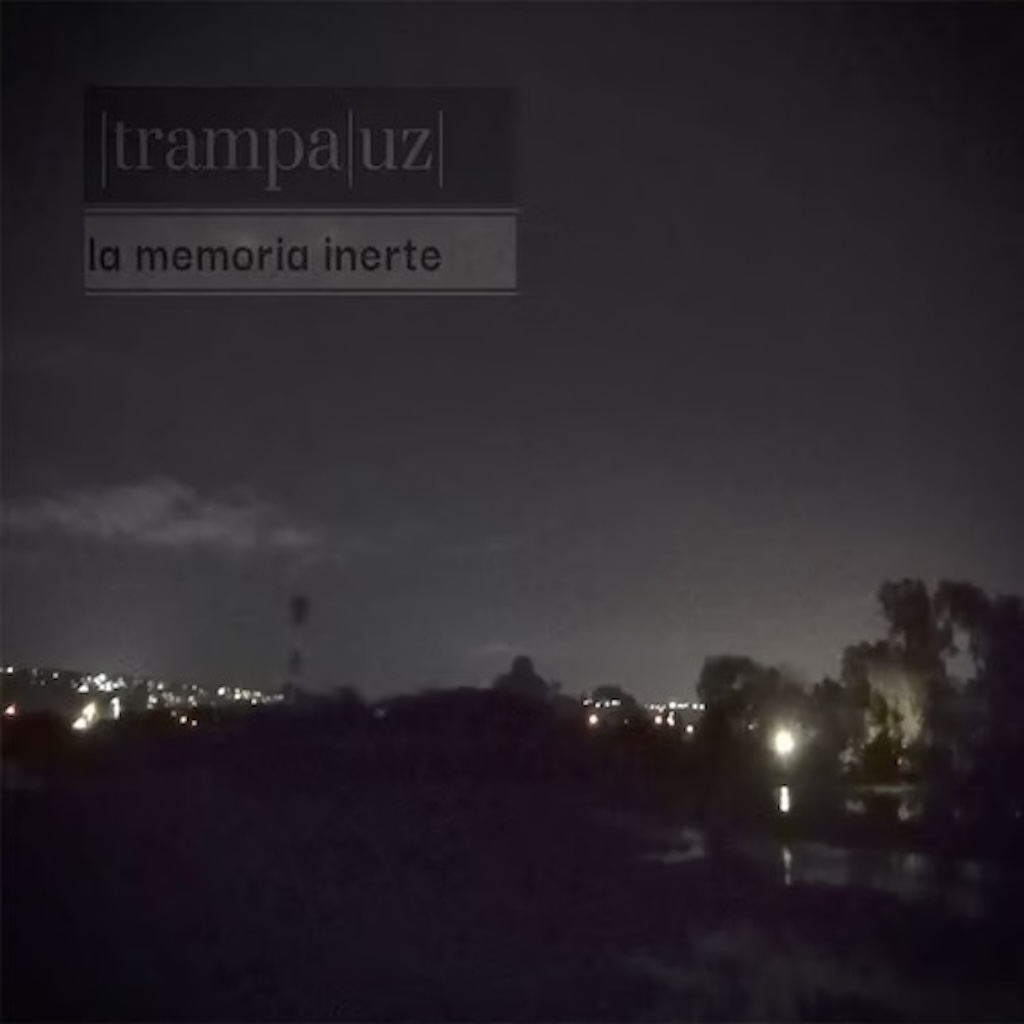
Su catálogo es considerable y reúne alrededor de una treintena de publicaciones entre álbumes, EP, colaboraciones, reediciones, grabaciones recuperadas y remezclas. Dentro de esa producción se encuentra “La Memoria Inerte”, publicado en 2024 por el sello peruano Chip Musik. El disco nació a partir de improvisaciones realizadas durante 2022 que posteriormente fueron cortadas, reorganizadas, procesadas y editadas. Esto resulta particularmente interesante después de conocer las influencias de Fernando, porque demuestra que el jazz, la improvisación, Talk Talk, Flying Saucer Attack y la grabación doméstica no son simples referencias estéticas, sino elementos que forman parte concreta de su método de trabajo.
“La Memoria Inerte” comienza con “En un día helado”, una de mis piezas favoritas del álbum. Desde el comienzo instala una atmósfera melancólica, apocalíptica, futurista, gélida, metálica y al mismo tiempo épica. Es como contemplar un paisaje posterior a una catástrofe o, mejor todavía, el recuerdo de algo que todavía no ha sucedido. Hay frialdad en la superficie, pero debajo permanece una emoción profunda. La pieza funciona perfectamente como una primera fotografía en movimiento: una imagen cubierta de escarcha que se desplaza lentamente frente a nosotros.
La segunda pista, “Vimos escapar el vapor”, me obliga a salirme un poco del libreto de influencias declaradas por Fernando. Aquí no puedo evitar escuchar algo de Swans, particularmente aquella melancolía de galpón que puede producir el bajo de Christopher Pravdica: grandes espacios industriales, concreto, vacío y resonancia. No afirmo que exista una influencia consciente; se trata más bien de una asociación que la propia música despierta. El vapor del título resulta además una imagen perfecta: algo estuvo allí, tuvo temperatura y consistencia, pero comienza lentamente a desaparecer.
“Entre Sábanas” es una pieza breve y extrañamente acuosa. Suena como si escucháramos goteras dentro de lo que alguna vez fue un templo visigodo, abandonado durante siglos y prácticamente perdido en el tiempo. Hay algo sacro escondido muy profundamente en la composición, algo que jamás se manifiesta de forma explícita, sino que apenas se insinúa con enorme reserva. Todo lo demás parece radiación: interferencia y materia suspendida alrededor de ese pequeño núcleo espiritual.
En “Cuando todo era mejor” reaparece un drone acogedor, nostálgico y atávico, atravesado por otro de los elementos que poco a poco comienzan a definir la identidad de este disco: un sonido quirúrgico, frío y preciso. En “La Memoria Inerte” hay pinza, hay bisturí, hay cirugía. El metal no funciona solamente como textura, sino que comienza a organizar el espacio y, en este caso, también el ritmo. El fondo permanece relativamente inmóvil, mientras pequeñas fricciones y pulsaciones metálicas introducen movimiento. El título podría sugerir una nostalgia amable, pero la música evita cualquier sentimentalismo fácil. Es como si el recuerdo estuviera siendo examinado bajo una luz clínica: una verdadera autopsia de la nostalgia.
“Nos fundimos en silencio” ocupa claramente un lugar intermedio dentro de la obra. Es un punto suspensivo, una reflexión a mitad de camino, una zona aparentemente neutra en la que el álbum parece detenerse antes de continuar. Sin embargo, esa neutralidad está ligeramente contaminada por algo más oscuro. Hay una sensación de pesadilla, de subconsciente y de plano astral. No ocurre demasiado en la superficie, pero debajo parece abrirse otra habitación, un espacio que solamente alcanzamos a entrever. Es una pausa, sí, pero una pausa atravesada por el sueño.
Con “Cada día era el último” vuelve el drone que había marcado parte de la primera mitad del trabajo, aunque acompañado ahora por un ritmo más amable, incluso amoroso, si cabe utilizar esa palabra dentro de un álbum tan atravesado por superficies metálicas y paisajes irradiados. Existe en el fondo una especie de cariño atómico, algo potencialmente amenazante que, sin embargo, termina sonando cercano al oído. La pieza conserva la cualidad tecnológica y ligeramente postapocalíptica del álbum, pero aquí aparece también una forma extraña de ternura: radiactiva y metálica, pero ternura al fin.
“Permaneciendo ocultos” es una de las piezas de textura más exquisita del disco. Posee una amplitud panorámica y una épica contenida que, en algunos momentos, me recuerda ciertos trabajos casi desconocidos asociados al universo de Mille Plateaux. Nuevamente aparece el sello de TRMPUZ: lo quirúrgico y lo metálico, aunque aquí esa materia parece cambiar constantemente de estado. El sonido puede sentirse sólido durante algunos segundos y, casi sin transición, volverse líquido, para luego endurecerse nuevamente. Metal que se derrite, líquido que se condensa: una música que parece modificar físicamente la materia de la cual está construida.
En “Mientras todos desaparecían” la raíz jazzística de Fernando resulta mucho más evidente, aunque completamente filtrada por su propio lenguaje. La textura es fina y el ritmo particularmente delicioso. En algunos momentos imagino una improbable intersección entre Tortoise y Labradford, pero lo más interesante es que ese ritmo no parece ir hacia ninguna parte. No existe una deriva teleológica; la música no necesita conducirnos a una resolución determinada. Se mantiene en movimiento simplemente porque puede hacerlo. El resultado es una especie de distopía jazzística: elegante, contenida y extrañamente confortable, como si mientras el mundo desaparece lentamente todavía quedara algo latiendo entre las ruinas.
“Dejando velas y vino” entra en un territorio que yo asociaría sin demasiados problemas al dark ambient, un lenguaje particularmente cercano a mis gustos. La oscuridad, sin embargo, no resulta opresiva. Aquí hay un atardecer. El álbum comienza a anunciar su propia finitud y aparece una atmósfera de ocaso, de otoño, de luz que lentamente disminuye. Después de atravesar paisajes helados, radiación, metal y distopías, la música parece aceptar que el final se aproxima. Las velas y el vino del título acentúan esa sensación de recogimiento. Está atardeciendo en el disco, y lo hace de una manera especialmente bella y plácida.
Finalmente llegamos a “En la penumbra del jardín”, una pieza extraordinaria y otro de mis momentos favoritos de La memoria inerte. Al principio parece que el álbum pudiera dejar una puerta abierta, pero a medida que avanza se comprende que ocurre exactamente lo contrario: el trabajo termina cerrándose sobre sí mismo. Es una clausura larga, envolvente y coherente con todo aquello que hemos escuchado antes. Regresan la melancolía, el paisaje, el misterio y esa sensación constante de que detrás de cada sonido existe otro sonido que apenas alcanzamos a percibir.
Esta última pieza permite comprender también algo fundamental: “La Memoria Inerte” no es un disco monótono. Al contrario, es un trabajo bastante versátil, lleno de secretos, recovecos, misterios escondidos y pequeños arcanos sonoros. Puede pasar de lo sólido a lo líquido, de lo gélido a lo acogedor, del drone de factura minimal al ritmo, de la distopía al recogimiento y de la radiación a algo que roza lo sagrado. Recomiendo escucharlo con buenos audífonos, en un espacio tranquilo y con la menor cantidad posible de distracciones, porque buena parte de su riqueza sucede precisamente en los márgenes, en sonidos que pueden pasar inadvertidos durante una escucha casual.
“La Memoria Inerte” llegó a mis manos como una especie de revelación tardía. Resulta curioso: conozco a Fernando desde los tempranos años noventa, lo he visto durante décadas entre disquerías, conciertos y conversaciones sobre música, y sin embargo entrar realmente en su obra es algo relativamente reciente para mí. En ese sentido TRMPUZ todavía conservaba algo de misterio. Haber conocido durante tantos años al hombre y descubrir mucho después la verdadera dimensión del músico ha sido una sorpresa particularmente grata.
Por eso resulta un honor presentarlo en Loop Music Magazine y compartir, aunque sea brevemente, algo de su historia, de sus influencias y de una discografía mucho más extensa de lo que este artículo podría abarcar. Detrás de toda esa producción se encuentra la misma persona sencilla, humilde, de excelente gusto y muy quitada de bulla que conocí hace décadas. Fernando Arce casi nunca hace ruido alrededor de sí mismo, pero lleva muchos años haciendo ruido de una manera extraordinariamente interesante.
Y seguramente volveremos a TRMPUZ, porque Fernando parece no descansar nunca. Continúa grabando, colaborando, recuperando material y publicando nuevos trabajos. Después de haber entrado finalmente en este universo, lo lógico es seguir escuchando.
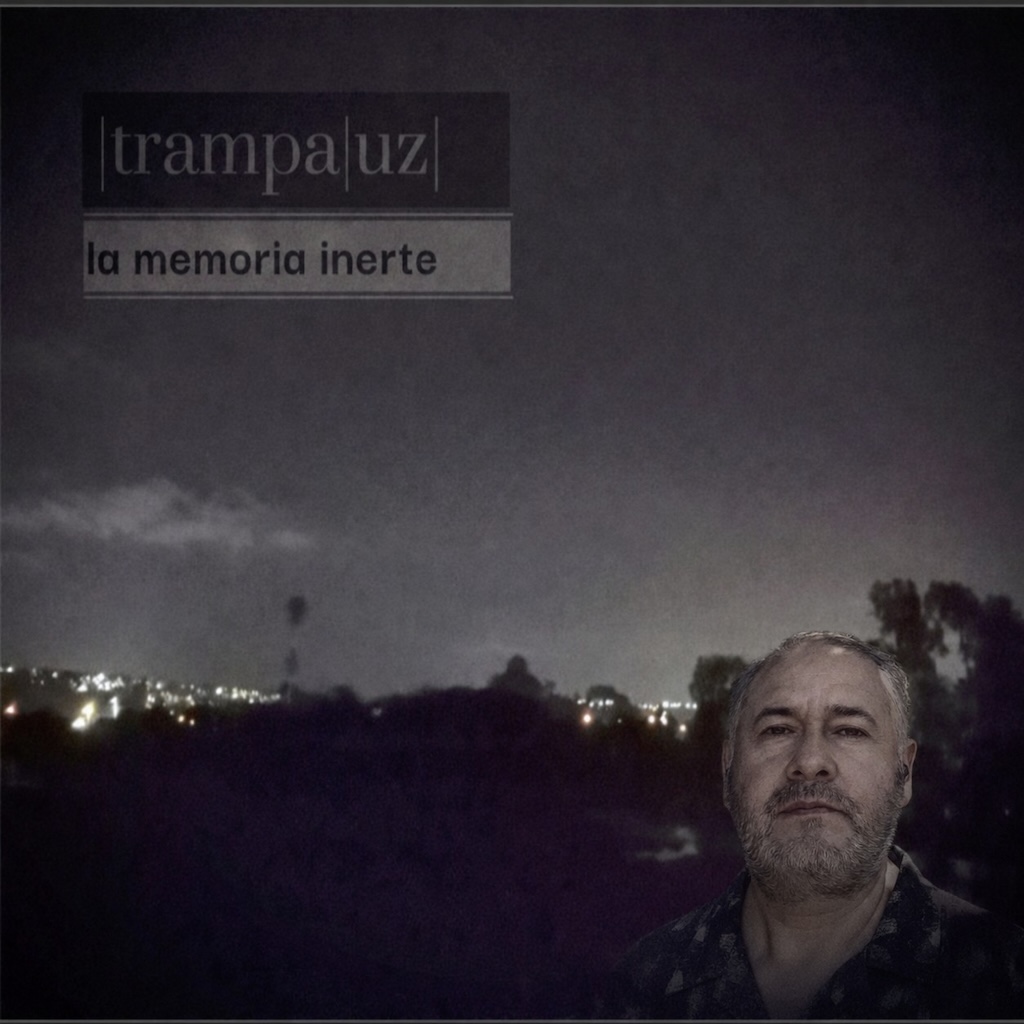
Behind TRMPUZ is Fernando Arce, a Chilean musician and sound experimenter whose work has developed over years with a consistency almost inversely proportional to the noise he himself generates around his work. His discography is extensive, meticulous, and prolific, traversing territories where improvisation, drone, processed guitar, electronics, ambient recordings, and a profoundly landscape-oriented conception of sound coexist. However, before delving into his music, there’s something I find impossible to separate from it: I’ve known Fernando for several decades and have always remembered him as a simple, cultured, music-loving, kind, and, above all, very unassuming person. He’s a low-profile man, one of those who seem to prefer listening and observing rather than drawing attention to himself. I think something of that personality inevitably seeps into TRMPUZ: even when his music reaches moments of saturation, noise, or intensity, it rarely descends into gratuitous clamor. There’s a reserve in it, a way of insinuating itself rather than imposing itself.
I first started seeing him in the early nineties. Fernando was a regular at Fusión and Background, two of those Santiago record stores where a whole generation was musically shaped. I also frequented that scene and ended up running into him time and again in different stores, at concerts, and in those spaces where music lovers exchanged information, records, recommendations, and discoveries. Fernando was always around, attentive to what was new, frequently attending concerts, listening intently, and talking about music without needing to show off his knowledge. He was part of a musical culture that’s hard to replicate today: people sought out records that weren’t always available, ordered imports, kept track of small labels, and a recommendation made in a store could end up opening up a completely new sonic territory.
The nineties were particularly fertile in that sense. There was a real explosion of bands that were radically changing the way we understood the guitar and the very concept of a song. There were clear precedents in the second half of the eighties, such as The Jesus and Mary Chain’s ‘Psychocandy,’ where feedback and distortion ceased to be mere accidents and became structural elements of the music. Then came groups like Spacemen 3 and Loop, and, during the nineties, projects like Flying Saucer Attack, Labradford, Rachel’s, among many others, which began to push those possibilities into increasingly abstract territories. The guitar could cease to be simply a guitar and become texture, noise, mass, repetition, post-rock, drone, atmosphere, or soundscape. Fernando’s ear was shaped amidst this transformation. I witnessed it, and I believe it is precisely there that he also began to find his place.
I recently asked him which musical styles had most profoundly influenced TRMPUZ. Fernando didn’t immediately respond with a list of «favorites,» but instead preferred to reconstruct a kind of acoustic memory, following the order in which certain musical styles appeared in his life. He then summarized his criteria in a particularly good way: he had chosen those albums that, in his own words, “blew my mind when I heard them.”
The first of these territories was jazz. Fernando has listened to it since childhood and even remembers encountering it early on in the Charlie Brown cartoons. Miles Davis’s ‘Kind of ‘Blue’ appears in his selection, and its presence helps to understand a fundamental aspect of his own work: the reliance on improvisation as a form of creation. It’s not about performing something completely predetermined, but about recording a sonic event, allowing accidents to occur, and later discovering what lay within it.
Then comes Pink Floyd, particularly ‘Meddle,’ an album that introduces another important dimension: psychedelia understood as an expansion of sonic space. Next comes Echo & The Bunnymen with ‘Porcupine,’ demonstrating that TRMPUZ doesn’t come solely from ambient, drone, or abstract music, but also from a post-punk sensibility capable of combining song, darkness, atmosphere, and estrangement.
One of the major turning points, however, came with My Bloody Valentine’s ‘Loveless.’ Fernando remembers it as his first real encounter with what he calls a «sonic state.» The expression is precise: it’s no longer just about listening to melodies, harmonies, or recognizable structures, but about entering a mass of sound that acquires an almost physical presence. Along the same lines, he also mentions Sonic Youth, although it didn’t ultimately make his top ten albums. What he admires about them is their ability to improvise and construct scales and channel distortion until it becomes matter. This helps explain why, in TRMPUZ, the guitar rarely limits itself to a traditional function: it can become surface, resonance, interference, or space.
Another pivotal album is Talk Talk’s ‘Laughing Stock.’ Fernando highlights its depth, its contained noise, and the use of different musicians and recording techniques that can later be organized and reconstructed. For him, there’s even a connection between this process and certain recording methods derived from modal jazz. Again, a central idea emerges: first record the event, and then discover the music within it.
The genealogy continues with Labradford, Stars Of The Lid, Auburn Lull, and Monoland. As one progresses through this list, the song seems to gradually dissolve. Repetition appears, expansive spaces, drone, ambient, guitars transformed into atmospheres, and a way of experiencing time much closer to contemplation than to conventional musical narrative.
But one name was still missing. Fernando had left many albums out and was unsure which one to use to complete the list. He finally chose Flying Saucer Attack’s ‘Further,’ and there, perhaps, one of the most important biographical details of our entire conversation emerges. It was they, he told me, who finally inspired him to start recording. The idea of home taping, that home recording could in itself constitute a creative territory, proved decisive. It was no longer necessary to wait for a big studio or have ideal production conditions. There were instruments, pedals, machines, a room, mistakes, noise, and time. That was enough to begin.
His selection was then headed by Miles Davis and continued with Pink Floyd, Echo & The Bunnymen, My Bloody Valentine, Talk Talk, Labradford, Stars Of The Lid, Auburn Lull, Monoland, and Flying Saucer Attack. More than a simple list of tastes, this sequence allows us to reconstruct a true education of the ear: from jazz to psychedelia, from post-punk to shoegaze, from guitar noise to post-rock, ambient, and drone. All of this is filtered through the Santiago music scene of the 1990s, a scene in which Fernando moved for years.
The name TRMPUZ also has another story. It comes from «Trampa luz» (‘Light Trap’), a song by Luis Alberto Spinetta included on his 1993 album, “Fuego Gris” (‘Gray Fire’). Fernando remembers that song as another of those impactful experiences capable of forever altering the way one listens. There he found a feeling of confusion, unease, and estrangement from reality that seems to have somehow remained within his own imagination. It’s no wonder, then, that he describes TRMPUZ’s music as a kind of “moving photographs,” dreamlike landscapes capable of shifting from a whisper to a storm and then returning to calm.
In recent years, his working method has also begun to incorporate lyrics more clearly. Before, as he explained to me, much of the message was concentrated in the song titles and the complete album sequence. Now he has begun to introduce texts and voices that flow within the music according to their placement: sometimes they appear in the stillness, other times they are lost amidst the noise. Fernando doesn’t necessarily think of them as songs in the traditional sense, but rather as a kind of verse integrated into the soundscape.
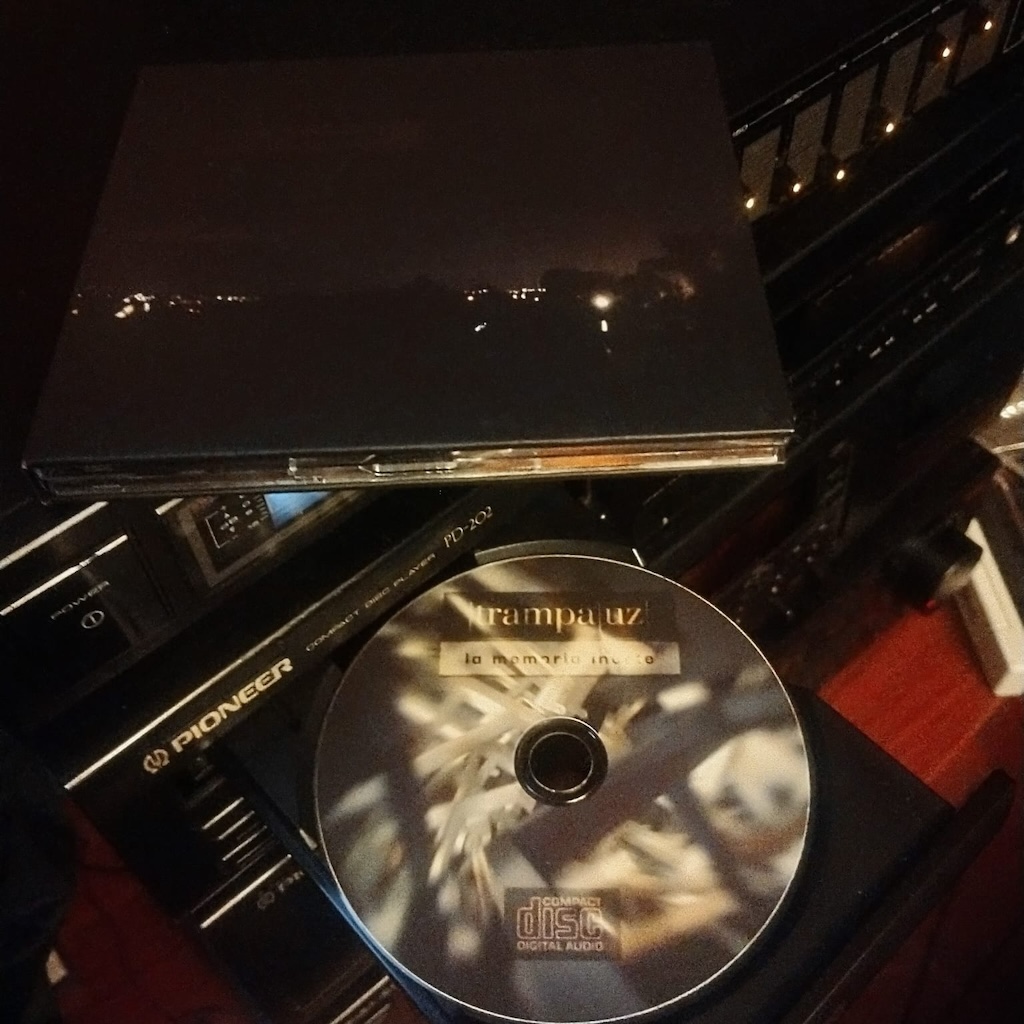
His catalog is considerable, comprising around thirty releases, including albums, EPs, collaborations, reissues, recovered recordings, and remixes. Among these is “La memoria inerte” (‘The Inert Memory’), released in 2024 by the Peruvian label Chip Musik. The album originated from improvisations made during 2022, which were subsequently cut, rearranged, processed, and edited. This is particularly interesting after learning about Fernando’s influences, because it demonstrates that jazz, improvisation, Talk Talk, Flying Saucer Attack, and home recording are not merely aesthetic references, but elements that form a concrete part of his working method.
The album’s inert memory begins with «En un Día Helado” (‘On a Frozen Day’), one of my favorite tracks. From the outset, it establishes a melancholic, apocalyptic, futuristic, icy, metallic, and simultaneously epic atmosphere. It’s like contemplating a landscape after a catastrophe or, even better, the memory of something that hasn’t yet happened. There’s a coldness on the surface, but beneath it lies a profound emotion. The piece works perfectly as a first photograph in motion: an image covered in frost that slowly moves before us.
The second track, «Vimos Escapar el Vapor” (‘We Saw the Steam Escape’), forces me to deviate slightly from the script of influences declared by Fernando. Here, I can’t help but hear something of Swans, particularly that warehouse-like melancholy that Christopher Pravdica’s bass can produce: vast industrial spaces, concrete, emptiness, and resonance. I’m not claiming there’s a conscious influence; it’s more of an association that the music itself evokes. The steam of the title also serves as a perfect image: something was there, had temperature and substance, but is slowly beginning to disappear.
“Entre Sábanas” (‘Between the Sheets’), is a short, strangely watery piece. It sounds like dripping water inside what was once a Visigothic temple, abandoned for centuries and practically lost to time. There is something sacred hidden deep within the composition, something that is never explicitly stated, but rather hinted at with enormous restraint. Everything else seems like radiation: interference and matter suspended around that small spiritual nucleus.
In “Cuando Todo era Mejor” (‘When Everything Was Better’), a welcoming, nostalgic, and atavistic drone reappears, pierced by another element that is gradually beginning to define the identity of this album: a surgical, cold, and precise sound. In La memoria inerte (Inert Memory), there are clamps, there is a scalpel, there is surgery. The metal doesn’t just function as texture; it begins to organize the space and, in this case, the rhythm as well. The background remains relatively still, while small metallic frictions and pulses introduce movement. The title might suggest a gentle nostalgia, but the music avoids any easy sentimentality. It’s as if memory were being examined under a clinical light: a true autopsy of nostalgia.
«Nos Fundimos en Silencio” (‘We Melted in Silence’), clearly occupies an intermediate place within the work. It’s an ellipsis, a midway reflection, a seemingly neutral zone where the album appears to pause before continuing. However, that neutrality is slightly tainted by something darker. There’s a nightmarish feeling, a sense of the subconscious and the astral plane. Not much happens on the surface, but beneath it, another room seems to open up, a space we only glimpse. It’s a pause, yes, but a pause permeated by dreams.
With «Cada Día Era el Ultimo” (‘Every Day Was the Last’), the drone that marked part of the first half of the work returns, although now accompanied by a gentler, even loving rhythm—if one can use that word within an album so permeated by metallic surfaces and irradiated landscapes. There’s a kind of atomic affection at its core, something potentially threatening that, nevertheless, ends up sounding close to the ear. The track retains the album’s technological and slightly post-apocalyptic quality, but here a strange kind of tenderness also emerges: radioactive and metallic, but tenderness nonetheless.
“Permaneciendo Ocultos” (‘Remaining Hidden’) is one of the album’s most exquisitely textured pieces. It possesses a panoramic breadth and a contained epic quality that, at times, reminds me of certain almost unknown works associated with the Mille Plateaux universe. TRMPUZ’s signature sound appears again: surgical and metallic, although here that material seems to constantly change state. The sound can feel solid for a few seconds and, almost without transition, become liquid, only to harden again. Melting metal, condensing liquid: music that seems to physically modify the matter from which it is constructed.
In “Mientras Todos Desaparecía” (‘While Everyone Disappeared’), Fernando’s jazz roots are much more evident, although completely filtered through his own language. The texture is fine and the rhythm particularly delightful. At times I imagine an unlikely intersection between Tortoise and Labradford, but what’s most interesting is that this rhythm doesn’t seem to be going anywhere. There’s no teleological drift; the music doesn’t need to lead us to a specific resolution. It keeps moving simply because it can. The result is a kind of jazzy dystopia: elegant, restrained, and strangely comfortable, as if, while the world slowly disappears, something still throbs among the ruins.
“Dejando Velas y Vino” (‘Leaving Candles and Wine’) enters a territory I would readily associate with dark ambient, a particular language, very close to my own tastes. The darkness, however, is not oppressive. Here is a sunset. The album begins to announce its own finitude, and an atmosphere of twilight, of autumn, of slowly fading light, emerges. After traversing icy landscapes, radiation, metal, and dystopias, the music seems to accept that the end is approaching. The candles and wine of the title accentuate that feeling of contemplation. It is dusk on the record, and it does so in a particularly beautiful and serene way.
Finally, we arrive at «En la penumbra del jardín» (‘In the Shadow of the Garden’), an extraordinary piece and another of my favorite moments on “La memoria inerte” (‘The Inert Memory’). At first, it seems that the album might leave a door open, but as it progresses, it becomes clear that the exact opposite is happening: the work ends up closing in on itself. It is a long, enveloping closure, coherent with everything we have heard before. The melancholy, the landscape, the mystery, and that constant feeling that behind each sound there is another sound that we can barely perceive return.
This last piece also allows us to understand something fundamental: La memoria inerte is not a monotonous album. On the contrary, it’s a remarkably versatile work, full of secrets, hidden corners, mysteries, and small sonic arcana. It can shift from solid to liquid, from icy to welcoming, from minimalist drone to rhythm, from dystopia to contemplation, and from radiation to something bordering on the sacred. I recommend listening to it with good headphones, in a quiet space with as few distractions as possible, because much of its richness lies precisely at the margins, in sounds that might go unnoticed during a casual listen.
“La Memoria Inerte” came into my hands as a kind of belated revelation. It’s curious: I’ve known Fernando since the early nineties, I’ve seen him for decades in record stores, at concerts, and in conversations about music, and yet truly delving into his work is something relatively recent for me. In that sense, TRMPUZ still retained a certain mystique. Having known the man for so many years and only discovering the true dimension of the musician much later has been a particularly pleasant surprise.
That’s why it’s an honor to present him in Loop Music Magazine and share, even briefly, some of his story, his influences, and a discography far more extensive than this article could possibly cover. Behind all that output is the same simple, humble person with excellent taste and a very low profile that I met decades ago. Fernando Arce almost never makes a fuss about himself, but he has been making noise for many years in an extraordinarily interesting way.
And we will surely return to TRMPUZ, because Fernando never seems to rest. He continues recording, collaborating, recovering material, and releasing new works. Having finally entered this universe, the only logical thing to do is keep listening.