
Jozef van Wissem_interview
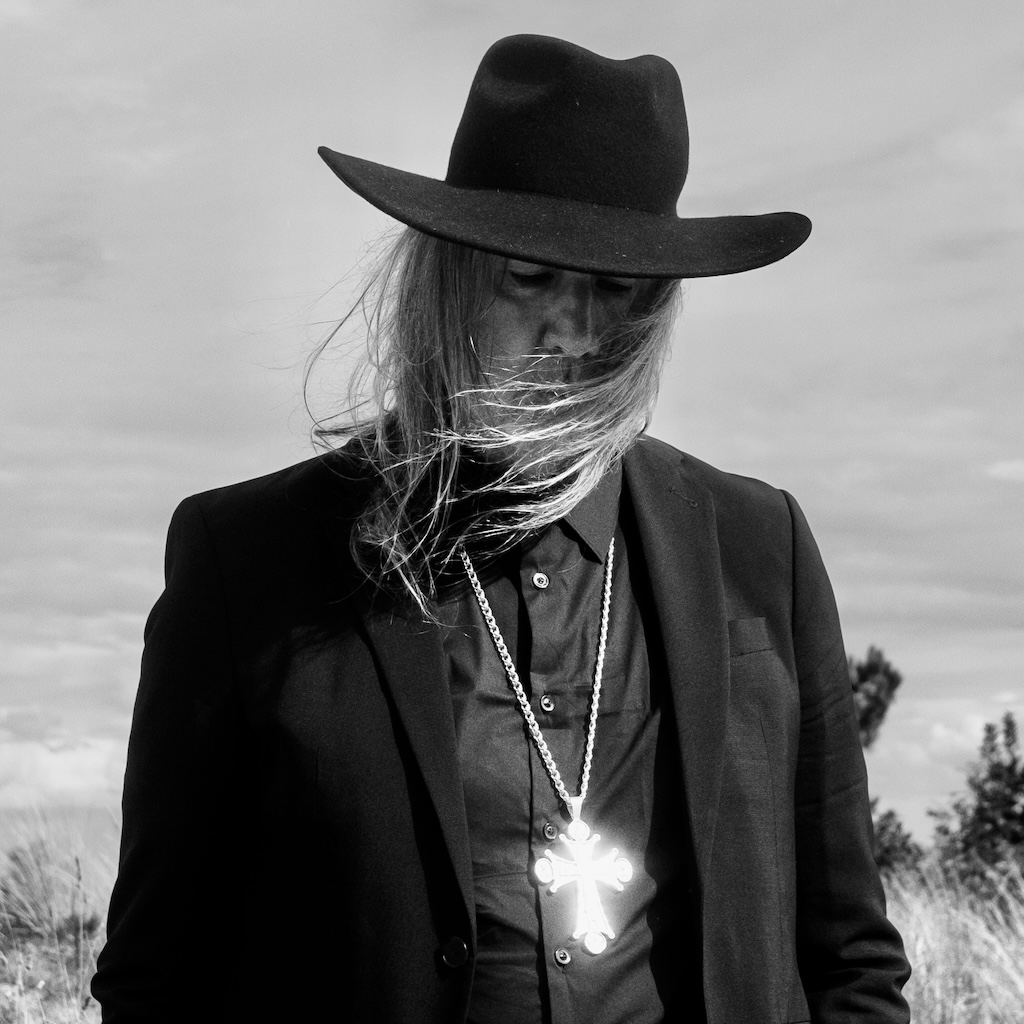
Nacido en Maastricht (Países Bajos), su primera escuela musical no fue la academia, sino su incursión en la escena New Wave y Punk de los años ‘80, donde tocaba la guitarra eléctrica y asistía un bar clandestino en Groningen.
En los años ‘90 se mudó a Nueva York para estudiar formalmente laúd con el maestro Pat O’Brien. De cara al instrumento se rebeló contra el academicismo rígido de «tocar las notas tal cual están en la página». Entonces decidió incorporar a la música renacentista, técnicas de la música de vanguardia.
Con su sonido se desenvuelve en el minimalismo oscuro, la repetición, los drones electrónicos, los paisajes sonoros y la amplificación de un laúd barroco negro de 24 cuerdas hecho a medida.
Ha sido galardonado en 2013 con el Cannes Soundtrack Award por la aclamada banda sonora de la película sobre vampiros aristócratas «Only Lovers Left Alive» de Jim Jarmusch (con quien ha grabado cinco álbumes grabados en formato dúo.
También ha sido comisionado por la National Gallery de Londres para musicalizar cuadros renacentistas y tocó en directo frente al cuadro «El Tocador de Laúd» de Caravaggio en el Museo del Hermitage.
En los últimos años ha tocado en directo nuevas bandas sonoras oscuras para clásicos del cine mudo como «Nosferatu» (1922), «The Fall of the House of Usher» (1928) y «The Cabinet of Dr. Caligari» (1920).
A través de repeticiones cíclicas, drones y resonancias profundas, el músico transforma la tradición del siglo XVII en un manifiesto de vanguardia musical que transporta al oyente hacia una experiencia mística.
El título de tu último álbum, “This Is My Blood” (Incunabulum Records, 2026), evoca directamente la Eucaristía cristiana. ¿Consideras que componer e interpretar esta música es un ritual devocional destinado a nutrir el espíritu?
«Sí, sin duda.»
Tu obra explora con frecuencia la dicotomía entre la luz y la oscuridad, demostrando que incluso tus piezas más ligeras transmiten una profunda tristeza. Dado el clima global actual, ¿crees que vivimos tiempos particularmente oscuros? ¿Dónde encuentras la luz?
«La luz la encuentro en la reacción del público a mi actuación, durante y después del concierto. Y en el silencio. Hay luz en el silencio.»
El tema «Remission» destaca como la única pieza vocal del álbum, actuando como un punto focal impactante e intencional en medio del luto instrumental. ¿Podrías contarnos cómo surgió esta canción, especialmente en lo que respecta a la decisión de introducir una atmósfera sagrada, similar a la de un coro, en ese momento específico?
«La canción surgió así, no tengo ni idea de dónde salió. Lo máximo que puedo decir es que quizás nace de la intuición. Pero ahora sé lo que significan las letras. Algo que no sabía cuándo las escribí. Cuando las escribo, ni siquiera sé qué significan. Su significado suele surgir después”.
«También quiero dejar que el oyente interprete su significado. Así pueden tener diferentes significados personales para cada uno».
Tienes una trayectoria reconocida tanto en el cine como en la música en solitario. ¿Cómo cambia tu enfoque creativo al componer la banda sonora de una película en comparación con la creación de un álbum en solitario? ¿Crees que trabajar bajo la narrativa de un director modifica tu relación con el laúd?
«Mi forma de componer para cine suele ser diferente a la de componer para un álbum. Para componer para cine, escribo las piezas más en función de la personalidad del director. No reacciono a las imágenes.
“Componer para un álbum es más bien un reflejo de un determinado periodo de mi vida. Pero eso no cambia mi relación con el instrumento”.
De cara al futuro, ¿qué nos puedes contar sobre tus próximos proyectos? ¿Hay algún territorio sonoro nuevo o alguna colaboración artística que te interese explorar próximamente?
«Últimamente he estado trabajando en varias cosas. Compuse la banda sonora de otra película, en la que sigo trabajando.
Mi nuevo disco, con temas nuevos en solitario, acaba de salir, así que estaré de gira para promocionarlo. En este momento estoy componiendo para tiorba (1) de 14 cuerdas, un instrumento nuevo hecho especialmente para mí. Tiene una afinación reentrante que abre nuevas posibilidades para componer, sonorizar e interpretar en directo. Mide 1,80 metros y es completamente negra.»
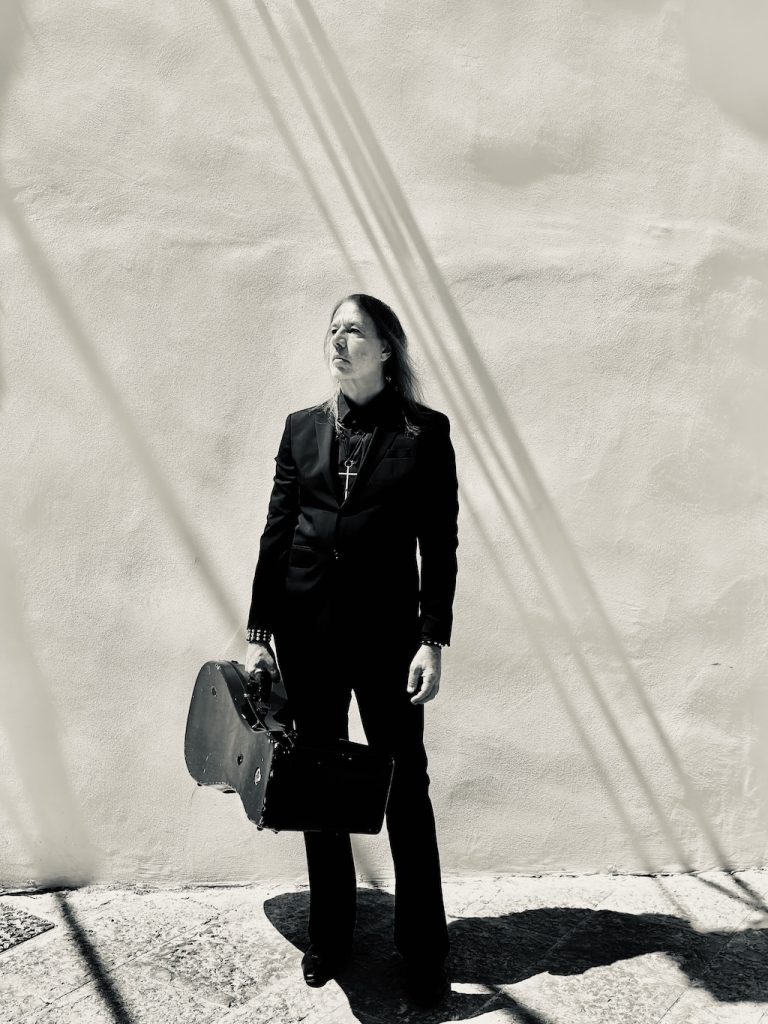
Born in Maastricht (Netherlands), Jozef van Wissem’s musical roots lie not in the academy, but in the raw energy of the 1980s New Wave and Punk scene, where he played electric guitar and frequented Groningen’s underground circuits.
In the 1990s, he relocated to New York to formally study the lute under Pat O’Brien. However, he quickly rebelled against rigid academicism—rejecting the mandate to play notes exactly as they appeared on the page. Instead, he chose to inject avant-garde methodologies into Renaissance frameworks.
His signature sonic palette explores dark minimalism, mathematical repetition, subtle electronic drones, and atmospheric soundscapes, all anchored by the amplification of a bespoke 24-string black Baroque lute.
This iconoclastic approach reached a global milestone in 2013 when he won the Cannes Soundtrack Award for Jim Jarmusch’s vampire masterpiece, Only Lovers Left Alive—a partnership that has yielded five collaborative albums.
His work has also caught the attention of high art institutions; he was commissioned by London’s National Gallery to score Renaissance masterpieces and performed live in front of Caravaggio’s The Lute Player at the Hermitage Museum.
In recent years, Van Wissem has toured heavily, performing live, dark scores for silent cinema classics like Nosferatu (1922), The Fall of the House of Usher (1928), and The Cabinet of Dr. Caligari (1920).
Through cyclical repetitions, low-end drones, and visceral resonance, he seamlessly refashions 17th-century tradition into a contemporary avant-garde manifesto, guiding the listener toward a deeply mystical experience.
The title of your latest album, ‘This Is My Blood,’ (Incunabulum Records, 2026) directly invokes the Christian Eucharist. Do you view the act of composing and performing this music as a devotional ritual intended to nourish the spirit?
«Yes certainly.»
Your work frequently explores the dichotomy between light and darkness, showing that even your lighter pieces carry a profound sadness. Given the current global climate, do you feel we are living in uniquely dark times, and where do you find the light?
«The light I find in the reaction to my performance of the audience, after and during the show. And in silence. There is light in Silence.
The track ‘Remission’ stands out as the album’s only vocal piece, acting as a stark, intentional focal point amidst the instrumental mourning. Could you tell us how this song came about, especially regarding the decision to introduce a sacred, choir-like atmosphere at that specific moment?
«The song happened to come out like this, I have no idea where it came from. The most I can say about this that it is maybe born out of intuition. But I know what the lyrics mean at this point. Which I didn’t when I wrote it. When I write them down I don’t even know what the lyrics mean. They usually get their meaning afterwards.”
«I also want to leave it up to the listener what they mean. So they can mean different personal things to the listener.»
You have a celebrated career in both cinema and standalone records. How does your creative approach shift when composing a film soundtrack versus crafting a solo album? Do you find that working under a director’s narrative changes your relationship with the lute?
«The way I write for film is usually different from composing an album.
To compose for film I write the pieces more according to the personality of the director. Not reactive to images really.
To write for an album is more a document of a certain personal time frame. But it doesn’t change my relationship to the instrument.»
Looking ahead, what can you share about your upcoming projects, and are there any new sonic territories or artistic collaborations you are eager to explore next?
«I have done quite a few things lately, I composed another soundtrack for another film. Still working on it.
My New record with new solo pieces is just out so I will be touring for the new record. At the moment I am writing pieces for 14 course theorbo (1), a new instrument that was just made for me., It has this reentrant tuning so it opens up new possibilities to composing, sound and performing live with it too. It’s 6 feet tall and all black.»
(1) Instrumento hermano del laud que se complementa por la extensión del rango sonoro (bajos profundos), hace de contraste con el laúd tradicional produciendo drones y tiende un puente entre la música antigua y el dark ambient.
A sister instrument to the lute, it complements it with its extended range (deep bass notes), providing a contrast to the traditional lute by producing drones, and bridges the gap between early music and dark ambient.
